 WEKESA KULECHO
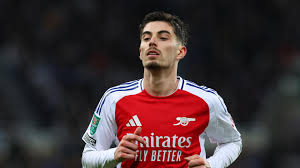
LONDON, England – The scream was not loud. Those inside Arsenal's London Colney training complex describe it more as a collapse—Kai Havertz pulling up during a routine finishing drill, clutching the back of his right thigh, his face buried in the dew-soaked grass.
Within hours, the fear was confirmed.
Kai Havertz will miss the north London derby. He will miss the FA Cup tie against Wigan. He will miss Wolves. But those are merely the fixtures he is guaranteed to miss. The deeper, more alarming question—whispered in hushed tones by club officials, unspoken in Mikel Arteta's press conferences—is whether Arsenal's £65 million forward will ever be the same player again.
Within hours, the fear was confirmed.
Kai Havertz will miss the north London derby. He will miss the FA Cup tie against Wigan. He will miss Wolves. But those are merely the fixtures he is guaranteed to miss. The deeper, more alarming question—whispered in hushed tones by club officials, unspoken in Mikel Arteta's press conferences—is whether Arsenal's £65 million forward will ever be the same player again.
'A Minor Muscular Injury' — The Official Line
The public-facing narrative is carefully managed.
Standard Sport understands Havertz has suffered a "minor muscular injury" that could keep him out for "a number of weeks" . BBC Sport reports he will miss Thursday's trip to Brentford, Sunday's FA Cup fixture against Wigan, and is a significant doubt for the February 22 north London derby against a Tottenham side that just sacked its own manager . The Wolverhampton encounter on February 25 is also under threat .
The Athletic, cited across multiple outlets, confirms the diagnosis as a muscular issue without specifying whether it occurred in training or during the Sunderland victory, where Havertz assisted Viktor Gyokeres' opening goal before his 67th-minute substitution .
But the sanitised language of press releases collides violently with what actually transpired on that training pitch.
The public-facing narrative is carefully managed.
Standard Sport understands Havertz has suffered a "minor muscular injury" that could keep him out for "a number of weeks" . BBC Sport reports he will miss Thursday's trip to Brentford, Sunday's FA Cup fixture against Wigan, and is a significant doubt for the February 22 north London derby against a Tottenham side that just sacked its own manager . The Wolverhampton encounter on February 25 is also under threat .
The Athletic, cited across multiple outlets, confirms the diagnosis as a muscular issue without specifying whether it occurred in training or during the Sunderland victory, where Havertz assisted Viktor Gyokeres' opening goal before his 67th-minute substitution .
But the sanitised language of press releases collides violently with what actually transpired on that training pitch.
The Knee That Won't Heal
Here is what the club is not saying in official statements.
According to Daily Mail Sport, which first reported concerns over Havertz's long-term fitness in January, the German has re-injured the same knee that required surgery after the opening day of the season .
That initial injury—sustained in a innocuous challenge against Manchester United on August 16—was supposed to be straightforward. Arthroscopic cleanup. Four months rehabilitation. Return to action in December.
Instead, Havertz was one week away from a matchday squad in November when his knee flared up during final training sessions. The setback was devastating, both physically and psychologically. Another phase of rehabilitation. Another delay. Another quiet conversation between medical staff about whether the joint would ever fully stabilise .
He finally returned against Portsmouth in the FA Cup on January 11. Twenty-three minutes. Cautious. Guarded.
Here is what the club is not saying in official statements.
According to Daily Mail Sport, which first reported concerns over Havertz's long-term fitness in January, the German has re-injured the same knee that required surgery after the opening day of the season .
That initial injury—sustained in a innocuous challenge against Manchester United on August 16—was supposed to be straightforward. Arthroscopic cleanup. Four months rehabilitation. Return to action in December.
Instead, Havertz was one week away from a matchday squad in November when his knee flared up during final training sessions. The setback was devastating, both physically and psychologically. Another phase of rehabilitation. Another delay. Another quiet conversation between medical staff about whether the joint would ever fully stabilise .
He finally returned against Portsmouth in the FA Cup on January 11. Twenty-three minutes. Cautious. Guarded.
Then came Kairat Almaty in the Champions League—his first start in nearly a year. He scored. He assisted. He played only the first half, carefully managed minutes, the club desperate to preserve their most expensive attacking asset .
February 3: Chelsea in the Carabao Cup semi-final second leg. Havertz, introduced as a substitute, prodded home a late winner against his former club. The Emirates erupted. Arteta called it evidence that Havertz would be "really important for us in the second part of the season" .
Nine days later, Havertz cannot run.
'The Team Knows How Important Kai Is'
Arteta's admiration for Havertz borders on the devotional. When other managers saw a misfit—too languid for the wing, too passive for the centre-forward role—Arteta saw a puzzle he could solveThis season, he believed he had found the answer. Havertz deployed in a deeper role, playing off Viktor Gyokeres, drifting into the half-spaces that neutralised his physical limitations and weaponised his technical elegance. Four goal contributions in four appearances. A goal involvement every 87 minutes. The system was working .
Now the system is broken.
"The team knows how important Kai is for us," Arteta said after the Kairat match, words that now read like an elegy. "Bring him on board and make sure that now we use him in the right way" .
There is no board left to bring him on.
The Arsenal Injury Ward: A Body Count
Havertz is not alone in his suffering. He is merely the most expensive casualty in a medical room that resembles a field hospital.
Mikel Merino underwent foot surgery and faces three to five months on the sidelines. Arteta, speaking Wednesday, delivered the prognosis with visible weariness: "The doctors were really happy with the way it went. The time frame we're talking about is months, whether it's three, four or five, I don't know" .
Bukayo Saka continues to manage a persistent hip issue. No return date. No clarity .
February 3: Chelsea in the Carabao Cup semi-final second leg. Havertz, introduced as a substitute, prodded home a late winner against his former club. The Emirates erupted. Arteta called it evidence that Havertz would be "really important for us in the second part of the season" .
Nine days later, Havertz cannot run.
'The Team Knows How Important Kai Is'
Arteta's admiration for Havertz borders on the devotional. When other managers saw a misfit—too languid for the wing, too passive for the centre-forward role—Arteta saw a puzzle he could solveThis season, he believed he had found the answer. Havertz deployed in a deeper role, playing off Viktor Gyokeres, drifting into the half-spaces that neutralised his physical limitations and weaponised his technical elegance. Four goal contributions in four appearances. A goal involvement every 87 minutes. The system was working .
Now the system is broken.
"The team knows how important Kai is for us," Arteta said after the Kairat match, words that now read like an elegy. "Bring him on board and make sure that now we use him in the right way" .
There is no board left to bring him on.
The Arsenal Injury Ward: A Body Count
Havertz is not alone in his suffering. He is merely the most expensive casualty in a medical room that resembles a field hospital.
Mikel Merino underwent foot surgery and faces three to five months on the sidelines. Arteta, speaking Wednesday, delivered the prognosis with visible weariness: "The doctors were really happy with the way it went. The time frame we're talking about is months, whether it's three, four or five, I don't know" .
Bukayo Saka continues to manage a persistent hip issue. No return date. No clarity .
Martin Odegaard has missed the wins over Chelsea and Sunderland with a minor muscle problem. Arteta was coy when pressed on Wednesday. "I didn't say that," he replied when asked if his captain was definitely out .
Leandro Trossard was forced off late against Sunderland. He is a doubt .
Max Dowman, the 16-year-old prodigy, is closing in on a comeback—but this game, like so many others, came too soon .
Leandro Trossard was forced off late against Sunderland. He is a doubt .
Max Dowman, the 16-year-old prodigy, is closing in on a comeback—but this game, like so many others, came too soon .
Arsenal lead the Premier League table. They topped the Champions League league phase. They remain alive in both domestic cups. And they are doing so with a squad held together by medical tape and Arteta's unyielding will.
'Not Bad Money When Most of Your Career Is Out Injured'
The comments section beneath the Daily Mail's report is, predictably, merciless.
"Not bad money when most of your football career is out injured," wrote one user .
The cruelty is exceeded only by its accuracy. Havertz has effectively lost a calendar year to injury. The hamstring tear in Dubai—February 2025, requiring surgery, ending his season prematurely. The knee on opening day—August 2025, five months consumed. The flare-up in November—another month vanished. Now this: a muscular injury, minor they insist, but attached to a body that has forgotten what it feels like to be whole .
What Comes Next
The fixtures will be navigated without him. Gyokeres will start at Brentford. Gabriel Martinelli may be deployed centrally. Arteta will find solutions because he has no other choice .
But the question that haunts London Colney is not about Brentford, or Wigan, or even Tottenham.
It is about whether Havertz's body will permit him to be the player Arsenal mortgaged their future to acquire. It is about whether "minor muscular injuries" are, in fact, minor when they accumulate across both knees and both hamstrings and every sinew of a frame that was never designed for the attritional demands of English football.
'Not Bad Money When Most of Your Career Is Out Injured'
The comments section beneath the Daily Mail's report is, predictably, merciless.
"Not bad money when most of your football career is out injured," wrote one user .
The cruelty is exceeded only by its accuracy. Havertz has effectively lost a calendar year to injury. The hamstring tear in Dubai—February 2025, requiring surgery, ending his season prematurely. The knee on opening day—August 2025, five months consumed. The flare-up in November—another month vanished. Now this: a muscular injury, minor they insist, but attached to a body that has forgotten what it feels like to be whole .
What Comes Next
The fixtures will be navigated without him. Gyokeres will start at Brentford. Gabriel Martinelli may be deployed centrally. Arteta will find solutions because he has no other choice .
But the question that haunts London Colney is not about Brentford, or Wigan, or even Tottenham.
It is about whether Havertz's body will permit him to be the player Arsenal mortgaged their future to acquire. It is about whether "minor muscular injuries" are, in fact, minor when they accumulate across both knees and both hamstrings and every sinew of a frame that was never designed for the attritional demands of English football.
It is about whether, at 26, the best years of Kai Havertz are already behind him.
Arteta will not say this publicly. The club will continue to release statements about expected returns and cautious management and the importance of getting the player fully fit.
Arteta will not say this publicly. The club will continue to release statements about expected returns and cautious management and the importance of getting the player fully fit.
But in the quiet corridors of Arsenal's training ground, where a German forward recently collapsed clutching his thigh, the fear is already spoken.
Another year is slipping away.
And the north London derby, once Havertz's stage, will be played without him
Another year is slipping away.
And the north London derby, once Havertz's stage, will be played without him