 Kiplangat Brian
A Triumph Born in Heat and Pressure
In the sweltering air of Riyadh, Chelsea began a journey that would redefine their identity. The Club World Cup was not just another trophy to chase; it was the proving ground for Enzo Maresca’s evolving squad — a team that had been dismissed by pundits, underestimated by rivals, and still haunted by recent years of inconsistency.
The critics said Chelsea lacked the steel for high-stakes tournaments. They said Maresca’s system was too fragile for knockout football. What they didn’t see was the quiet confidence brewing in Cobham, the hunger of a young core ready to play without fear, and a tactical blueprint designed to exploit every inch of the pitch.
The Group Stage: Early Statements
Chelsea’s first steps in the tournament were anything but tentative. Against Al Ahly, they played with a sharpness that sent an immediate warning: the Blues were here to dominate. Cole Palmer’s early strike set the tone, his composure belying his years. João Pedro, on loan from Brighton but instantly at home in Chelsea blue, doubled the advantage with a deft header.
The second group match against Urawa Red Diamonds proved sterner. The Japanese champions pressed high, tested Chelsea’s buildup play, and even forced Sánchez into acrobatic saves. But the hallmark of this Chelsea was resilience. A late burst from Mykhailo Mudryk, twisting past two defenders before firing low into the corner, secured top spot in the group.
Benfica: Storm, Chaos, and Character
The quarter-final clash with Benfica was a different beast entirely. A sudden storm delay midway through the first half created a surreal atmosphere. When play resumed, Chelsea looked rattled, conceding to a João Neves thunderbolt.
Yet Maresca’s halftime talk seemed to flip a switch. Gallagher led by example, pressing relentlessly, and Palmer produced a moment of pure invention — a disguised through ball for Raheem Sterling, who finished coolly. Deep into stoppage time, Levi Colwill rose highest from a corner to head home the winner. Chelsea had weathered both the storm in the sky and on the pitch.
Palmeiras Déjà Vu
Two years earlier, Chelsea had beaten Palmeiras in a tense final. This time, they met in the semi-finals. The Brazilians were physical, combative, and relentless in the tackle. But Chelsea’s pace on the flanks proved decisive. Reece James delivered a pinpoint cross for João Pedro to head home, and Moisés Caicedo’s long-range drive sealed a 2–0 win. The Blues were in another Club World Cup final — but this time, they were brimming with momentum.
The PSG Final: A Statement to the World
The final against PSG was billed as a clash of philosophies: Chelsea’s intricate positional play versus the French champions’ direct, star-driven attack. The match began at a furious tempo, with Kylian Mbappé forcing Sánchez into a fingertip save within minutes.
But Chelsea struck first. Palmer’s goal, crafted from a lightning counter led by Enzo Fernández, was a masterclass in precision. PSG pushed hard for an equalizer, but Chelsea’s defensive discipline was immaculate. Thiago Silva, in what felt like a poetic chapter against his former club, marshaled the backline with calm authority.
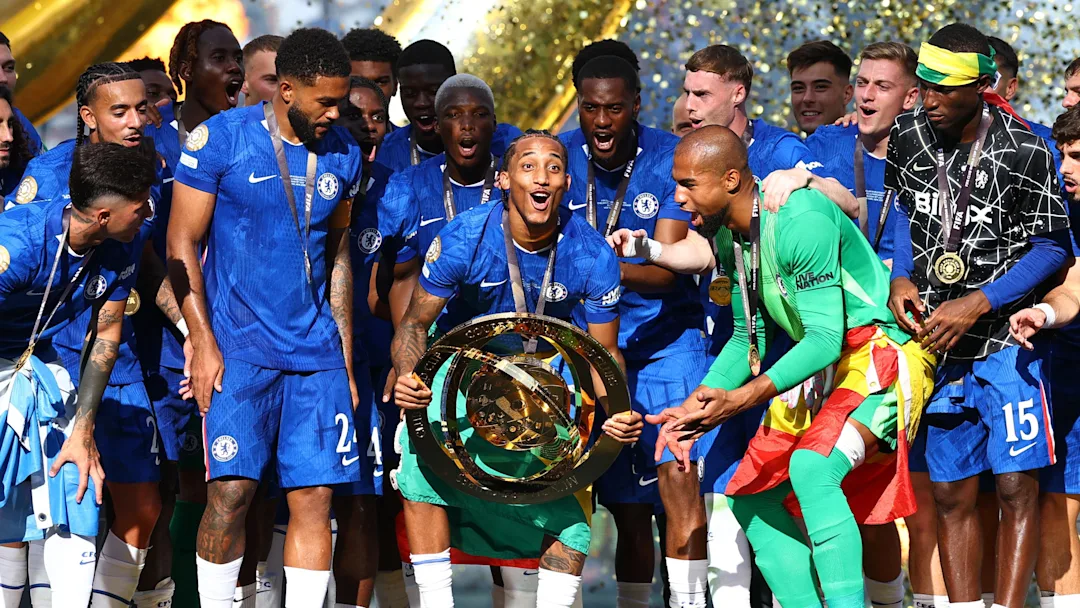
Late in the game, João Pedro’s penalty sealed a 2–0 win. As the final whistle blew, Chelsea’s bench erupted onto the pitch, embracing in tears and laughter. The Blues were world champions once more.
Maresca’s Masterplan
The tactical triumph was not just in the results, but in the method. Maresca’s rotation policy kept players fresh in the Middle Eastern heat. His insistence on building through the thirds frustrated pressing teams, while the controlled use of vertical passes exploited gaps at just the right moments. Every player understood their role — a rare clarity for a side still early in its development cycle.
The Unbeaten Renaissance
If the Club World Cup was the spark, what followed was the blaze. Chelsea returned to Europe brimming with belief. In preseason, they dismantled Bayer Leverkusen 4–1, edged AC Milan in a tactical chess match, and swept aside Atlético Madrid in a friendly that felt like a Champions League night.
More importantly, they carried that form into competitive fixtures. In the Premier League’s opening weeks, they combined flair with discipline — Palmer and Mudryk dazzling in attack, Caicedo and Gallagher controlling midfield, and Sánchez continuing his heroics between the sticks. The unbeaten run stretched to double digits, and suddenly Chelsea were not just competing; they were dictating.
Player Profiles: The Heart of the Revolution
- Cole Palmer: At just 22, Palmer has become Chelsea’s creative heartbeat, blending composure with audacity.
- João Pedro: The Brazilian striker, once considered a gamble, proved a relentless presence up front, scoring in every knockout match.
- Robert Sánchez: From doubted signing to world champion goalkeeper, Sánchez’s saves defined the tournament.
Voices of the Faithful
From Stamford Bridge to the streets of Nairobi and Lagos, Chelsea fans celebrated like never before.
“This isn’t just a trophy — it’s proof that we’re back.” — @BlueBlood92
“Maresca’s Chelsea feels like the real deal. We’re not afraid anymore.” — Season ticket holder, West Stand
Why This Chelsea Feels Different
Unlike the disjointed squads of recent years, this Chelsea is united. There’s no superstar sulking, no tactical confusion. The veterans lead, the youngsters shine, and the manager’s vision is crystal clear. The Club World Cup didn’t just add silverware — it restored belief.
The Road Ahead
With the Premier League title race heating up and the Champions League looming, Chelsea know the challenge will intensify. But this time, they carry the swagger of champions of the world. For a club that has endured turbulence, the transformation is as much psychological as tactical.
Chelsea are no longer just a team chasing relevance. They are a team that believes — and, perhaps more dangerously for their rivals, a team that knows how to win.