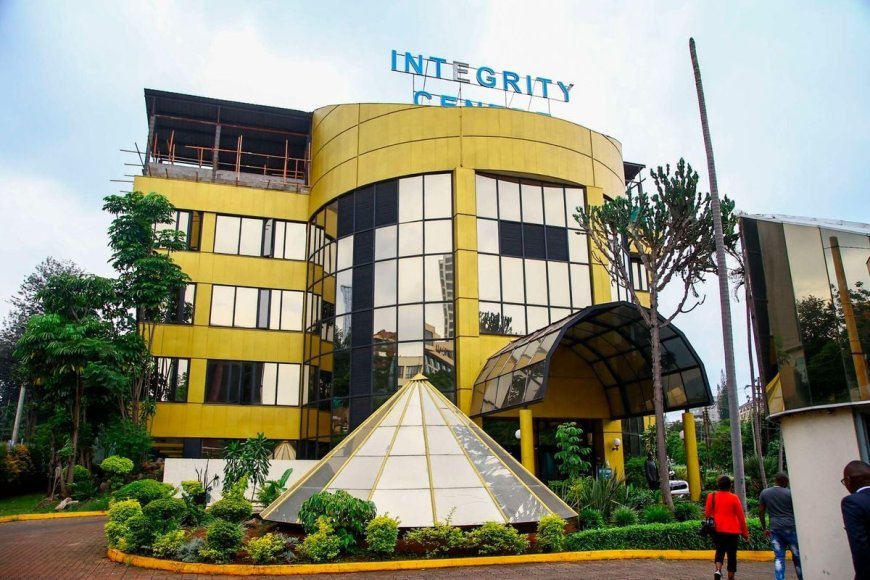
The pre-dawn hush of Nairobi's suburbs shattered like fragile glass on the morning of November 5, 2025, as unmarked vans and sedans with tinted windows converged on quiet cul-de-sacs and gated estates across the city and beyond. In coordinated precision that evoked a scene from a high-stakes thriller, Ethics and Anti-Corruption Commission detectives—clad in windbreakers emblazoned with the agency's insignia—breached doors in Nairobi, Kiambu, Nyeri, Machakos, and Nanyuki, their flashlights cutting through the gloom to uncover ledgers, laptops, and locked safes. By the time the first roosters crowed, seven suspects were in custody: a senior assistant commissioner of sports, a deputy accountant general from the Ministry of ASALs and Regional Development, an accountant at the State Department for Sports, and directors of shadowy travel firms implicated in the web. The allegations, laid bare in a terse EACC statement issued at 8 a.m., painted a damning portrait of systemic plunder: the embezzlement of Sh3.8 billion in public funds through rigged procurement deals spanning the 2020/2021 to 2025/2026 financial years. "This is not mere graft; it's a sophisticated full-circle scam where stolen billions loop back to the state, fattening pockets with interest on the public's dime," EACC CEO Twalib Mung'aa declared at a midday briefing in Integrity Centre's glass-walled auditorium, his voice edged with the controlled fury of a man who has chased shadows for decades. "The suspects abused their authority to collude with contractors, inflating fictitious contracts for events and supplies that never materialized, only to park Sh597 million of the loot in Treasury bonds—robbing Kenya twice over."
The raids, greenlit by warrants from the Milimani Anti-Corruption Court late on November 4, targeted a nexus of officials and private proxies whose scheme allegedly siphoned funds meant for national sporting glory. At the epicenter stood the State Department for Sports, a bureaucratic behemoth overseeing everything from stadium renovations to athlete stipends under the Youth Affairs and Sports Cabinet Secretary, Ababu Namwamba. Investigators zeroed in on procurement irregularities: overpriced tenders for "international sports tours" that existed only on paper, ghost supplies of training kits for youth academies, and ballooning budgets for events like the 2024 Africa Cup of Nations qualifiers, where costs for logistics and hospitality tripled without a single invoice justified. "We were promised kits for our football league, but all we got were excuses and empty fields," recounted 42-year-old coach Elias Kiprop from a rundown pitch in Embakasi, his voice thick with the bitterness of dashed hopes for his under-15 team. "Now I learn the money vanished into their safes—it's like stealing dreams from kids who have nothing else."
Among the arrested was the unnamed senior assistant commissioner, a mid-50s bureaucrat whose office allegedly greenlit 18 dubious contracts worth Sh2.1 billion to firms like Turkenya Tours & Safaris Ltd and Smart Flows Travel Ltd—shell entities directed by co-suspects Dickson Kibunyi Mahia and Maureen Wangui Wambugu. EACC forensics, pieced from seized servers and bank statements, traced how payments for "team travel to Dubai training camps" never left Nairobi, funneled instead through layered accounts to relatives and cronies. The deputy accountant general, whose dual role in ASALs masked cross-ministry sleight-of-hand, stood accused of approving disbursements that bypassed Treasury checks, a maneuver that netted Sh1.2 billion in unvetted outflows. The sports department accountant, David Muasya Musau, allegedly rubber-stamped the ledgers, his signature a seal on Sh800 million in phantom invoices. "These weren't oversights; they were orchestrated thefts, a betrayal of the trust placed in public stewards," Mung'aa elaborated, projecting seized documents on a screen behind him—faded receipts for "event catering" totaling Sh450 million, cross-referenced with empty hotel logs. "The audacity peaks in the recycling: Sh597 million parked in government securities, earning 12 percent yields while the state borrows at 14 percent. It's embezzlement squared—steal from the left hand, lend to the right, pocket the spread."
The scheme's elegance lay in its circularity, a financial sleight-of-hand that preyed on the opacity of procurement and the allure of low-risk bonds. Embezzled funds, laundered through travel firm facades posing as sports logistics providers, flowed into personal accounts disguised as "consultancy fees." From there, portions were reinvested in Treasury bills and bonds—government debt instruments yielding steady returns—allowing the culprits to profit anew from the very coffers they had raided. "It's the ultimate irony: the thieves become the state's unwitting saviors, collecting interest on pilfered principal," quipped anti-corruption analyst Dr. Miriam Kariuki during a post-raid panel on KTN, her charts illustrating the loop with looping arrows. "This isn't just fraud; it's a critique of our fiscal architecture—weak audits let the cycle spin unchecked." EACC sleuths, tipped by a whistleblower in September 2024—a disgruntled procurement officer whose demotion followed a rejected tender—had pieced the puzzle over months, their wiretaps capturing coded calls about "event packages" that masked bond purchases. The Sh597 million, traced to a cluster of nominee accounts, included Sh120 million in 91-day T-bills bought in 2023, maturing with Sh14 million in interest that vanished into offshore wallets.
Raids unfolded like clockwork symphonies of scrutiny. In Nairobi's upscale Runda, detectives roused the senior commissioner at 4:30 a.m., his modernist villa's garage yielding two luxury SUVs—a Range Rover and a Mercedes G-Wagon—registered to a shell firm but fueled by sports budgets. Safes cracked open to reveal Sh1.2 million in crisp notes, bundled alongside passports and property titles for coastal villas in Diani. In Kiambu's Juja, the deputy's modest bungalow hid a warren of filing cabinets stuffed with 200 bogus invoices, their ink still fresh from a home printer. Nyeri's rolling hills concealed the accountant's rural retreat, where earthmovers unearthed a buried strongbox holding Sh850,000 and a ledger detailing bond maturities. Machakos and Nanyuki operations nabbed the travel directors mid-commute, their SUVs pulled over on the Thika Superhighway with trunks laden with laptops encrypted in basic Caesar ciphers—child's play for EACC's cyber unit. "We moved like shadows, but the evidence screamed volumes," recounted lead investigator Rose Wanjiku, a 15-year veteran whose team logged 1,200 man-hours on the probe. "One suspect, bleary-eyed at his door, muttered, 'You finally caught the ghost'—but ghosts don't drive Prados bought with public pence."
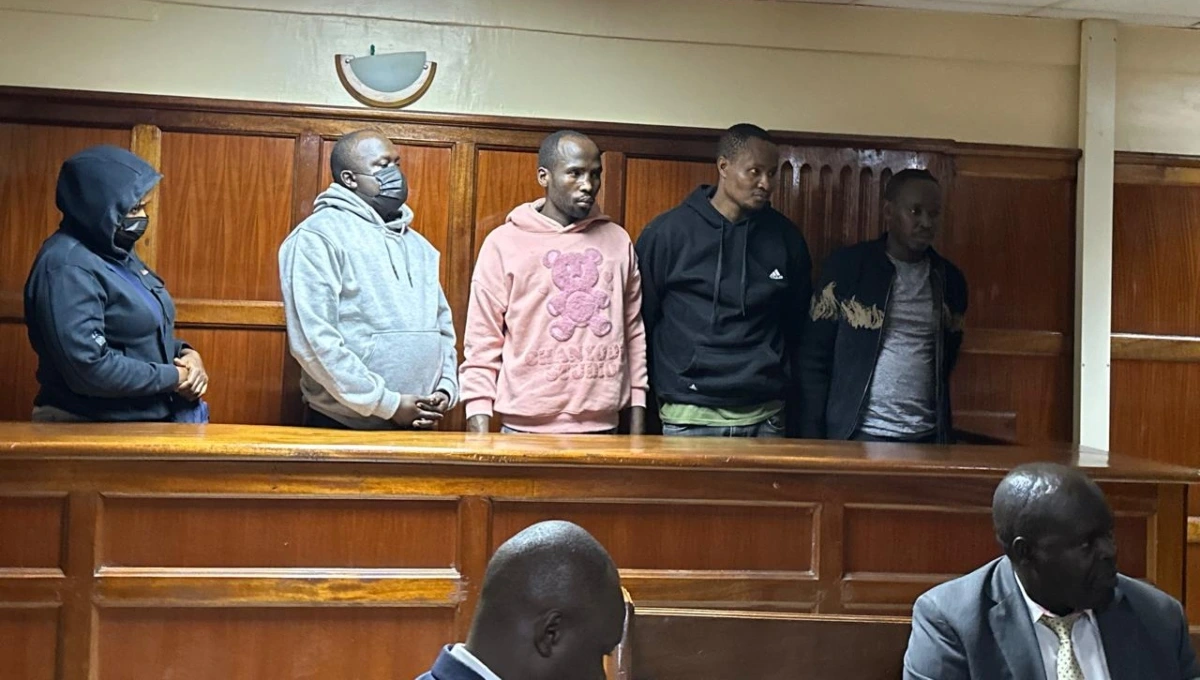
By noon, the Integrity Centre's holding cells brimmed with the accused, their arraignments slotted for November 7 at the Milimani Anti-Corruption Court on charges of conspiracy to defraud, abuse of office, and money laundering under the Anti-Corruption and Economic Crimes Act. Bail hearings loomed contentious, with EACC pushing for Sh500 million sureties to match the scale of the heist. "These aren't petty thieves; they're architects of austerity, their actions inflating the Sh4.5 trillion debt we all shoulder," Mung'aa pressed, his finger jabbing at a pie chart showing sports allocations—Sh12 billion in 2024/2025—dwarfed by losses. The recovery tally from the raids: Sh3.58 million in cash, 15 title deeds to upscale apartments in Westlands and Kilimani, and seven vehicles valued at Sh150 million, all impounded under provisional freezing orders. Digital hauls included 500 gigabytes of emails and spreadsheets, cross-referenced with Central Bank records to trace the bond loop—a Sh597 million carousel that yielded Sh72 million in illicit interest over three years.
The scandal's tendrils snaked through Kenya's sporting underbelly, a sector long plagued by mismanagement despite its promise as a youth panacea. The State Department for Sports, restructured in 2022 under Namwamba's watch, oversees Sh15 billion annually for infrastructure like the Moi International Sports Centre revamps and athlete grants. Yet, audits from the Office of the Auditor General in 2024 flagged Sh2.1 billion in unaccounted expenditures, from overpriced turf installations at Kinoru Stadium—budgets ballooning from Sh109 million to Sh355 million without tender trails—to ghost payments for the 2023 World U18 Championships, where Sh382 million disbursed yielded only Sh274 million in refunds. "We summoned Sports Kenya's CEO last week; discrepancies screamed fraud," revealed Public Investments Committee chair Benjamin Langat during a November 4 grilling, his gavel echoing in Parliament's chambers. "Now EACC confirms it—Sh3.8 billion vanished into thin air, while our youth train on cracked pitches." Namwamba, addressing the fallout in a State House huddle on November 5, vowed zero tolerance. "This betrayal wounds the heart of our Talanta Hela initiative; we'll root it out, no sacred cows," he stated, his tone a blend of indignation and introspection. "Sports build nations; corruption crumbles them."
Whistleblowers and insiders peel back layers of the rot. A former procurement clerk, granted anonymity for safety, detailed the modus: officials inflating "travel packages" for non-existent tours, pocketing 60 percent kickbacks funneled to travel facades. "They'd quote Sh50 million for a 'team safari to Ethiopia'—no visas, no flights, just fat envelopes," the source confided over encrypted calls traced by EACC. The bond twist, a masterstroke of irony, exploited the Treasury's appetite for domestic debt: embezzled sums, cleansed through layered transfers, snapped up bills at auctions, earning yields that recycled into luxury lairs. "It's full-circle economics at its most cynical—rob the state, lend it back, sip chai on the interest," Dr. Kariuki analogized, her models projecting Sh1.2 billion in compounded losses if unchecked. The Sh597 million, parked in 2023-2025 issuances, included Sh200 million in infrastructure bonds ironically funding sports facilities the thieves had starved.
Public outrage, fanned by viral clips of the raids—grainy bodycam footage of detectives hauling evidence bags—swept social media, with #SportsTheft trending alongside memes of officials as "goal poachers." Youth activists from the Gen Z brigade, still smarting from 2024's Finance Bill protests, converged on Afya House, chanting "No more own goals!" In Mombasa's Nyali, football academies paused drills, coaches like Kiprop rallying parents for petitions. "Our kids dream of green pitches; these crooks paved them with gold," Kiprop told a rally, his whistle dangling like a talisman. EACC's Mung'aa, fielding barbs on citizen tip lines, pledged transparency: "Every shilling recovered funds a real goal—a stadium seat, a scholarship. Report, and we'll raid." The probe, now under ODPP's glare, eyes charges carrying 10-year minimums, with asset forfeiture to claw back the loop.
As November's sun dipped, Integrity Centre's labs hummed with forensics—ink analyses on invoices, blockchain traces on bond trades—while the accused huddled in cells, their empires of evasion evaporating. For Kenya, where corruption devours Sh2 trillion yearly per World Bank tallies, the sports heist stands as indictment: a department meant to forge champions now a forge of fraud. Mung'aa, poring over raid manifests, mused to deputies: "They thought the cycle unbreakable; we snapped the chain." Kiprop, back on his pitch under floodlights, drills his team with renewed vigor, the ball's thud a defiant drumbeat. In the republic's resilient rhythm, where graft's loop meets justice's lasso, this raid endures—a full-circle reckoning, turning embezzlement's echo into accountability's anthem.
The fallout cascaded into legislative arenas. On November 6, the Public Investments Committee, chaired by Langat, issued summons to Namwamba, EACC brass, and ousted Sports Kenya officials, their hearing a coliseum of cross-examinations. "Kinoru's Sh246 million black hole? Explain, or face the music," Langat thundered, dossiers thumping tables. Revelations trickled: Sh30 million to "PPP consultants" for shelved stadium models, Sh47 million dangling in U18 refunds. Namwamba, testifying via video link from Mombasa, distanced his watch: "I inherited rot; now we excise it with EACC's scalpel." The bond ploy, dissected in committee briefs, exposed Treasury vulnerabilities—anonymous bids allowing nominee laundering. "Reform auctions, mandate KYC for buyers," urged fiscal wonk Dr. Kariuki in a sidebar memo, her fixes a blueprint for Sh500 billion in annual debt safeguards.
Community ripples swelled in sports enclaves. In Embakasi's dusty fields, Kiprop's academy hosted a "Clean Game Day," youth scrawling anti-graft slogans on banners, their chants a chorus against the heist. "No more stolen goals—fund our futures!" echoed a 14-year-old striker, his dribble a metaphor for evasion foiled. In Nyeri's highlands, raided estates saw neighbors form watch groups, tip lines to EACC buzzing with procurement whispers. Mung'aa, fielding 500 calls daily, greenlit a "Sports Integrity Hotline," its jingle a whistle's trill. For the accused, cells in Industrial Area loomed as reckonings: the senior commissioner, pacing a 10-by-10, reportedly confessed fragments—"It started small, snowballed"—to a cellmate turned informant. Wambugu, the travel director, lawyered up with a KSh10 million retainer, her plea: "Bureaucrats squeezed; I was the sponge."
Broader strokes brush Kenya's graft canvas. The EACC, under Mung'aa's 2024 pivot to proactive probes, recovered Sh700 million in 2025 alone, disrupting Sh7.2 billion in schemes from counties to parastatals. Yet, sports' Sh3.8 billion bite dwarfs NYS's Sh2 billion family-tie tangle or Natembeya's Sh1.4 billion stadium saga, underscoring a sector's soft underbelly. "Athletes sweat for medals; officials for millions—time to flip the script," Namwamba rallied at a Kisumu meet, unveiling a Sh5 billion "Clean Talanta" fund. Dr. Kariuki's models forecast Sh20 billion in ripple savings if loops like this shatter—yields reinvested in pitches, not penthouses.
As raids' dust settled, Integrity Centre's vaults brimmed with seized spoils: Prados auctioned for Sh120 million, titles foreclosed to fisc. Kiprop, coaching under stars, dreams aloud to his lads: "One day, these fields will gleam with your sweat, not stolen shine." In Kenya's unyielding forge, where corruption's cycle meets EACC's snare, this heist resolves as requiem—a full-circle fraud fractured, its echoes a call to cleaner games, where the only interest earned is in the nation's unbowed spirit.