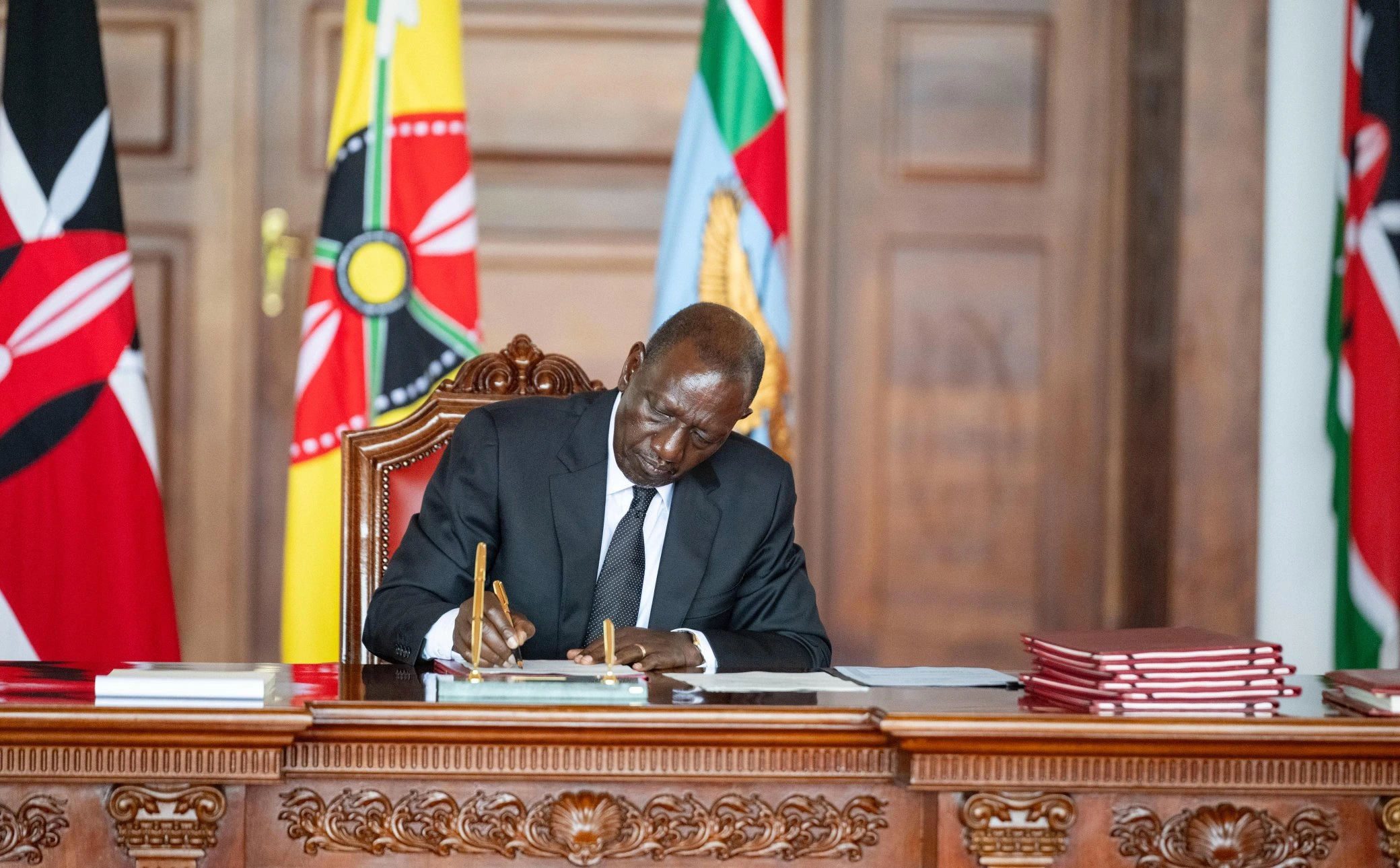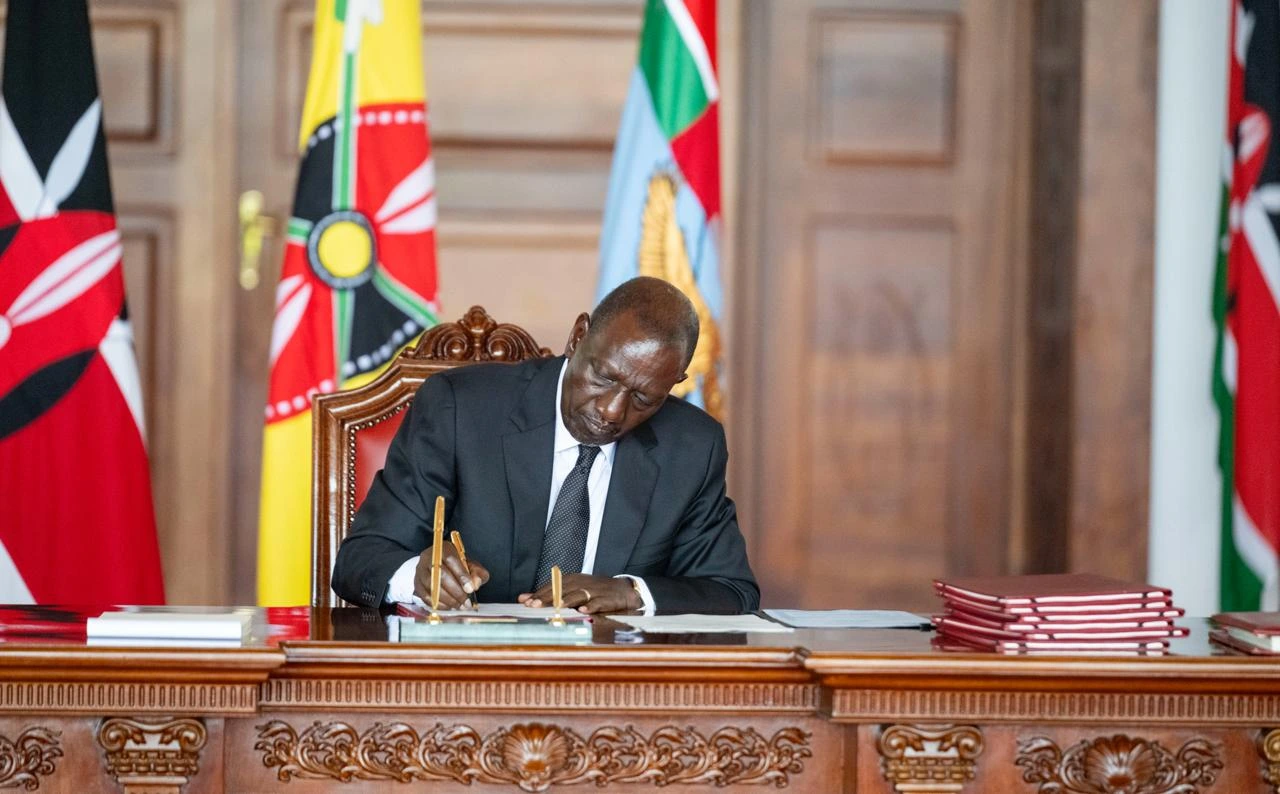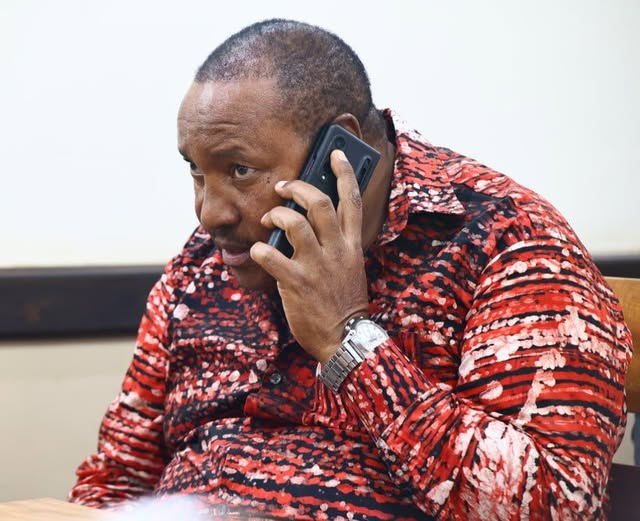
The iron gates of Kamiti Maximum Security Prison on the outskirts of Nairobi, where the distant hum of the city gives way to the stark silence of high walls and razor wire, creaked open on the afternoon of November 18, 2025, releasing former Kiambu Governor Ferdinand Waititu after nearly nine months of incarceration. The 62-year-old politician, whose flamboyant tenure as county boss from 2013 to 2020 was as colorful as it was controversial, walked free following a High Court ruling that approved a Sh53 million bank guarantee as alternative to the 12-year custodial sentence handed down in February for his role in a Sh588 million graft scandal. Waititu, dressed in a crisp white shirt and navy trousers that belied the weight of his ordeals, paused briefly at the prison entrance to address a small gathering of supporters and family members who had waited hours under the overcast sky, his voice hoarse but defiant. "Today is not victory, but vindication—the court has heard my appeal, and justice will prevail," Waititu declared, his words met with cheers from a crowd of about 50, many waving branches from nearby acacias as if in a makeshift parade. "I return to my people in Kiambu not as a convict, but as a fighter—for the truth, for the innocent, for the future we deserve."
The release, granted by Justice Rose Ndombi of the Milimani High Court during a brief mention on November 17, marks a significant reprieve for Waititu, who had been remanded at Kamiti since his February 13 conviction on charges of conflict of interest, abuse of office, and dealing with suspect property related to the irregular award of a Sh588 million road tender to Testimony Enterprises Ltd in 2018. Chief Magistrate Thomas Nzioki had sentenced him to 12 years—five years for the main graft count or a Sh2.5 million fine, plus a mandatory Sh51 million fine or an additional seven years—while barring him from public office for 10 years. Waititu's wife, Susan Wangari Ndung'u, was fined Sh500,000 or faced one year in jail, with sentences running concurrently. The High Court, in approving the bond, reaffirmed the existing terms from Waititu's ongoing hate speech case but emphasized that the Sh53 million guarantee must be deposited first, a condition Waititu confirmed had been arranged through a Nairobi-based financial institution. "The prosecution is ready to proceed, and the next hearing is scheduled for January 15, 2026," Ndombi noted in her ruling, her gavel a measured punctuation to the proceedings. "The appellant's health concerns and the merits of his appeal warrant this step, but compliance is absolute—no shortcuts to freedom."
Waititu's legal odyssey, a saga spanning nearly a decade of investigations, trials, and appeals, began in earnest in 2017 when the Ethics and Anti-Corruption Commission (EACC) zeroed in on the road tender scandal, alleging that the governor had irregularly awarded the contract to Testimony Enterprises—a firm owned by associates Charles Chege and Beth Wangeci—despite the company lacking the requisite experience and financial muscle. Evidence presented in court included bank slips showing Sh25.6 million in kickbacks funneled to Waititu and his wife through Saika Two Estates Developers, a family company, as well as forged documents from the University of Nairobi and Jomo Kenyatta University of Agriculture and Technology purporting to qualify Chege. "The prosecution proved beyond reasonable doubt that the tender was skewed in favor of Testimony, with Mr. Waititu's fingerprints all over the conflict," Magistrate Nzioki had ruled on February 12, dismissing Waititu's claims of political motivation as "unsubstantiated paranoia." The conviction, the second for a governor after Samburu's Moses Lenolkulal's 2020 four-year term for Sh83 million graft, drew mixed reactions: jubilation from anti-corruption watchdogs like Transparency International Kenya, who hailed it as "a warning shot to devolved units," and outrage from Waititu's supporters in Kiambu, who staged protests at the Milimani courts chanting "Free Baba Yao" and accusing the judiciary of Uhuru Kenyatta-era vendettas.
Waititu, born Ferdinand Ndung'u Waititu in 1962 in a modest family in Kikuyu, had risen from Njiru Ward councilor in 2002 to Makadara MP in 2007, his bombastic style and anti-eviction crusades earning him the nickname "Baba Yao" for his streetwise bravado. His 2017 gubernatorial win in Kiambu, defeating incumbent William Kabogo with 55 percent of the vote, had been a triumph of grassroots mobilization, promising to transform the coffee-rich county into an economic powerhouse with Sh50 billion in projects from housing estates to industrial parks. Yet, his term unraveled amid a cascade of scandals: the 2019 impeachment by 63 Kiambu MCAs on 95 counts of gross misconduct and corruption, upheld by the Senate in January 2020 despite Supreme Court challenges; the 2012 hate speech charges for inciting against Maasai in Kayole, acquitted in 2017 after a protracted trial; and the 2018 NYS graft probe that led to his 2020 Senate ouster. "Ferdinand's fall is Kiambu's loss—he fought for the poor, even if his methods were messy," reflected former aide Solomon Kinuthia during the November 17 court session, his voice low amid the media scrum.
The graft case itself, a labyrinth of legal maneuvers that began with EACC raids in 2017 and culminated in the February 2025 conviction, hinged on the irregular tender for the Kiambu roads project. Testimony Enterprises, lacking a Sh100 million turnover requirement, was awarded the Sh588 million contract through a single-source process that bypassed competitive bidding. Waititu, as accounting officer, approved the variation that inflated costs by Sh200 million, pocketing Sh25.6 million via Saika Two, while Chege and Wangeci funneled funds through suspect accounts. "The evidence was overwhelming—bank records, witness testimonies, even Waititu's own emails authorizing the payout," DPP Noordin Haji had argued in closing submissions, his case bolstered by forensic audits tracing the money to luxury purchases including a Sh15 million Land Cruiser and coastal villas. Nzioki's sentencing, delivered February 13 amid a packed courtroom where Waititu's wife wept openly, imposed the 12-year term as "deterrent justice," barring him from office for a decade—a clause that effectively shelves any 2027 gubernatorial ambitions.
Waititu's appeal, lodged immediately in the High Court under Certificate of Urgency No. 234 of 2025, had argued procedural irregularities: lack of fair hearing, biased evidence, and political vendetta from Uhuru's era. "The trial was a kangaroo court—prosecution withheld exculpatory documents, judge rushed judgment amid election pressures," his lawyer Tom Ojienda submitted in October, seeking to quash the conviction and sentence. Ndombi, in her November 17 ruling, granted the bond but upheld the merits for appeal: "The appellant's health—high blood pressure, chest pains—warrants release, but the guarantee stands as surety. Bond conditions from the hate speech matter persist—no travel without leave, report monthly."
The hate speech case, a 2012 relic from Waititu's Makadara days, accused him of inciting violence against Maasai in Kayole after a street child's killing by a Maasai guard. Acquitted in 2017 after a five-year trial, it lingers as a bond condition: Sh1 million surety, bi-weekly reporting. "The hate speech ghost haunts, but graft's the chain—Sh53 million breaks it," Ojienda celebrated post-ruling, hugging Waititu as he emerged from the holding cell.
Waititu's freedom, bittersweet amid the appeal's marathon, allows him to rally Kiambu supporters from his Ruiru home, where 200 well-wishers gathered November 18. "Kamiti taught me resilience—now, I fight from freedom for justice," Waititu said, raising a fist. Kinuthia: "Baba Yao rises—Kiambu awaits." Haji: "Prosecution ready—January 15, truth tested." For Waititu, the bond is bridge: from bars to ballots, a governor's graft gambit where Sh53 million buys time, and truth's trial tempers tenacity.
The conviction's February 13: 12 years, Sh53.5 million fine. Appeal lodged: Certificate 234/2025. Bond approved: November 17. Hate speech conditions: Sh1 million surety, monthly reports. Well-wishers: 200 Ruiru. Haji's readiness: January 15. Kinuthia's cheer: "Baba Yao rises." In Kenya's legal labyrinth, Waititu's walkout weaves—a graft gauntlet where guarantees grant grace, and appeals aspire to absolution.