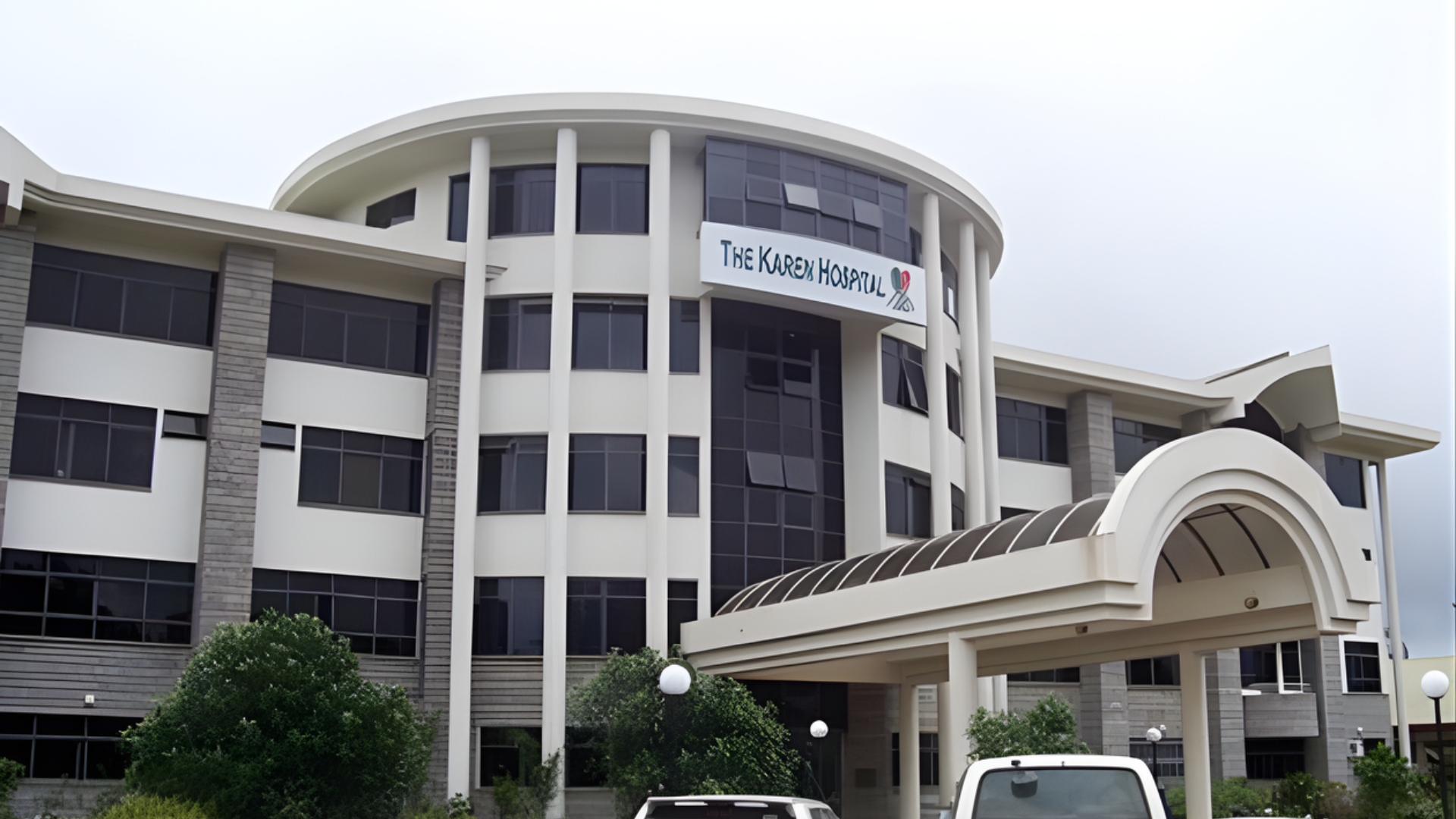
The quiet, tree-lined driveway of The Karen Hospital, usually filled with the soft hum of luxury vehicles dropping off patients, felt heavier than usual on the morning of November 21, 2025. Inside the cool, antiseptic corridors that smell faintly of disinfectant and fresh flowers from the reception vase, a legal and deeply human drama has been unfolding for months around bed 12 in the High Dependency Unit. There lies Mzee Elisha Omondi Otieno, 83, a retired primary school headmaster from Siaya who suffered a massive stroke in early June. What began as emergency care has turned into a Sh25 million medical bill that the hospital now says it can no longer sustain without payment. Yesterday, the hospital’s management filed an urgent application before Justice Olga Sewe at the Milimani High Court seeking orders either to have the elderly man transferred to a public or more affordable private facility or to discharge him to his family for home-based care.
In the court papers, the hospital’s chief executive officer, Dr Cleopas Mailu, paints a picture of quiet desperation. “Since admission on June 4, 2025, the patient has been on mechanical ventilation, renal dialysis three times a week, daily physiotherapy, and round-the-clock specialist nursing,” the affidavit reads. “The bill currently stands at Sh24,987,450 and increases by approximately Sh187,000 every 24 hours. Despite repeated requests, the family has only managed to pay Sh1.8 million in total and has not made any payment since September 12.” Dr Mailu told the court that the hospital has continued treatment out of compassion but can no longer subsidise care at this level indefinitely, especially when other critically ill patients are being turned away for lack of beds.
The family’s side of the story is one of heartbreak and helplessness. Mzee Omondi’s eldest son, Dr Isaac Otieno, a lecturer at a private university in Nairobi, stood outside the hospital’s billing office yesterday afternoon clutching a folder of payment receipts and correspondence. “My father was brought here unconscious after collapsing at his rural home in Ugenya,” he said, his voice cracking. “We chose Karen because it was the nearest hospital with an ICU bed that night. We never imagined he would stay this long. We sold the piece of land he had kept for his retirement, we have borrowed from chamas, we even started a M-Changa that raised Sh840,000, but it is finished. We are not running away; we just don’t have Sh25 million.”
Dr Otieno explained that his father’s NHIF cover lapsed two years ago when he retired and the family forgot to convert it to the retiree package. A private insurer they approached in July declined the claim, saying the stroke was a pre-existing condition because the old man had suffered a mild one in 2021. “We have begged the hospital to transfer him to Kenyatta National Hospital or even Jaramogi Oginga Odinga Teaching and Referral Hospital in Kisumu, but they say there are no ICU queues and he may not survive the journey,” he added, wiping his eyes with the back of his hand. “Now they want to send him home. Home is a mud-walled house with no electricity. How do we put a ventilator there?”
Inside the HDU, nurses continue their routine around Mzee Omondi’s bed with the quiet professionalism that private hospitals are known for. A ventilator hisses rhythmically, monitors beep softly, and a dialysis machine stands ready for the next session. Sister Mercy Wanjiku, the nurse in charge of the unit, spoke briefly on condition of anonymity. “Baba is stable but completely dependent. He opens his eyes, he recognises his children, he tries to mouth words, but he cannot breathe on his own. We have grown attached to him; we celebrate every small improvement. But we also see the bill growing and we know the hospital cannot run on emotion alone.”
The hospital’s head of legal affairs, Caroline Mutheu, explained that the decision to go to court was a last resort after months of negotiations. “We have reduced rates where we could, we waived some consultant fees, we allowed payment plans that were not honoured,” she said. “We are a private entity, not a charity. We have salaries to pay, supplies to buy, and other patients waiting. The law allows us to seek court direction in such cases so that no one accuses us of abandoning a patient.” She cited previous similar cases where courts have ordered transfers to public facilities or allowed discharge against medical advice when families explicitly accept responsibility.
In the corridors outside the HDU, relatives of other patients whispered about the case with a mixture of sympathy and fear. “If they can do this to an old man who has been here six months, what about the rest of us?” asked one woman waiting to see her husband in the cardiac ward. Another man, visiting his mother after surgery, shook his head. “Private hospitals are good until the money runs out. Then you remember why we fought for universal health coverage.”
The family has instructed city lawyer Danstan Omari to oppose the application. In his replying affidavit, Omari argues that discharging the patient would amount to a death sentence. “The applicant is fully aware that there is no ICU bed available at any public hospital within reachable distance and that home-based ventilation is impossible for this family,” the document states. “This honourable court should not be used as an instrument to eject a vulnerable Kenyan whose only sin was to fall sick in a private facility.” Omari has asked the court to compel the Ministry of Health to find an ICU bed in a public hospital or, in the alternative, to order the hospital to continue treatment while the family explores crowdfunding and political intervention.
Late yesterday evening, Homa Bay Governor Gladys Wanga, informed of the case through social media appeals, phoned the family and promised to raise the matter with the Council of Governors health committee. “No Kenyan should die because they cannot pay a hospital bill,” she posted on her official accounts. “We are engaging Karen Hospital and exploring how the county can assist with transfer or part settlement.” Similar messages came from Siaya Governor James Orengo’s office, though no firm commitment has been made public.
Back at the hospital, Dr Mailu insists the institution remains compassionate. “We are not heartless. If a public facility confirms an ICU bed and ambulance transfer capability, we will facilitate everything at our cost. If the court orders us to continue treatment, we will obey. All we ask is legal clarity so that whatever happens next is not laid at our door alone.”
As night fell over the leafy suburb of Karen, the lights in the HDU remained on. Mzee Omondi lay motionless except for the rise and fall of his chest driven by the ventilator. His children took turns holding his hand, whispering stories of grandchildren he may never see again if the court rules against them. Outside, the hospital’s electronic billboard continued to flash advertisements for executive health checks and advanced cardiology services, a stark reminder of the two worlds that sometimes collide within the same walls: the world of those who can pay and the world of those who once could, but no longer can.
The matter is set for mention on November 26, 2025, when Justice Sewe is expected to give directions on whether to issue interim orders keeping the patient in hospital pending full hearing. Until then, the bill continues to climb, the ventilator continues to hiss, and a family waits in the fragile space between hope and surrender.
In the quiet of the night shift, Sister Mercy returned to check the drip. “Baba, fight a little longer,” she whispered as she adjusted the oxygen mask. “Maybe the judge will have mercy where money failed.”