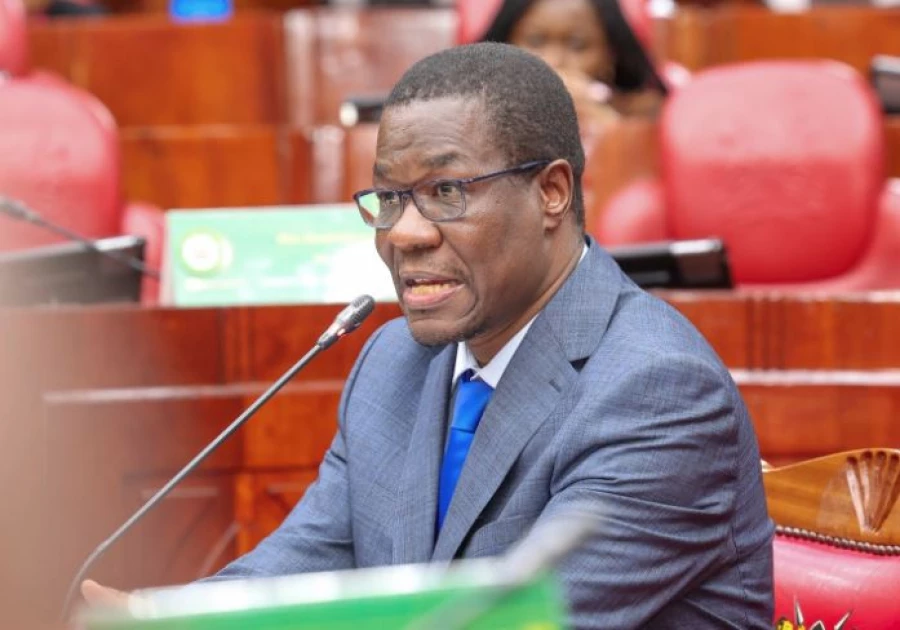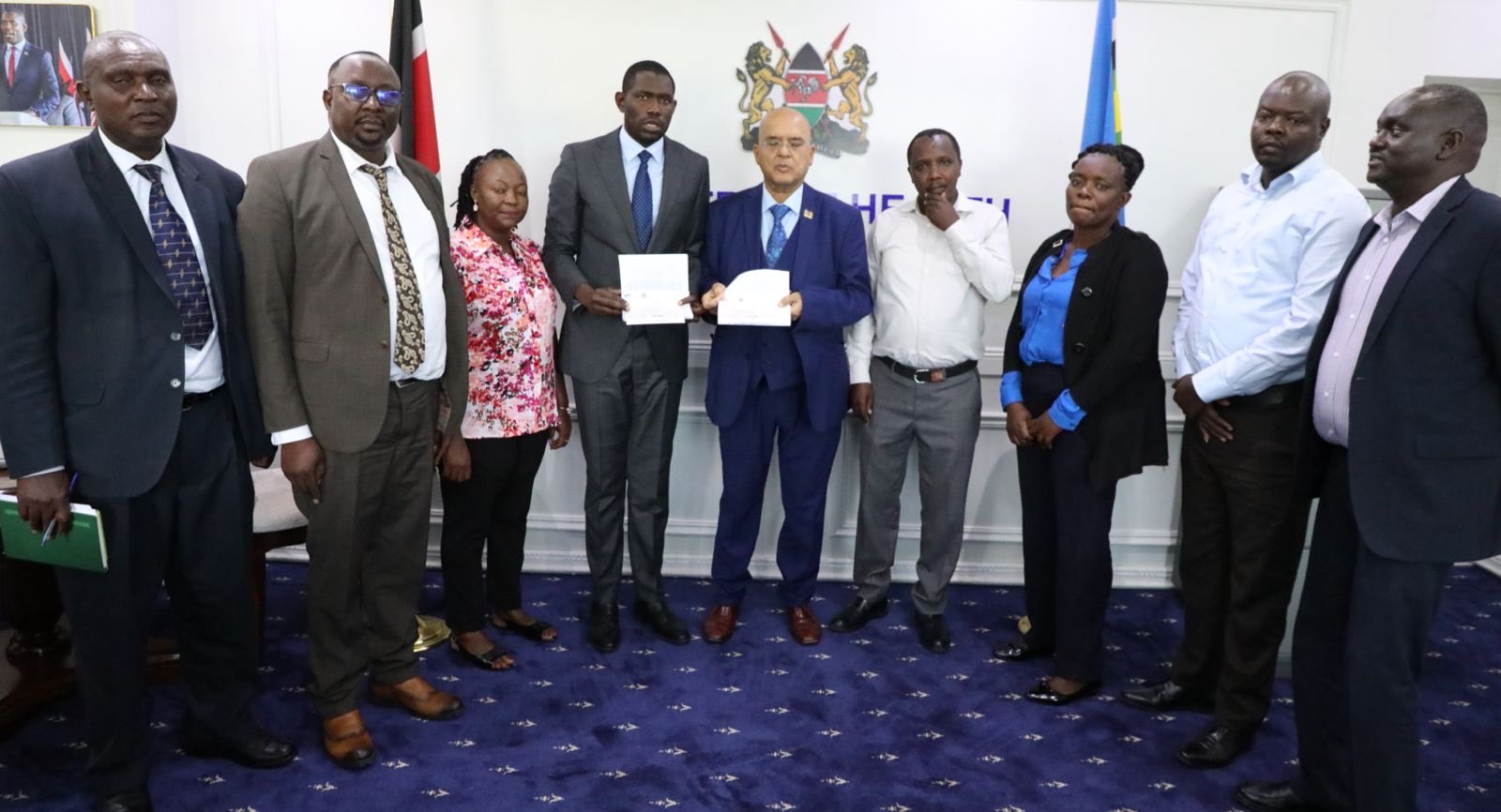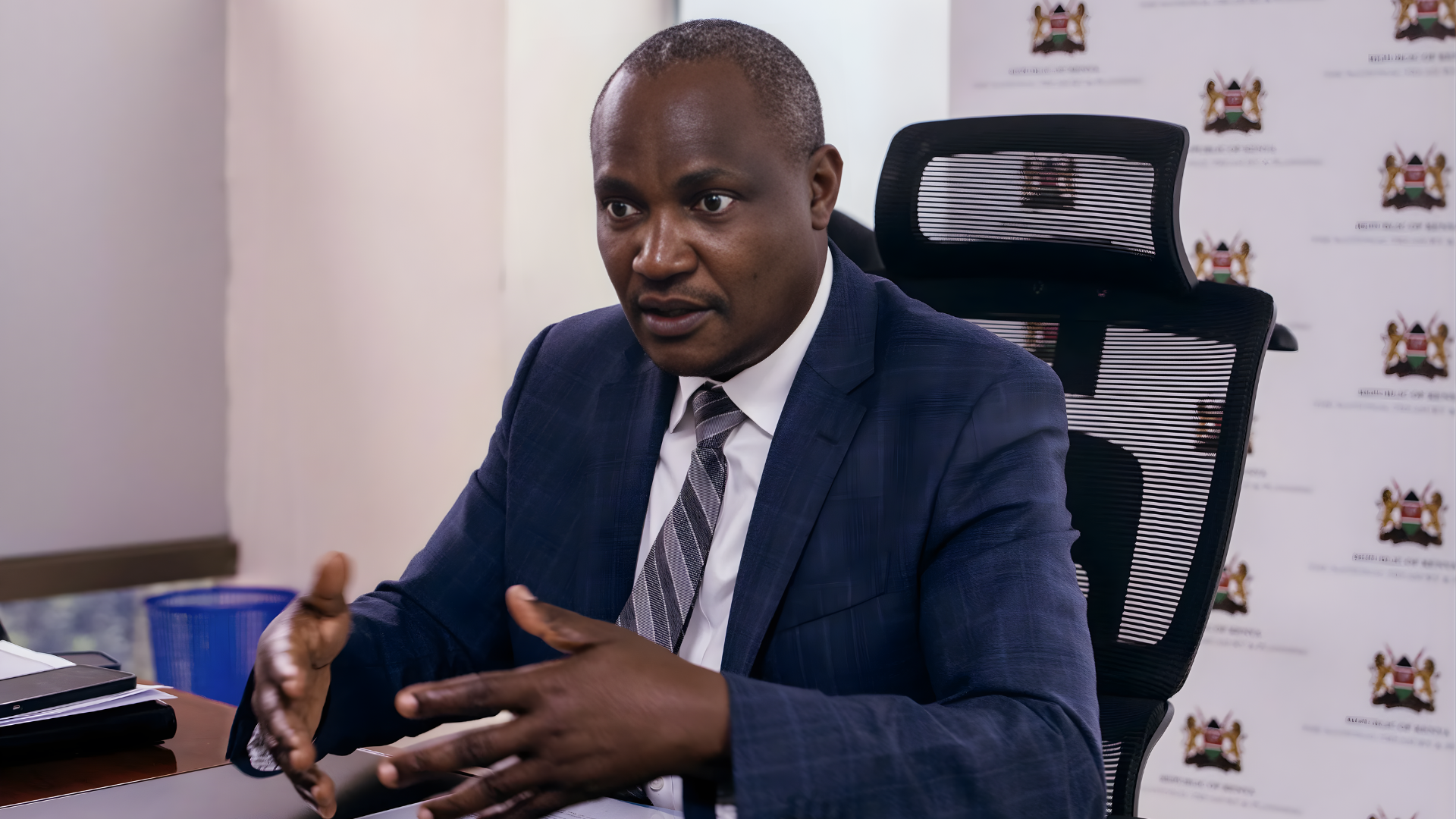
The cool evening breeze off Lake Victoria swept through the palm-lined compound of the late Jaramogi Oginga Odinga’s home in Bondo on the afternoon of November 17, 2025, carrying the scent of roasted tilapia and the murmur of elders gathered beneath a sprawling mango tree. Inside the modest sitting room where portraits of Kenya’s founding vice president and his son Raila Amolo Odinga hang side by side, National Treasury Cabinet Secretary John Mbadi sat flanked by a circle of Luo Council of Elders, youth leaders, and women representatives from across Nyanza. The mood was solemn yet expectant—this was not just another courtesy call; it was a quiet coronation of sorts. Mbadi, dressed in a simple navy suit and speaking in measured Dholuo interspersed with English, delivered a message that has reverberated from Kisumu’s Kondele roundabout to the fishing villages of Homa Bay: he is ready to lead the Luo community, but he will never claim to fill the shoes of Baba. “Raila Odinga is a giant whose shoes no one can fit—not me, not anyone,” Mbadi said, his voice steady but laced with reverence as he leaned forward, palms open in a gesture of humility. “Baba has carried this community for fifty years through fire and storm. My role is not to replace him but to build on the foundation he laid, with unity, consultation, and a laser focus on keeping Luos at the center of national decision-making.”
The gathering, convened at the invitation of the Luo Council of Elders chairman Ker Odungi Randa, marked Mbadi’s most explicit positioning yet as the community’s next political steward at a time when Raila Odinga, now 80, is immersed in his campaign for the African Union Commission chairmanship and has progressively delegated regional coordination to trusted lieutenants. Mbadi, the Suba South MP who rose from a tax consultant at PricewaterhouseCoopers to Treasury CS in President Ruto’s broad-based government, framed his leadership as evolutionary rather than revolutionary. “Leadership changes with time,” he continued, his eyes scanning the room where grey-haired elders nodded in approval and younger delegates recorded every word on their phones. “Baba’s era was about defiance and agitation—necessary for the season we were in. Our season now calls for stability, strategic engagement, and issue-based politics. We must protect our political relevance without tearing ourselves apart every five years.”
The remarks, delivered barely a month after Raila publicly endorsed Mbadi as “one of the sharpest minds in government” during a funds drive in Migori, have ignited a quiet but intense conversation across Nyanza about succession and unity. For decades, Luo politics has revolved around Raila’s magnetic personality—first as the enigma who walked out of detention to challenge Moi, then as the people’s president who commanded millions in 2007, 2013, 2017, and 2022. His absence from day-to-day regional coordination since joining Ruto’s government in 2024 has left a vacuum that has seen old rivalries resurface: James Orengo versus Peter Anyang’ Nyong’o in Kisumu Senate races, Opiyo Wandayi versus Millie Odhiambo in parliamentary speakership whispers, and a younger crop of leaders like Junet Mohamed and Oburu Oginga quietly maneuvering. Mbadi’s intervention seeks to bridge that gap. “I am not here to compete with anyone,” he emphasized, raising his voice slightly as some younger delegates shifted in their seats. “I am here to consult, to listen, to bring Orengo, Nyong’o, Wandayi, Junet, Oburu—everyone—around one table. A divided Luo nation is a defeated Luo nation.”
The elders, who have watched the community fracture after every election cycle since 2007, received the message with cautious optimism. Ker Odungi Randa, speaking after Mbadi, invoked the spirit of Jaramogi’s unity call in 1969. “Jaramogi said ‘not yet Uhuru’ because he saw division coming. Baba carried that torch. Now the torch is heavy, and Baba is looking to Addis Ababa. Mbadi has come with humility—we will walk with him if he walks with all of us,” the ker declared, his beaded flywhisk punctuating each word as the room erupted in applause. A youth representative from Kisumu, 28-year-old Caren Awuor, added: “We are tired of fighting each other every five years. Baba gave us handshake in 2018; now we need a handshake among ourselves. If Mbadi can deliver that, we follow.”
Mbadi’s vision, as outlined in Bondo and later echoed in a November 18 interview on Ramogi FM, rests on three pillars: protecting Luo political bargaining power within the Kenya Kwanza administration, delivering tangible development through his Treasury perch—already evident in the Sh3 billion Kisumu port allocation and Sh5 billion for the Kisumu-Kericho highway—and shifting from personality-driven to issue-driven politics. “We will no longer measure success by how loudly we shout in opposition,” he told the radio audience. “We will measure it by how many hospitals we build, how many youth we employ, how many of our children go to university on scholarships. That is the new Luo agenda.”
Yet the path is not without skeptics. In Homa Bay, Governor Gladys Wanga—seen by some as a parallel contender—welcomed Mbadi’s overture but reminded listeners that leadership must emerge organically. “Raila is still with us; let no one rush to inherit what is not yet vacant,” she said on November 19. In Siaya, Senator Oburu Oginga, Raila’s elder brother, praised Mbadi’s humility but stressed that “the community will choose its leader when Baba says the time has come.” Even in Suba South, Mbadi’s own constituency, some youth questioned whether a man who joined Ruto’s government could truly represent the community’s historical opposition ethos.
Mbadi, aware of the tightrope, has moved swiftly to consolidate. Within 48 hours of the Bondo meeting, he convened a follow-up in Kisumu with Orengo, Nyong’o, Wandayi, Junet, and Governor Anyang’ Nyong’o’s deputy Oduor Ong’wen, where a joint communiqué pledged “unconditional unity behind Raila’s AU bid and coordinated leadership at home.” He has also scheduled town halls in every Nyanza county before Christmas, promising to listen more than speak. “I am not Raila; I will never be Raila,” he reiterated in Kisumu, his voice softer now, almost confessional. “But I am ready to serve, to consult, to unite. If the community says yes, I will lead. If it says wait, I will wait. My ego is not bigger than our future.”
As the sun dipped behind Bondo’s rolling hills that November evening, elders poured libation under the mango tree, praying for wisdom for the son of Suba stepping forward. Across Nyanza, WhatsApp groups buzzed with the same question: is this the quiet transition the community has long needed, or the prelude to another season of contest? For now, Mbadi has staked his claim—not as Raila’s replacement, but as the steward of a new chapter where Luo unity is the priority and Raila’s legacy remains the north star.
Ker Randa’s flywhisk punctuated unity. Awuor’s handshake call resonated with youth. Wanga’s caution echoed in Homa Bay. Oburu’s timing reminder in Siaya. Kisumu communiqué pledged coordination. Mbadi’s town halls scheduled before Christmas. In Nyanza’s nuanced narrative, a transition tempers—humble, deliberate, where shoes remain unfilled but the path forward is paved with consultation, and the community coalesces.