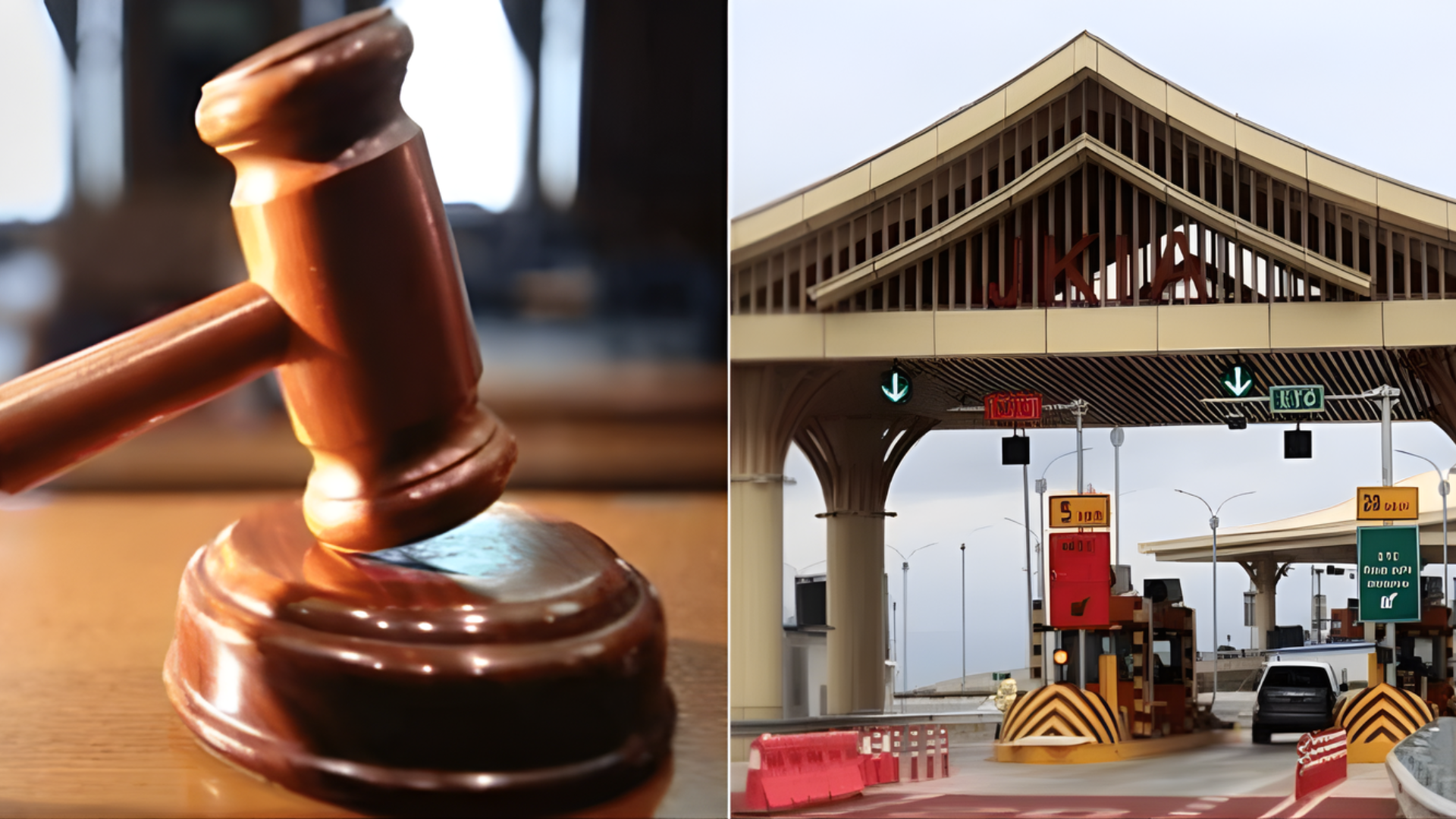
The sleek billboards lining the Nairobi Expressway, where smiling toll attendants in crisp blue uniforms wave at speeding motorists under the slogan “Your Journey, Our Pride,” have become an unmistakable part of the capital’s skyline since the road opened in 2023. Yet one of those smiling faces belonged to a woman who had not worked for Moja Expressway for over two years, and on the morning of November 20, 2025, the Court of Appeal in Nairobi delivered a landmark ruling that has forced the toll road operator to pay dearly for that oversight. In a unanimous decision by Justices Daniel Musinga, Patrick Kiage, and Agnes Murgor, the court dismissed Moja Expressway’s appeal and upheld a High Court judgment awarding Sh500,000 in damages to former customer service agent Caroline Wanjiku for the unauthorized use of her image long after she resigned in June 2023. “Consent to use an individual’s likeness in employment-related marketing is inherently tied to the subsistence of the employment relationship,” Justice Kiage read from the 38-page judgment, his voice echoing in the near-empty courtroom. “Once that relationship is terminated, whether by resignation or otherwise, the licence expires automatically unless expressly renewed in writing. To hold otherwise would be to sanction indefinite exploitation of a person’s personality rights.”
Caroline Wanjiku, now 32 and working as a cashier at a Naivas supermarket in Thika Road Mall, sat quietly in the public gallery clutching a worn folder of documents as the ruling was delivered. When journalists approached her outside the Milimani Law Courts, tears welled in her eyes. “They kept my face on those huge billboards from Westlands to Mlolongo for two and a half years after I left,” she said, her voice trembling with a mixture of relief and lingering anger. “Motorists would stop me on the street and say, ‘Aren’t you the lady from the expressway adverts?’ I felt violated every day. Today the court has told them my face is not their property.”
The saga began innocently enough in October 2022 when Moja Expressway, then preparing for the road’s grand opening, organised a photoshoot at the Syokimau toll station. Wanjiku, then a freshly hired customer service agent earning Sh28,000 monthly, was among twenty employees asked to pose in uniform. A simple consent form was circulated, authorising the company to use the images “for marketing and promotional purposes during the period of employment.” She signed without hesitation—everyone did. The photographs appeared everywhere: on giant LED billboards, in newspapers, on the company website, and even on the electronic display boards inside the toll plazas. When Wanjiku resigned in June 2023 to take up a better-paying job, she thought that would be the end of it. It was not. Her image remained the centrepiece of the “Your Journey, Our Pride” campaign well into 2025, even featuring prominently in a festive December 2024 campaign showing her smiling face illuminated by Christmas lights.
In January 2025, after repeatedly complaining to former colleagues and receiving no response, Wanjiku instructed lawyer Brian Matagaro to send a demand letter asking for the immediate removal of her image and compensation for continued use. Moja Expressway’s legal department replied that the consent form contained no expiry clause and therefore remained valid. That response triggered the lawsuit filed in March 2025 at the Milimani Commercial Court, where Justice Francis Tuiyott ruled in her favour in July, awarding Sh400,000 in general damages and Sh100,000 for violation of personality rights. The judge found the consent form’s wording “during the period of employment” unambiguous and ordered immediate takedown of all materials. Moja Expressway complied by removing the physical billboards but appealed, arguing that the contract’s silence on post-termination use implied perpetual licence.
The Court of Appeal demolished that argument in a judgment rich with references to the Constitution’s Article 31 on privacy and emerging jurisprudence on image rights. “Personality rights are not commodities to be traded indefinitely,” Justice Musinga wrote. “An employer cannot claim ownership of an employee’s likeness simply because a poorly drafted consent form failed to specify an end date. To do so would offend public policy.” The bench increased the damages to Sh500,000, citing the “prolonged and egregious” nature of the violation and the commercial benefit Moja Expressway derived from Wanjiku’s image during peak travel seasons.
Outside court, Wanjiku’s lawyer hailed the decision as a precedent for thousands of Kenyans whose images are used in corporate advertising. “This is bigger than Caroline,” Matagaro told journalists clustered around him. “Banks, telcos, supermarkets—every company that photographs employees for marketing must now seek fresh consent if they want to keep using those images after resignation or retrenchment.” Moja Expressway’s lead counsel, Fred Ngatia, declined to comment as he hurried to a waiting car, but the company later issued a brief statement expressing disappointment and promising to “review internal processes on image rights and consent documentation.”
For Wanjiku, the victory is bittersweet. The Sh500,000, minus legal fees, will help clear school fees arrears for her two children and perhaps fund a small business, but the emotional toll lingers. “Every time I drove on that road with my kids, they would point and say ‘Look, mummy is on the big TV!’ while I felt ashamed because I no longer worked there,” she recalled, wiping tears with the sleeve of her cream blouse. “I just wanted my face back. Today I finally have it.”
The ruling has already sent ripples through corporate Kenya. At a Nairobi advertising agency, creative director Mark Kamau admitted reviewing dozens of model release forms that afternoon. “Many of our clients use employee photos because they’re cheaper than hiring models,” he said over coffee. “This judgment means we now have to track down every former employee whose face is still on a billboard or risk lawsuits.” Across town at Moja Expressway’s headquarters in Upper Hill, staff were reportedly scrambling to audit all marketing materials featuring current and former employees.
As dusk settled over the city and the expressway lights flickered on, one billboard near the Museum Hill interchange stood conspicuously dark for the first time in years—the space where Caroline Wanjiku’s smile once greeted a million commuters now blank, awaiting a new face whose consent will hopefully be clearer, and finite.
The photoshoot consent: “during the period of employment.” Resignation: June 2023. Demand letter: January 2025. High Court award: Sh500,000 July 2025. Appeal dismissed: November 20, 2025. Billboards removed: August 2025. Matagaro’s precedent: thousands affected. Ngatia’s silence: hurried exit. Kamau’s review: dozens of forms. Wanjiku’s children: “Look, mummy!” In Kenya’s evolving image economy, the appeal ends—a face freed where rights reclaim recognition, and consent concludes corporate claim.