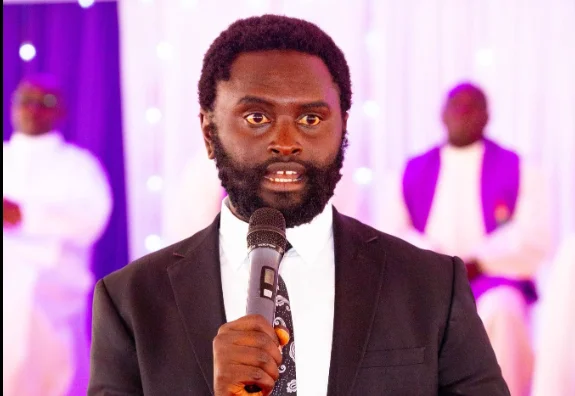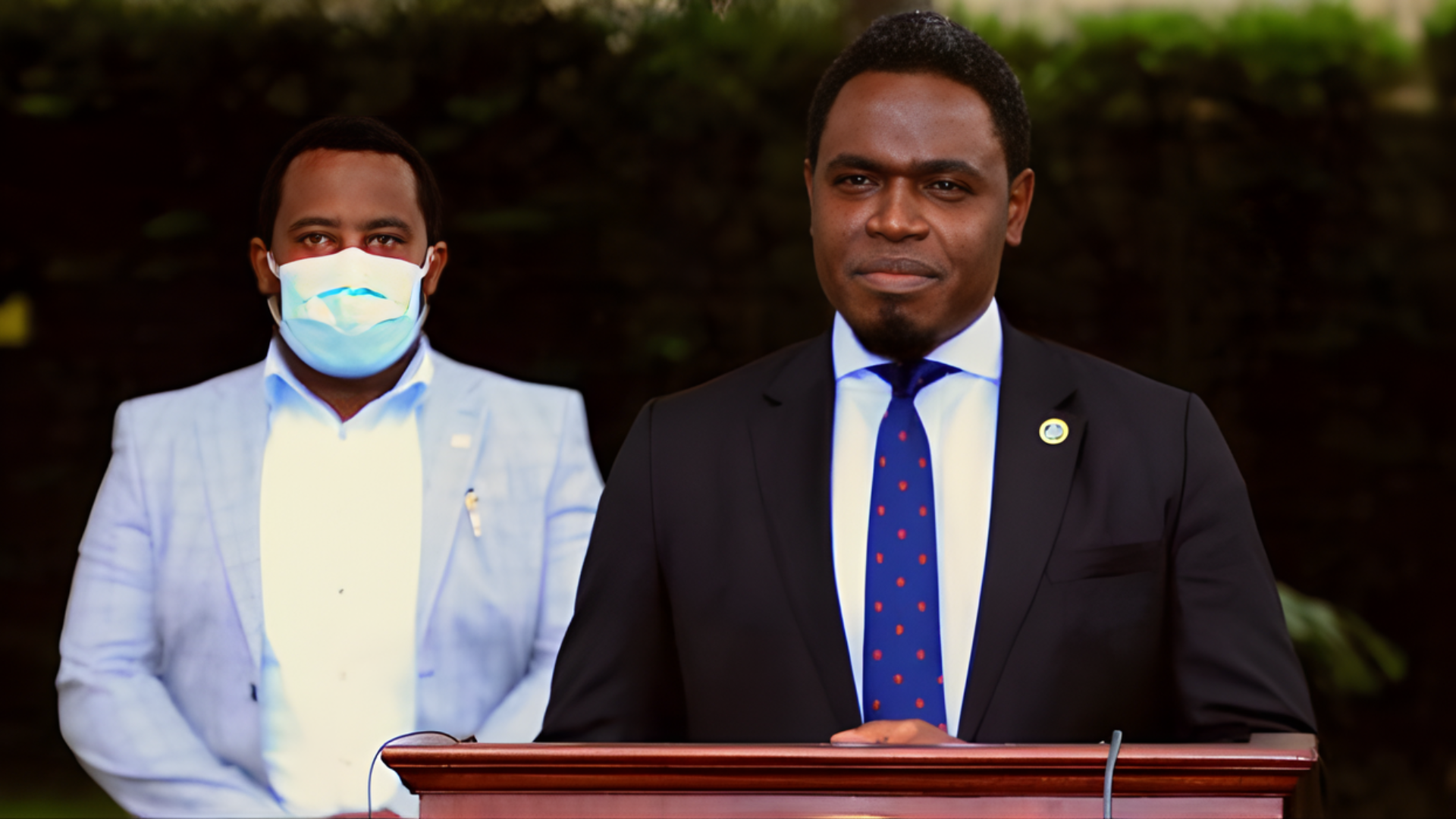
The polished corridors of Nairobi's political salons, where alliances shift like shadows at dusk and ambitions simmer in whispered cabals, witnessed another seismic pivot on November 7, 2025, as Nelson Havi, the erstwhile firebrand president of the Law Society of Kenya whose barbs had once scorched the corridors of power, formally severed ties with the ruling United Democratic Alliance. In a letter stamped with the indelible mark of UDA's headquarters at the Weston Hotel, the 48-year-old lawyer—whose journey from constitutional crusader to party loyalist had been as meteoric as it was meandering—tendered his resignation, effective immediately under Section 14 of the Political Parties Act. The missive, a crisp single-page affair addressed to UDA Secretary General Hassan Omar and copied to the Registrar of Political Parties, framed the departure not as disillusionment but as democratic deference: a response to the insistent chorus of Westlands constituents urging him to reclaim his roots in the Orange Democratic Movement, the party that had cradled his early activism before he ventured into the ruling fold. "The people of Westlands have put only one condition to me—they have asked that I resign from UDA and join ODM," Havi stated in a terse announcement posted to his X account shortly after the letter's dispatch, his words a clarion that set Nairobi's rumor mills ablaze. "I have been in ODM before. My departure was necessitated by the need then to challenge the dismemberment of the Constitution through the BBI initiative. Today, I heed the sovereign will of the people."
Havi's exit, formalized amid the midday bustle of the city center where matatus honk like impatient suitors and pedestrians weave through the throng of hawkers peddling knockoff watches, marks the denouement of a three-year dalliance with UDA that had begun as a calculated gamble and ended as a poignant reversal. Elected LSK president in 2018 on a platform of radical reform—vowing to "dismantle the capture of the legal profession by the executive"—Havi had emerged as a thorn in the side of the Uhuru-Ruto administration, his tweets a torrent of invective against the Building Bridges Initiative, which he branded a "constitutional coup disguised as reconciliation." His 2021 defection to UDA, announced at Deputy President William Ruto's Karen residence amid a gathering of Rift Valley barons and Nairobi hustlers, was a masterstroke of realignment: a bid for the Westlands parliamentary seat in 2022, where the cosmopolitan enclave's mix of high-rise condos, expatriate enclaves, and informal settlements promised a fertile ground for his anti-establishment gospel. "I join UDA not as a convert, but as a challenger—to build a party that serves the people, not the palaces," Havi had proclaimed that day, his bowtie askew under the Karen sun as Ruto clasped his shoulder in a photo-op that splashed across front pages. Yet, the gamble faltered: Havi garnered 38 percent of the vote, edged out by incumbent Timothy Wanyonyi of ODM, whose incumbency and grassroots machinery proved unassailable in a race that pitted Nairobi's urban vanguard against Nyanza's enduring loyalties.
Westlands, with its 120,000 voters—a kaleidoscope of young professionals in sleek apartments overlooking the UN compound, matatu touts hustling along Waiyaki Way, and Kibera's spillover of dreamers chasing nine-to-five escapes—has long been a bellwether for Kenya's political crosswinds, its eclectic demographics defying ethnic silos in favor of ideological tides. Havi's 2022 loss, though galling, had not dimmed his star; instead, it amplified his voice as a UDA gadfly, his op-eds in the Standard lacerating party orthodoxy on everything from the Finance Bill's tax hikes—"a betrayal of the hustler's promise"—to the handling of Gen Z protests that scorched Parliament in June 2024. Whispers of his restlessness had bubbled since Raila Odinga's October 2025 passing, a seismic void that reshuffled ODM's deck and opened doors for figures like Havi, whose early dalliance with the party in the 2000s had seen him clerk for Jaramogi's legal team during the 1990s multiparty agitations. "Westlands isn't tribal; it's transitional—people want leaders who bridge, not burn," Havi had confided to allies during a September 2025 baraza at the French Embassy's shadow, where he rallied 500 youths on constitutional reforms. "UDA offered a platform; ODM, my provenance. The people have spoken—it's time to return home."
The appeal's timing, sharp as a barrister's brief, aligns with seismic shifts in Westlands' political firmament. Incumbent MP Timothy Wanyonyi, a 52-year-old ODM stalwart whose 2022 victory had hinged on 52 percent of the vote amid a bruising contest with Havi, has signaled his exit from the seat to pursue the Bungoma gubernatorial race in 2027—a high-stakes bid to unseat incumbent Wycliffe Wafula Chemutai amid a crowded field of 12 aspirants. Wanyonyi, a soft-spoken advocate whose tenure has focused on housing cooperatives and youth skilling hubs in the constituency's satellite slums like Laini Saba, confirmed his ambitions in a low-key announcement at a Bungoma harambee on October 28, drawing cheers from Bukusu elders who see in him a bridge to Nyanza's influence. "Westlands has been my classroom; Bungoma, my calling—I've served faithfully, now I seek to serve deeper," Wanyonyi stated then, his words a gentle farewell that left the seat—a perennial ODM fortress with 65 percent support in 2022—ripe for reclamation. Havi's move, framed as "heeding the sovereign will," taps into that vacuum: his 2022 near-miss, where he polled 42,000 votes to Wanyonyi's 48,000, had resonated with the constituency's 40 percent youth demographic, many disillusioned with ODM's post-Raila drift toward broad-based coalitions with UDA.
Havi's letter, a model of legal brevity penned on his firm's letterhead from Advocates Chambers in the city center, cited the public's mandate as the catalyst: "The constituents of Westlands, through various platforms including town halls and social media petitions, have unequivocally expressed their desire for me to contest the 2027 general elections under the ODM banner," it read, timestamped at 10:15 a.m. on November 7 and acknowledged by UDA's Omar within the hour. The registrar, under the Act's seven-day notification clause, will excise Havi from UDA's rolls by November 14, clearing his path to ODM's fold—a party still navigating the aftershocks of Odinga's demise, with interim leadership under Oburu Oginga and factional tugs between Raila loyalists and reformists eyeing a post-Africa Union reinvention. "ODM is homecoming—it's where I cut my teeth on justice, from Saba Saba to the 2010 referendum," Havi elaborated in a follow-up X thread, his posts garnering 2,500 likes within hours from a mix of LSK alumni and Westlands millennials who had backed his 2022 insurgency. "UDA was a detour for accountability; now, the people reroute me back."
The maneuver injects fresh volatility into Westlands' 2027 calculus, a constituency where ethnic arithmetic yields to aspirational alliances: 30 percent Kikuyu, 20 percent Luo, 15 percent Luhya, and a polyglot 35 percent blending Somali traders, Goan merchants, and expatriate enclaves in Gigiri's shadow. Wanyonyi's departure opens a tripartite fray: Havi's ODM bid, likely unopposed in primaries given his 2022 near-win, pits him against UDA's probable nominee—speculation swirls around Nairobi Woman Rep Esther Passaris or deputy governor candidate Salim Mvurya—and any Azimio wildcards from DAP-K. "Westlands is a mirror of Kenya—diverse, demanding, done with dynasties," observed political analyst Dr. Kariuki Muigua at a November 7 panel on KTN, his charts projecting Havi's 55 percent edge in a fragmented field. "His UDA stint gave him cross-aisle cred; ODM returns him to base with ballast." Havi's platform, previewed in a manifesto teaser at a LSK alumni dinner on November 5, centers on "legal equity": free clinics for tenants in Milimani's high-rises, anti-eviction buffers for Kibera's artisans, and blockchain land registries to tame the constituency's Sh200 billion real estate vortex.
Yet, the switch stirs undercurrents of intrigue in a political landscape still raw from Raila Odinga's October passing and the ensuing ODM realignment. Havi's 2021 UDA leap, amid the BBI's constitutional skirmishes, had branded him a "handshake apostate" in ODM circles, his critiques of the 2022 Azimio coalition—"a marriage of convenience, not conviction"—earning barbs from Raila lieutenants like Edwin Sifuna. "Havi's flip-flops forecast fractures—UDA yesterday, ODM tomorrow; what's the principle?" Sifuna had quipped in a 2023 X spat, his words a scar that lingers amid ODM's post-Raila flux, where Wanga's chairmanship navigates Oburu's interim grip and youth pushes for a Sifuna-led reboot. Havi's return, if greenlit at ODM's November 15 NEC meeting, could mend fences: his LSK legacy—overseeing the 2020 police reforms post-George Floyd echoes—aligns with ODM's justice ethos, while his Westlands war chest, Sh50 million from legal retainers and diaspora fundraisers, bolsters the party's urban coffers. "ODM needs Nelson's fire—Westlands is our Nairobi beachhead; he reclaims it," enthused Siaya Senator James Orengo in a private call to Havi on November 7, his mentorship a nod to their shared 1990s bar days.
Westlands' grapevine, from Gigiri's cocktail lounges to Mathare's mechanic shops, buzzes with the implications. Wanyonyi's gubernatorial pivot, announced amid Bungoma's tea belts where he polls 45 percent against Chemutai's 35 percent per 2025 surveys, leaves a void his party had eyed for a Nyanza-Rift fusion candidate. "Tim's exit is my entrance—Westlands wants a fighter, not a fence-sitter," Havi confided to allies over nyama choma at Carnivore on November 7, his laughter a release from the letter's weight. Potential UDA rivals sharpen: Passaris, the outspoken woman rep whose 2022 tally of 52,000 votes edged Havi by 10,000, eyes a rematch with "urban feminism vs. legal bravado." Mvurya, the deputy governor hopeful, scouts the seat as a stepping stone, his coastal networks promising Luhya consolidation. "Havi's ODM hop is a homecoming horror—Westlands rejects Raila's relics," Mvurya tweeted, his barb igniting a thread of 1,200 replies blending memes of Havi's bowties with Westlands skyline renders.
For Havi, the resignation is redemption's arc: from LSK's 2018 election—where he trounced rival Erick Theuri amid cries of "Havi for President"—to UDA's 2022 drubbing, his voice had echoed in op-eds decrying the "hustler's paradox": a government of the poor taxing the poor. His 2023 X tirades against the Finance Bill—"a fiscal guillotine on the neck of the vulnerable"—had aligned him with Gen Z's fury, earning 100,000 followers and a 2024 LSK lifetime honor. "UDA was a test; ODM, the testament—Westlands demands I run true," Havi reflected in a Nation interview on November 7, his gaze on the cityscape from his 14th-floor office where case files stack like unfinished symphonies. The move, he claims, fulfills a 2022 pledge: "If the people call, I answer—no party trumps principle."
As November's chill nips the city, Westlands' political pot simmers: Havi's ODM nod, likely by November 20, sets a 2027 primary sprint where his 38 percent base swells with anti-incumbency winds. Passaris, rallying women at a Karura Forest walk, counters: "Westlands wants builders, not bowties—my record speaks volumes." Mvurya, in Mombasa meet-and-greets, scouts alliances: "Havi's flip is UDA's fuel— we'll outrun the opportunist." For the constituency's youth—40 percent under 25, 25 percent unemployed—the race resonates as referendum: Havi's legal lance against Passaris's advocacy or Mvurya's infrastructure pitch. "Nelson speaks our language—justice for the squeezed," enthused 22-year-old barista Lily Wangui at a Westlands cafe, her apron dusted with coffee grounds from a shift serving Gigiri envoys.
In Kenya's kaleidoscopic kaleidoscope, where parties pivot like weather vanes in the wind, Havi's resignation endures as emblem: a lawyer's ledger balanced, a politician's path rerouted. From UDA's ascent to ODM's embrace, his move mirrors the republic's restless reinvention—Westlands as arena, 2027 as horizon. As the registrar's stamp dries on his exit, Havi eyes the dawn: "The people called; I answer. Let the race begin."