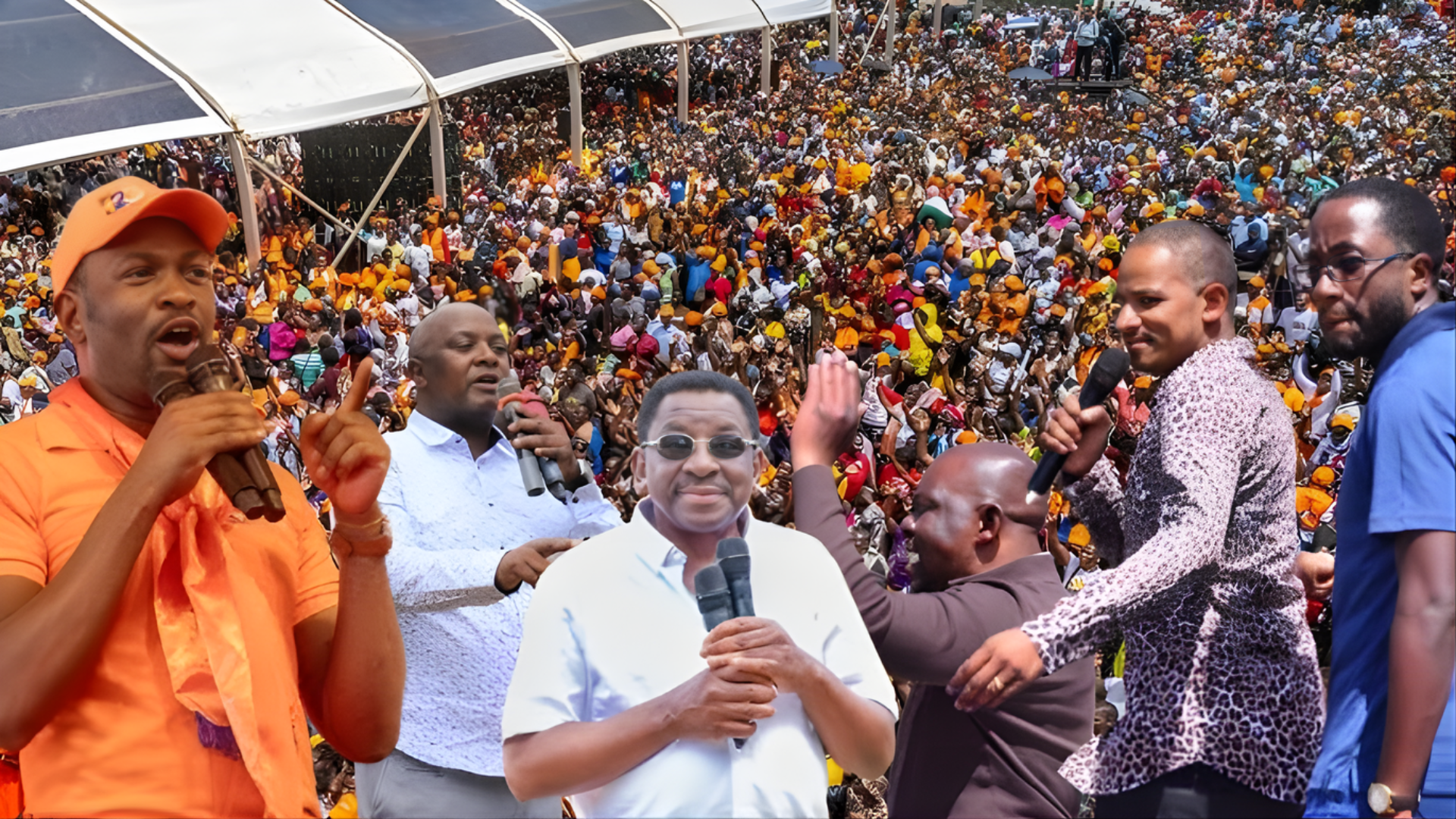
ODM’s hardline faction launched the ‘Linda Mwananchi’ nationwide mobilisation tour at Busia Stadium on Sunday, December 21, 2025, with Secretary-General Edwin Sifuna, Siaya Senator James Orengo and Embakasi East MP Babu Owino leading thousands of supporters in a firm rejection of any merger or cooperation with President William Ruto’s United Democratic Alliance.
The event marked the official start of a series of grassroots rallies aimed at confronting high taxes, corruption, police brutality and economic hardship that have intensified since the death of party founder Raila Odinga in October 2025. Organisers described the turnout as organic and overwhelming, with supporters streaming in from Ugunja in Siaya County and neighbouring districts in Busia, Bungoma and Trans Nzoia.
Sifuna, addressing the crowd under a sea of orange flags, said the tour was born out of necessity to reclaim ODM’s founding principles. “Baba left us a legacy of fighting for the ordinary mwananchi,” Sifuna declared. “Today we begin the journey to defend that legacy against high taxes that crush families, corruption that steals from the poor, and police crackdowns that silence the voice of the people. Linda Mwananchi is not just a tour; it is a national awakening.”
Senator James Orengo delivered one of the most forceful speeches of the day, directly addressing the speculation about a merger with UDA. “Let me be clear: ODM will never merge with UDA,” Orengo said to thunderous applause. “There will be no handshake, no coalition, no power-sharing deal with those who have inflicted pain on our people. Raila Odinga stood for justice and equity. We will not betray that stand.”
Embakasi East MP Babu Owino went further, warning party elders against any secret talks with the government. “Some elders may be tempted by offers of positions and money,” Owino said. “We are watching. If you sit at the table with Ruto, know that the youth of this country will not forgive you. Linda Mwananchi is about the people, not about personal deals.”
The Busia rally drew an estimated 25,000 supporters, many of whom arrived on foot, motorbikes and matatus from as far as Ugunja, Siaya and Mumias. The crowd’s energy was palpable, with chants of “Baba’s spirit lives” and “No merger” echoing throughout the stadium.
Speakers also criticised the high cost of living, pointing to taxes on fuel, VAT on essentials and the burden of the Social Health Authority levy. “Kenyans are taxed to death while the elite live in luxury,” Sifuna said. “We will not accept a government that punishes the poor and rewards the corrupt.”
The tour is expected to move next to Kakamega, Vihiga, Kisumu and Homa Bay before heading to the Rift Valley and Nairobi. Organisers say the rallies will remain peaceful but firm, focusing on accountability, constitutionalism and economic justice.
The launch comes nearly a year after Raila Odinga’s death in October 2025 and amid growing speculation about ODM’s future direction. The March 2025 Memorandum of Understanding between ODM and Kenya Kwanza, initially seen as a bridge to unity, is set to expire in March 2026, and the hardline faction has made it clear it opposes any extension or merger.
Political analyst Dr Martin Ouma described the tour as a clear signal of internal realignment. “Sifuna, Orengo and Owino represent the conscience of ODM,” Ouma said. “They are drawing a line in the sand against any compromise with the government. This could split the party or force a return to opposition politics ahead of 2027.”
ODM Chairperson John Mbadi has not directly commented on the tour but has previously urged unity. “We must remain focused on the bigger picture,” Mbadi said in a recent statement. “Discipline and collective decision-making will guide us.”
UDA Secretary General Hassan Omar dismissed the rallies as noise. “ODM is fighting itself,” Omar said. “While they hold rallies, Kenya Kwanza is delivering development. The people will choose results over rhetoric in 2027.”
As the ‘Linda Mwananchi’ tour gains momentum, it highlights the deep divisions within ODM and the struggle to define the party’s identity in the post-Raila era. With the 2027 elections less than two years away, the coming months will likely see intensified debate over direction, alliances and leadership.