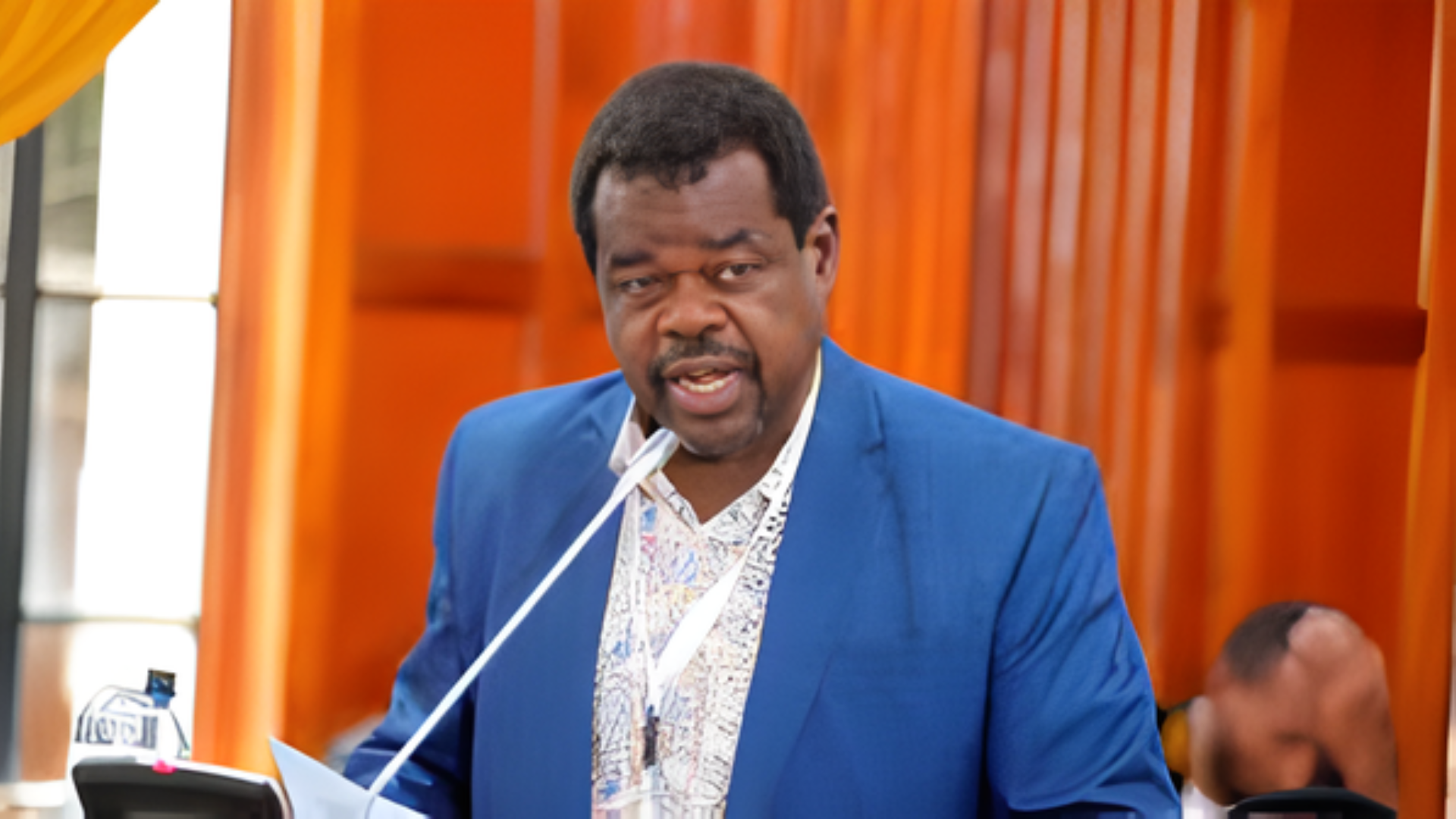
Busia Senator Okiya Omtatah Okoiti, a longstanding advocate for electoral reforms, has escalated his fight against what he describes as systemic flaws in Kenya's presidential election process by filing a constitutional petition at the Milimani High Court in Nairobi. The petition, registered as Constitutional Petition No. E757 of 2025 and dated November 23, 2025, targets the National Tallying Centre operated by the Independent Electoral and Boundaries Commission at the Bomas of Kenya, seeking its outright abolition for presidential elections.
Omtatah's legal challenge comes at a time when the IEBC is in the midst of reconstituting its commissioner lineup ahead of the 2027 General Elections, with public scrutiny intensifying over past irregularities. The senator argues that the centre's role in verifying and collating results contravenes Articles 86 and 138 of the 2010 Constitution, which stipulate that votes for the presidency must be tallied, verified, and declared final at the constituency level by returning officers. He contends that subsequent layers of verification at the county and national levels, as enshrined in Section 39 of the Elections Act of 2011 and Regulation 83(2) of the Elections Regulations, create unnecessary redundancy and vulnerability to interference.
In the petition, Omtatah names the IEBC, its Chairperson Erastus Ethekon, the Attorney General, the National Assembly, and the Senate as respondents. He accuses them of perpetuating an unconstitutional framework that treats constituency-declared results as provisional, thereby eroding public trust in the electoral system. The suit further highlights how the centralized process limits access to information under Article 35 of the Constitution, as many Kenyans, particularly in rural and underserved areas, cannot reliably access the IEBC's online portal for real-time updates.
"This petition is part of my continued commitment to defend the rule of law, protect the sovereign will of the people, and secure free, fair, and credible elections," Omtatah stated in a post on his X account on November 24, 2025, shortly after filing the case. He elaborated that the national tallying centre has historically facilitated malpractices, including delays in result announcements, manipulation of figures, and undue influence from unelected actors, drawing parallels to the contentious 2017 and 2022 presidential polls.
Omtatah's arguments are rooted in the constitutional principle that sovereignty resides with the people, exercised through direct vote at polling stations. He asserts that once results are declared at the 290 constituencies—complete with Form 34A submissions—the IEBC's role should be limited to aggregating these figures without re-verification. "The Constitution gives final authority to the 290 constituencies," Omtatah emphasized in the petition, warning that the current setup invites the kind of "Bomas drama" witnessed in previous elections, where disputes over result transmission and verification led to Supreme Court interventions.
The petition seeks several specific remedies from the High Court. Primarily, it requests a declaration that the National Tallying Centre, in its current form, is unconstitutional for presidential elections and must be dismantled. This would entail striking down provisions that empower county returning officers and the IEBC Chairperson to conduct additional verifications. Omtatah also wants an order mandating the immediate public posting of final constituency results at each tallying centre, beyond mere digital uploads, to enhance accessibility and accountability.
Furthermore, the suit calls for the revocation of powers allowing the IEBC to treat constituency results as non-final, reaffirming that such declarations are binding. If successful, these changes would compel the IEBC to restructure its operational framework well before the 2027 polls, potentially eliminating the high-stakes drama at the Bomas and decentralizing the process to prevent bottlenecks.
Legal experts have noted that Omtatah's petition echoes ongoing debates about electoral integrity in Kenya. Just days earlier, on November 19, 2025, a consortium of opposition leaders under the United Opposition Coalition filed a similar suit through advocates Gitobu Imanyara and Company, challenging the centralized handling of presidential results. Their petition demands mandatory ballot reconciliation before electronic transmission, gazettement of all polling stations six months in advance, and publication of a complete voter register three months before elections. It also insists that the national centre has no authority to re-tally, alter, or invalidate constituency figures.
Omtatah's case builds on this momentum, positioning itself as a preemptive strike against potential flaws in the upcoming cycle. During a brief interaction with journalists outside the High Court on the morning of November 24, Omtatah addressed concerns about the timing of his petition. "We cannot wait for another election night chaos to act. The 2022 polls showed us the dangers of centralized control—figures that didn't add up, servers allegedly infiltrated, and results that took days to clarify. This is about preventing history from repeating itself," he said, referencing the Supreme Court's scrutiny of the 2022 presidential election where mathematical inconsistencies were highlighted.
The IEBC, still navigating its transition under interim Chairperson Erastus Ethekon following the resignation of Wafula Chebukati in 2022, has yet to file a formal response to the petition. However, in a statement issued on November 20, 2025, IEBC spokesperson Joyce Chege defended the tallying centre's role. "The National Tallying Centre ensures comprehensive verification and collation as per the law, promoting transparency through live streaming and public access. Any changes must align with constitutional safeguards," Chege remarked, underscoring the commission's commitment to reforms amid the selection of new commissioners.
Parliamentary reactions have been swift and divided. Majority Leader Kimani Ichung'wah, speaking in the National Assembly on November 24, dismissed the petition as "opposition grandstanding." "Senator Omtatah is at it again, challenging every process that doesn't suit his narrative. The Elections Act has been tested in courts multiple times; this is just another delay tactic ahead of 2027," Ichung'wah stated, urging the judiciary to expedite hearings to avoid derailing preparations.
In contrast, minority leader Opiyo Wandayi welcomed the move, calling it a "necessary safeguard." During a press briefing at Orange House on the same day, Wandayi said, "Omtatah is right—the tallying centre has been a black box for too long. We've seen results manipulated in the shadows of Bomas. Decentralizing verification will restore faith in our democracy." Wandayi, whose Azimio la Umoja coalition has been vocal on electoral reforms, hinted at potential support for legislative amendments if the court rules in Omtatah's favor.
Civil society organizations have also weighed in, amplifying the petition's significance. The Katiba Institute, a key player in past electoral litigation, issued a statement on November 23 endorsing the challenge. Executive Director Dennis Shirima noted, "This petition aligns with our long-standing advocacy for constituency-level finality, as affirmed in Supreme Court precedents like the 2017 Raila Odinga case. Centralization breeds opacity; transparency starts at the grassroots." Shirima referenced Article 138(10) of the Constitution, which vests the declaration of presidential results in the IEBC but within the bounds of verified constituency tallies.
The timing of Omtatah's filing is particularly poignant, coinciding with the IEBC's ongoing recruitment drive for a new seven-member commission, expected to be finalized by early 2026. The senator has previously criticized the selection panel's operations, filing a separate suit in March 2025 to halt its activities over procedural lapses, including the Senate's alleged failure to pass amendments to the IEBC Act. That case remains pending, adding layers to the broader reform narrative.
Omtatah's track record in electoral matters lends weight to his latest endeavor. In 2022, he petitioned the Supreme Court to nullify the presidential results, arguing that IEBC figures were "cooked" through backward calculations to favor certain outcomes. Presenting mathematical analyses, he highlighted discrepancies in voter turnout percentages and Form 34A submissions, claiming over 1.6 million votes were streamed post-polling closure. Though the court upheld William Ruto's victory, it acknowledged irregularities, ordering reforms that partially informed the current discourse.
Earlier, in 2017, Omtatah was among petitioners challenging the fresh presidential election, focusing on transmission protocols and the role of returning officers. His involvement in the 2020 consolidated petitions against the Election Laws Amendment Act further solidified his reputation as a bulwark against perceived erosions of electoral integrity. In that case, alongside Katiba Institute and Africog, he successfully argued for the unconstitutionality of provisions reducing IEBC quorum and altering decision-making thresholds.
Analysts predict the High Court will prioritize Omtatah's petition given its implications for 2027. Constitutional lawyer Steve Ogola, speaking to reporters on November 24, observed, "This isn't just about abolishing a venue; it's about redefining power in elections. If the court agrees, it could mandate physical posting of results, biometric safeguards, and stricter timelines—transforming how Kenyans experience voting day." Ogola pointed to the 2017 Supreme Court ruling annulling Uhuru Kenyatta's win, which emphasized the finality of Forms 34A, as a potential precedent.
Public response has been polarized yet engaged. On social media platforms, #AbolishTallyingCentre trended briefly on November 24, with users sharing memes of the Bomas venue juxtaposed against chaotic election nights. A teacher from Kisumu, posting under the handle @LakeVibesKE, wrote, "Finally, someone saying what we've all known: Bomas is where magic happens, not math. Omtatah for president!" Conversely, supporters of the status quo, including some Kenya Kwanza affiliates, accused the senator of undermining institutions.
In Busia County, Omtatah's home turf, constituents gathered at his Malaba office on November 24 to voice support. One local elder, Mary Achieng, told a local radio station, "Our son is fighting for all of us. In 2022, we waited days for results that changed by the hour. No more—let the constituencies speak, and let that be the end." Achieng's sentiment reflects a broader rural frustration with urban-centric processes that often delay outcomes in remote areas.
As the petition awaits assignment to a bench, probably before Justice Chacha Mwita or a constitutional division panel, stakeholders are bracing for ramifications. The IEBC has scheduled public participation on proposed regulations in December 2025, which could intersect with court directives. Opposition figures like Kalonzo Musyoka have signaled interest in joining as amici curiae, while the National Treasury monitors potential costs of overhauling verification systems.
Omtatah's unyielding pursuit of this cause underscores a deeper quest for a resilient democracy. In a nation where elections have twice triggered Supreme Court nullifications—first in 2017 under Chief Justice David Maraga, then partial validations in 2022 under Chief Justice Martha Koome—the petition arrives as a clarion call for prophylaxis over cure. By challenging the tallying centre's legality, Omtatah isn't merely litigating a venue; he's advocating for a system where the people's voice, captured at the polling booth, echoes unadulterated to the presidency.
The High Court's ruling, expected within months given the urgency flagged in the filing, could redefine electoral architecture, ensuring that 2027 unfolds not in the glare of Bomas spotlights, but in the quiet certainty of 290 constituency declarations. For now, as affidavits are prepared and respondents notified, Kenya watches—hoping this petition bridges the chasm between constitutional intent and electoral reality.