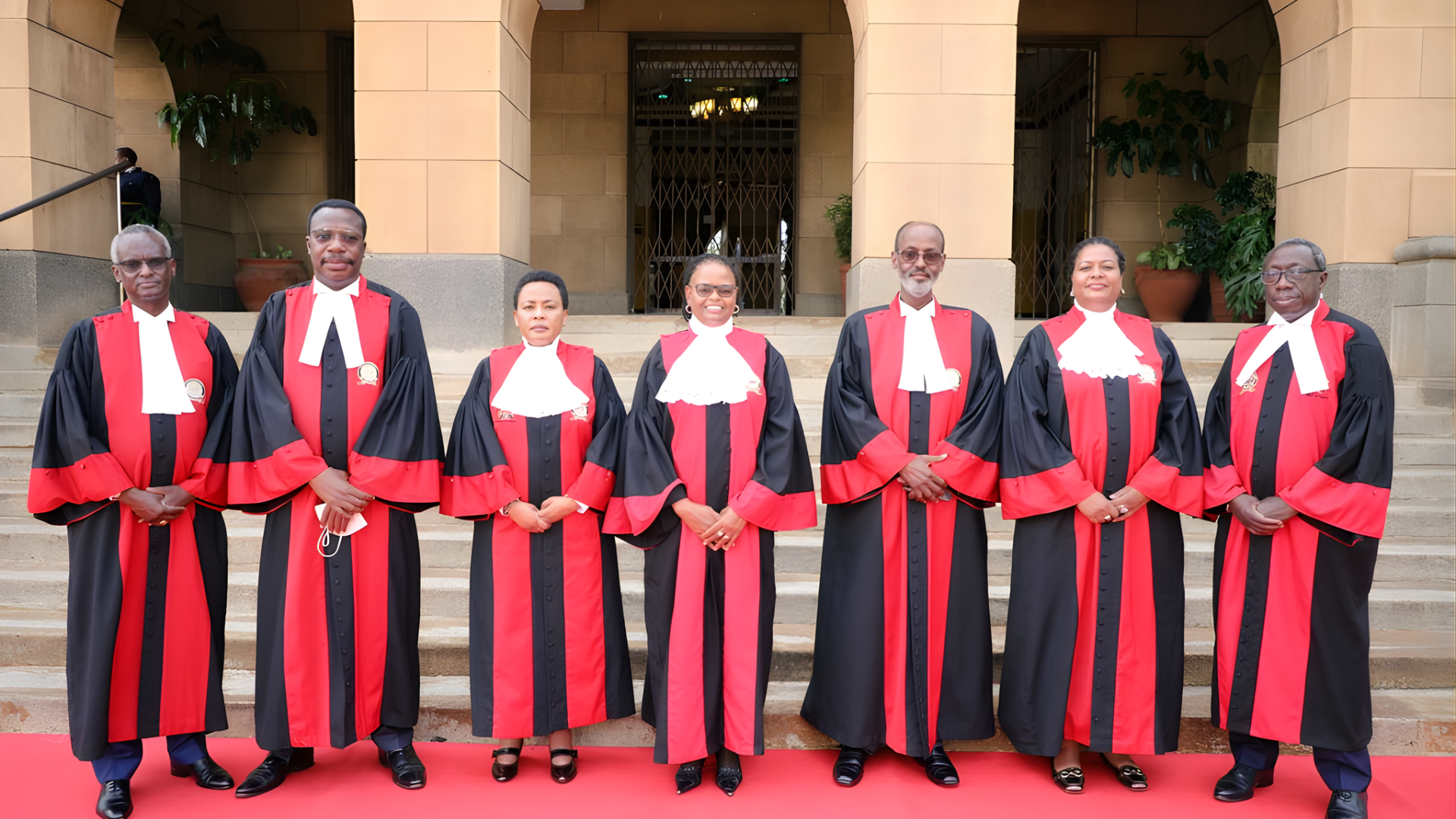
The notice was only two paragraphs long, typed in the usual restrained language of the Judiciary, yet it landed like a small thunderclap in every law firm along Ngong Road and in the corridors of Milimani Law Courts. On the afternoon of November 24, 2025, the Registrar of the Supreme Court quietly uploaded a practice direction announcing that both the Supreme Court and the Court of Appeal would proceed on annual Christmas recess from December 21, returning to full operations on January 19, 2026.
During the month-long break, only urgent applications—those involving life, liberty, or matters of overwhelming public interest—would be entertained by duty judges working on rotation. Everything else, from multi-billion commercial appeals to the remaining 2022 election petitions still crawling through the system, would simply wait.
In a cramped office on the fifth floor of a building opposite the Milimani commercial courts, senior counsel Paul Muite read the notice aloud to his juniors, then let the printed copy fall onto the desk.
“Four weeks,” he said, rubbing the bridge of his nose. “Four weeks where nothing moves unless someone is about to be hanged or the country is literally on fire.”
One of the associates, a young woman named Wanjiku who had been waiting for a date in an appeal touching on a Sh17 billion sugar importation case, groaned audibly. “My client has been asking me every day when the Court of Appeal will hear us. What do I tell him now? That the judges are buying Christmas trees?”
Muite laughed, but it was the tired laugh of a man who has seen too many recesses. “Tell him the truth. Tell him the judges are also human. They have grandchildren who want to see them without black robes and red sashes.”
Across town at the Supreme Court building on City Hall Way, the atmosphere was considerably calmer. In the chambers of one of the justices, a small artificial Christmas tree already twinkled in the corner, its lights reflecting off framed photographs of past benches. A court clerk carefully placed a red and green holiday card on the justice’s desk.
“Do you think the lawyers will understand, mheshimiwa?” the clerk asked.
The justice, sipping tea from a china cup, smiled gently. “They will grumble, as they always do. Then they will go to the coast or the village and drink something cold and forget about us until January. That is the rhythm of this job. Even justice must sometimes take a holiday.”
By late afternoon the WhatsApp groups that connect Kenya’s legal fraternity were ablaze. One message, forwarded so many times that nobody knew who first sent it, captured the mood perfectly: “Supreme Court and CoA are closing shop. If your matter is not bleeding, dying, or about to cause a national strike, see you next year.”
At Reata Law Chambers along Riverside Drive, partners held an emergency meeting over nyama choma and Tusker. The most senior among them, a silver-haired advocate who had appeared before the Court of Appeal since the Kaparo era, raised his bottle in mock toast.
“To the Christmas recess,” he declared. “The only time the Court of Appeal moves faster is when they are running away from work.”
Laughter broke out, but it was edged with real anxiety. One of the younger partners spoke up. “We have an appeal listed for directions on December 19. If the bench does not finish, the file sleeps until February. My client is a bank that is bleeding money every day this case drags.”
Another partner shrugged. “File an urgent application for the duty judge. But you know how that goes. Unless the bank is literally on fire, the duty judge will tell you ‘urgency is relative’ and wish you happy holidays.”
In the corridors of Milimani, court clerks were already warning litigants who wandered in hoping to get last-minute dates. One elderly man from Kitui, clutching a dog-eared file concerning a land dispute that had outlived two of his children, stood helplessly as a clerk explained the recess to him in Kiswahili.
“Baba, hakuna kesi tena mpaka mwaka mpya. Jaji wameenda likizo.”
The old man stared at the clerk for a long moment. “Likizo gani? Mimi nimekuja na mia tano tu ya basi. Sasa nitalala wapi mpaka Januari?”
The clerk could only offer a sympathetic smile and a bottle of water.
By evening, the Law Society of Kenya released a measured statement urging members to manage client expectations and to file only genuinely urgent applications during the recess period. Behind the scenes, however, the LSK WhatsApp group for Nairobi advocates was far less diplomatic.
One prominent female advocate posted a meme of a judge in a Santa hat riding a sleigh pulled by exhausted lawyers, with the caption: “When the courts close but your client still thinks you control the calendar.”
Another simply wrote: “See you all at the coast. Same WhatsApp group, different background.”
At the Supreme Court registry, the last members of staff were locking up when a final visitor arrived—a senior director from one of the big-four banks, accompanied by two advocates carrying thick files. They begged for five minutes with the duty registrar.
“We have an application to stop a transaction worth nine billion shillings,” one of the advocates pleaded. “If this is not heard before the 25th, the money disappears forever.”
The registrar, already in a light Christmas sweater under her official robe, listened patiently then shook her head. “Bring it tomorrow morning before ten. The duty justice will look at it. But gentlemen, I must warn you—the justice has already bought flight tickets to Mauritius for the 23rd. If your nine billion does not convince him it cannot wait, he will still be on that plane.”
The advocates left looking like men who had just been told rain was coming during a drought.
As night fell over Nairobi, the city’s two most majestic court buildings stood quiet under floodlights. Inside the Court of Appeal, only a single light burned on the third floor where the duty judge for the first week of recess was already reviewing a thick stack of urgent applications—mostly bail appeals from prisoners who did not want to spend Christmas behind bars.
Somewhere in the building, a cleaner hummed along to Brenda Fassie’s “Vul’indlela” while pushing a mop across marble floors that would see no arguments, no tears, no dramatic revelations for almost an entire month.
One of the security guards at the entrance gate looked up at the dark windows and chuckled to his colleague. “Sasa hapa ndoto tu mpaka Januari. Hakuna mtu atakuja kukalia hii bench hadi jaji akuje na hangover ya Boxing Day.”
His colleague laughed and adjusted the radio playing Lingala rhumba. “Wacha wao wapumzike. Sisi tulishapumzika tangu tumeajiriwa.”
Far away in villages and coastal villas, judges were already packing light cotton shirts and sunscreen, kissing grandchildren they rarely saw during term time, and switching off phones that normally never stopped ringing.
For thirty days, Kenya’s highest courts would belong only to caretakers, night guards, and the occasional desperate lawyer clutching an urgent chamber summons that might—or might not—save a fortune, a life, or a political career.
The wheels of justice, for once, would spin very, very slowly.
And somewhere in a small upcountry town, an old man who had spent his last five hundred shillings on bus fare to Nairobi would curl up under a mango tree and wait for January, dreaming of a hearing that felt as distant as the stars above him.