 WEKESA KULECHO
As Kenya, along with Uganda and Tanzania, prepares to co-host the 2027 Africa Cup of Nations (AFCON) — one of the biggest sporting events on the continent — the spotlight has increasingly fallen on Talanta Stadium, Nairobi’s ambitious 60,000-seat flagship sports venue. Once completed, it is expected to become the heart of Kenya’s AFCON infrastructure and a symbol of the nation’s sporting ambitions.
A New Sporting Icon in the Making
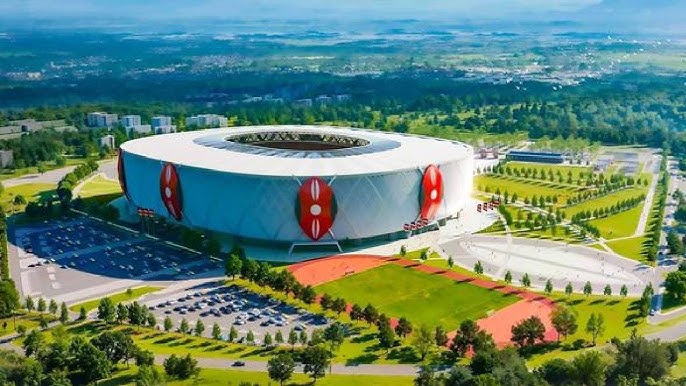
Talanta Stadium, part of the broader Talanta Sports City project at Jamhuri Grounds in Nairobi, is being built to meet FIFA and CAF standards — a long-awaited development for Kenyan football and rugby. When finished, it will represent the country’s largest purpose-built multi-use arena and a centerpiece for major international and domestic events.
The design features modern architecture with three enclosed tiers of seating, luxury skyboxes, hospitality areas, and cutting-edge media facilities aimed at enhancing the fan experience. Plans also include advanced broadcast, VAR, and goal-line technology, aligning the venue with the highest standards expected in contemporary international sports.
Construction Progress and Timeline
Since groundbreaking in March 2024, the Talanta project has steadily progressed through key milestones:
- By March 2025, the stadium had reached around 40 % completion, with its distinctive three-tiered structure taking shape and local workers gaining valuable experience on a project of this scale.
- By December 2025, construction had crossed about 68 %, with the outer façade, roof canopy framework, and initial groundwork for the pitch underway.
- As of January 2026, the build had entered its final phase, with about 80 % complete — seating installations advancing, exterior emblems in place, and internal systems like broadcast facilities and hospitality areas nearing final touches.
These updates underscore a clear focus on meeting deadlines, with officials aiming for handover ahead of March 2026 to allow time for testing and commissioning before AFCON 2027.
World-Class Features and Technological Innovation
One standout architectural highlight is the stadium’s planned retractable roof, which would make Talanta one of the few venues in Africa to boast such a feature. The retractable roof — supported by a sophisticated hydraulic cable lifting system — will offer flexibility for weather conditions, improve spectator comfort, enhance lighting for turf growth, and increase revenue-generating opportunities through year-round use.
Moreover, Talanta is designed to host not just football but also rugby matches, athletics field events, major concerts, community engagements, and cultural gatherings, positioning it as a versatile hub for entertainment and sport.
Strategic Importance for AFCON 2027 and Beyond
The venue’s completion is critical for Kenya’s role in delivering a successful AFCON tournament — and not just because of prestige. The Confederation of African Football (CAF) requires host nations to meet specific infrastructure benchmarks in areas such as stadium standards, training grounds, transport linkages, and safety protocols.
In response to scrutiny about readiness, the Kenyan government has invited CAF inspection teams to assess facilities — including Talanta — so any final adjustments can be made while work continues on the ground.
Additionally, transportation planning has been aligned with the stadium’s opening. Kenya Railways is clearing land for a dedicated rail spur linking Nairobi Central, Nyayo National Stadium, and Talanta Sports City to improve access and ease congestion on match days — a rare urban rail extension tied specifically to AFCON preparation.
Economic and Social Impact
The Talanta project has also contributed to job creation, with thousands of workers employed, including both skilled technicians and local labourers — a notable boost for Nairobi’s construction sector.
Beyond economic benefits, proponents argue the stadium will catalyse long-term growth for Kenyan sports by providing world-class facilities for local clubs, national teams, and youth development programs. Many football fans see it as the venue that could finally enable Kenyan clubs to play international fixtures at home rather than abroad.
Criticism and Public Debate
Despite widespread enthusiasm, the project has not been without critics. Some observers question the cost-benefit balance, arguing that the billions spent on Talanta could be deployed in critical sectors like agriculture, water security, or health infrastructure. Others stress the need for complementary stadiums in regional cities like Mombasa and Kisumu to decentralize sporting development.
Nevertheless, many supporters counter that the lack of world-class facilities has long hindered Kenya’s ability to host major international sporting events and fulfil FIFA/CAF requirements — a gap Talanta is poised to fill.
Looking Ahead
As Kenya counts down to AFCON 2027, Talanta Stadium remains a focal point of national pride and international scrutiny. With major construction milestones rapidly approaching, authorities are hopeful that by early 2026 the venue will be fully operational, tested, and certified for events — giving the country a true flagship stadium capable of showcasing African football at its highest level.
If successful, Talanta Stadium won’t just be an architectural marvel; it will signify Kenya’s arrival as a serious host of world-class sporting events, inspiring future generations and leaving a legacy that extends far beyond the tournament itself.