 Wambui Faith
When we speak about the "cost of living," it often sounds like a distant economic term found in a World Bank report. But for us, it’s the sound of a matatu conductor shouting a new price, the sight of a smaller piece of meat in the evening stew, and the heavy silence when a parent realizes they have to choose between a bus fare and a balanced meal.
If we look at the reality of our streets and markets, it’s clear that we aren't just facing a "price adjustment"—we are facing an economic overhaul of our daily lives.
The Fuel Catalyst
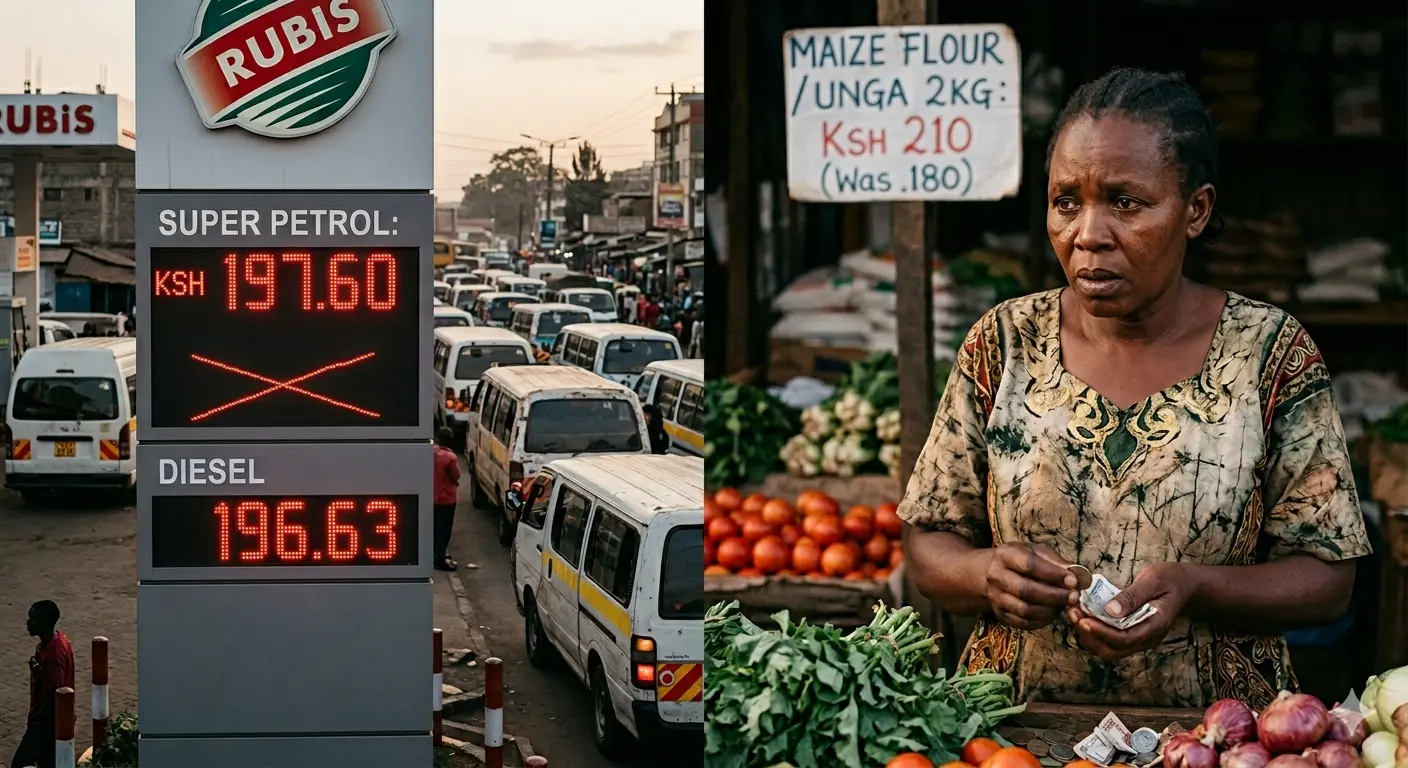
Fuel is the invisible ingredient in everything we consume. With Petrol hitting Ksh 197.60 and Diesel soaring by Ksh 30 this week, we aren't just paying more at the pump. We are paying for the transportation of every tomato from the farm and every sack of maize from the mill.
The "Landed Cost" Reality: While global shocks like the conflict near the Strait of Hormuz drive prices up, the local impact is immediate. Transport isn't just a service; it's the lifeline of our supply chain. When Diesel goes up by 18.07%, the cost of moving goods follows, and that cost is never absorbed by the manufacturer—it is always passed to you and me.
The Ripple Effect on the Table
I highlight a terrifying trend: food inflation. Currently, food and non-alcoholic beverages are driving inflation at a rate of over 7.7%.
1.Production Spikes: Farming in Kenya is mechanized. From tractor fuel for tilling to the electricity used in milling flour, energy is a massive overhead.
2.The Mama Mboga Factor: When wholesale prices rise due to transport costs, the local vendor has to increase her prices to keep her stall open. The result? A household that used to spend Ksh 500 on dinner now needs Ksh 750 for the exact same meal.
The Search for a Sober Solution
The heated debate between Ndindi Nyoro and Kimani Kuria last night, and the echoes continue stirring debate,One side calls for tax reversals and the return of subsidies; the other points to global instability and the need for fiscal discipline.
But for the person standing at a bus stop in the rain, or the entrepreneur watching their small bakery's profit margins vanish into a KPLC bill, these political arguments offer little warmth.
Final Thought
We are living through a historical "squeeze." The global market is volatile, and our local economy is fragile. As we navigate this month’s EPRA cycle, the question isn't just how much fuel will cost—it’s how much more the Kenyan spirit can endure before the weight of "living" becomes too heavy to carry.
If we look at the reality of our streets and markets, it’s clear that we aren't just facing a "price adjustment"—we are facing an economic overhaul of our daily lives.
The Fuel Catalyst
Fuel is the invisible ingredient in everything we consume. With Petrol hitting Ksh 197.60 and Diesel soaring by Ksh 30 this week, we aren't just paying more at the pump. We are paying for the transportation of every tomato from the farm and every sack of maize from the mill.
The "Landed Cost" Reality: While global shocks like the conflict near the Strait of Hormuz drive prices up, the local impact is immediate. Transport isn't just a service; it's the lifeline of our supply chain. When Diesel goes up by 18.07%, the cost of moving goods follows, and that cost is never absorbed by the manufacturer—it is always passed to you and me.
The Ripple Effect on the Table
I highlight a terrifying trend: food inflation. Currently, food and non-alcoholic beverages are driving inflation at a rate of over 7.7%.
1.Production Spikes: Farming in Kenya is mechanized. From tractor fuel for tilling to the electricity used in milling flour, energy is a massive overhead.
2.The Mama Mboga Factor: When wholesale prices rise due to transport costs, the local vendor has to increase her prices to keep her stall open. The result? A household that used to spend Ksh 500 on dinner now needs Ksh 750 for the exact same meal.
The Search for a Sober Solution
The heated debate between Ndindi Nyoro and Kimani Kuria last night, and the echoes continue stirring debate,One side calls for tax reversals and the return of subsidies; the other points to global instability and the need for fiscal discipline.
But for the person standing at a bus stop in the rain, or the entrepreneur watching their small bakery's profit margins vanish into a KPLC bill, these political arguments offer little warmth.
Final Thought
We are living through a historical "squeeze." The global market is volatile, and our local economy is fragile. As we navigate this month’s EPRA cycle, the question isn't just how much fuel will cost—it’s how much more the Kenyan spirit can endure before the weight of "living" becomes too heavy to carry.