 Faith Masita
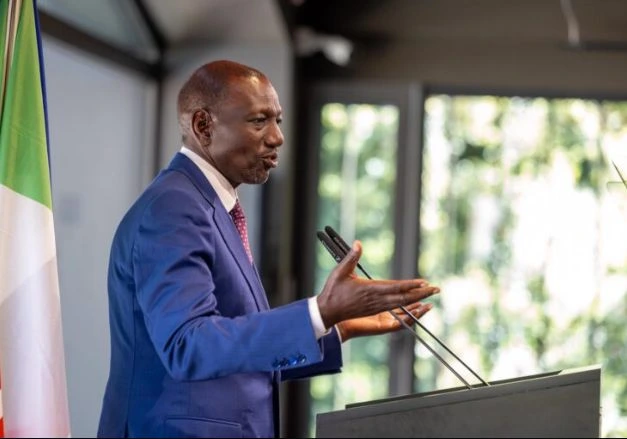
At the Africa We Build Summit 2026 held in Nairobi today, April 23, President William Ruto urged African nations to pivot toward mobilizing and deploying the continent’s substantial domestic savings to drive industrialization.
The core of his message is that Africa now possesses enough internal capital to finance its own development, shifting the focus away from a reliance on external funding.
The core of his message is that Africa now possesses enough internal capital to finance its own development, shifting the focus away from a reliance on external funding.
Key Highlights from the Summit:
The Sh260 Trillion Opportunity: According to the State of Africa’s Infrastructure Report 2026 released at the summit by the Africa Finance Corporation (AFC), Africa’s non-bank domestic capital pools have surpassed $2 trillion (approximately Sh260 trillion). This figure significantly exceeds the roughly $1.7 trillion in cumulative external flows recorded between 2014 and 2024.
Growing Domestic Reserves: The report highlights that:
Pension and insurance assets have crossed $1 trillion (Sh130 trillion) for the first time.
Central bank reserves reached $530 billion (Sh68.9 trillion) in 2025.
The Path Forward:
President Ruto emphasized that Africa’s challenge is no longer a lack of capital, but rather the deployment of these resources into bankable infrastructure and industrial projects. He called for:
Regional Integration: Connecting fragmented resource bases through infrastructure (roads, rail, ports, and electricity grids) to allow raw materials and intermediate goods to move freely.
Coordinated Policy Frameworks:
Aligning national development plans across borders to create integrated industrial platforms, similar to the model seen in the European Union.
Investment in Production: Moving beyond exporting raw materials to investing in local production to absorb the continent’s rapidly growing workforce.
The Sh260 Trillion Opportunity: According to the State of Africa’s Infrastructure Report 2026 released at the summit by the Africa Finance Corporation (AFC), Africa’s non-bank domestic capital pools have surpassed $2 trillion (approximately Sh260 trillion). This figure significantly exceeds the roughly $1.7 trillion in cumulative external flows recorded between 2014 and 2024.
Growing Domestic Reserves: The report highlights that:
Pension and insurance assets have crossed $1 trillion (Sh130 trillion) for the first time.
Central bank reserves reached $530 billion (Sh68.9 trillion) in 2025.
The Path Forward:
President Ruto emphasized that Africa’s challenge is no longer a lack of capital, but rather the deployment of these resources into bankable infrastructure and industrial projects. He called for:
Regional Integration: Connecting fragmented resource bases through infrastructure (roads, rail, ports, and electricity grids) to allow raw materials and intermediate goods to move freely.
Coordinated Policy Frameworks:
Aligning national development plans across borders to create integrated industrial platforms, similar to the model seen in the European Union.
Investment in Production: Moving beyond exporting raw materials to investing in local production to absorb the continent’s rapidly growing workforce.
Recent Regional Move.
In line with this focus on infrastructure and regional cooperation, President Ruto also announced that Kenya will increase its equity investment in the Africa Finance Corporation by Sh3.25 billion as the institution establishes a regional office in Nairobi. Additionally, he signaled deepening energy cooperation by confirming Kenya’s intent to invest in Uganda’s Sh500 billion oil refinery project.
Does this shift toward domestic capital mobilization change how you view regional infrastructure projects, or would you like to explore more about specific initiatives being discussed at the summit?
Does this shift toward domestic capital mobilization change how you view regional infrastructure projects, or would you like to explore more about specific initiatives being discussed at the summit?