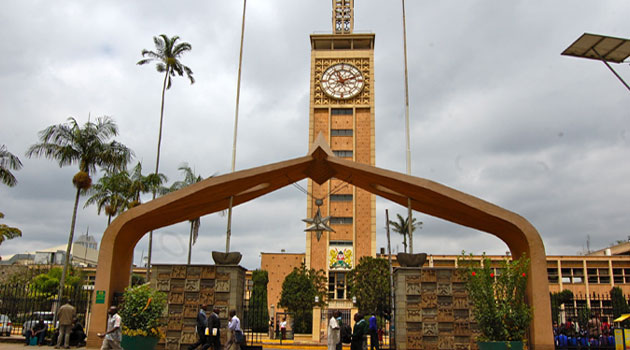
The Auditor General has warned that the National Social Security Fund’s Sh4 billion idle properties in Nairobi’s Central Business District are at risk due to unclear or worthless land titles, which are costing the fund significant potential returns.
In the latest audit report tabled in Parliament on December 21, 2025, the Auditor General highlighted that 12 prime properties owned by NSSF in the CBD remain undeveloped or underutilised because of disputes over ownership documents. Some titles are described as outdated, with others lacking proper surveys or encumbered by caveats from third parties.
NSSF Managing Trustee David Koross acknowledged the challenges during a media briefing in Nairobi on December 22, 2025. “We are actively addressing the title issues through legal channels and partnerships with the Lands Ministry,” Koross said. “These properties represent a key asset class for the fund, and resolving the disputes will unlock value for our members through rentals and development.”
The audit estimates that the idle assets could generate up to Sh1.2 billion annually in rental income if regularised and leased at market rates. Currently, only three of the 12 properties are partially occupied, yielding less than Sh280 million yearly, far below potential.
Chief Investment Officer Kenneth Owera attributed some delays to historical land allocation irregularities dating back to the 1990s. “Many of these titles were issued under questionable circumstances before NSSF acquired them,” Owera said. “We have engaged valuers and lawyers to clean up the documentation, but court processes are slow. In the meantime, we are exploring joint ventures with private developers to monetise the assets without ownership risks.”
The Auditor General recommended an immediate forensic audit of all NSSF land titles and urged the fund to pursue legal action against any fraudulent allocations. Failure to act, the report warns, exposes the properties to encroachment or loss through adverse possession claims.
NSSF holds over 45 parcels in the CBD, valued at Sh4.2 billion as of June 2025, but the idle ones represent 22 percent of the portfolio by area. Members have expressed frustration over the underperformance. “Our contributions are tied up in dead assets while we struggle with low pensions,” said a retired teacher from Nakuru who is an NSSF beneficiary.
In a separate development, NSSF is targeting about 13 percent annual dollar returns from its Sh9.6 billion stake in the Nairobi–Nakuru toll road public-private partnership project.
The fund acquired the equity stake in the 233-kilometre dual carriageway project in October 2025 through a consortium led by French developer Vinci Highways. The road, expected to be completed by 2028, will introduce Kenya’s first major toll system, with fees projected at KSh 2.50 per kilometre for light vehicles.
Managing Trustee David Koross described the investment as a strategic move to diversify NSSF’s portfolio into infrastructure. “This project offers stable, long-term returns indexed to the dollar, protecting against inflation and currency risks,” Koross said. “We expect 13 percent annual yields over the 30-year concession period, generating billions in dividends for our 2.7 million members.”
Chief Investment Officer Kenneth Owera explained that the stake was funded from NSSF’s infrastructure allocation, which stands at Sh45 billion or 4 percent of total assets under management. “The toll road fits our mandate for investments that create jobs and economic value,” Owera said. “It will employ over 5,000 during construction and 1,200 during operations, while easing logistics costs for businesses.”
The project has faced delays due to land acquisition disputes and environmental concerns, but Owera said mitigation measures are in place. “We have ring-fenced our investment to ensure compliance with ESG standards,” he added. “Returns will start flowing from toll collections in 2028, with upside from traffic growth.”
Critics have questioned the fund's exposure to a single project. Opposition MP John Kiarie said the investment concentrates risk. “NSSF should diversify further rather than putting Sh9.6 billion in one basket,” Kiarie said. “What if traffic projections fall short or toll resistance emerges?”
NSSF officials countered that the consortium guarantees a minimum return floor through traffic risk-sharing mechanisms. The fund's overall portfolio yielded 8.2 percent in the year to June 2025, with infrastructure contributing 12 percent.
As NSSF navigates asset risks and opportunities, members hope the strategies will enhance retirement benefits in an economy grappling with high living costs.