 Victor Elvis Mugambi
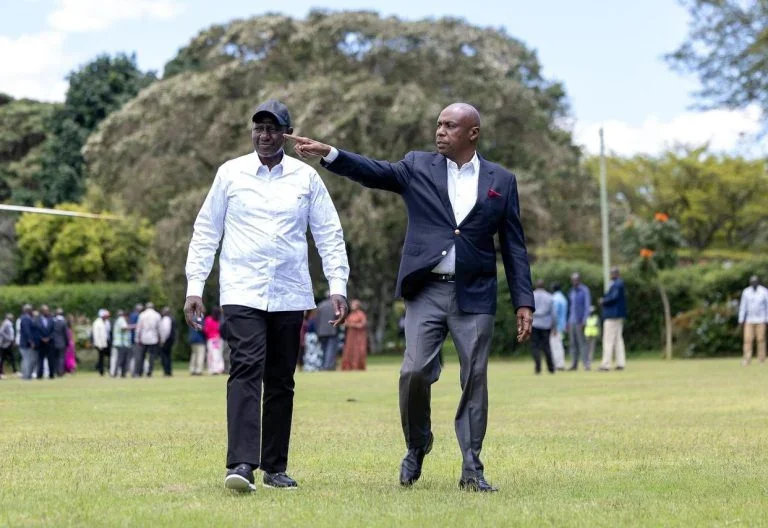
The political landscape in Kenya has recently been marred by a pronounced escalation between Gideon Moi, a significant political figure and media owner, and President William Ruto. This rivalry has become increasingly public and intense, with each side accusing the other of misconduct, blackmail, and political manipulation. The tensions are not just personal but also reflect broader issues of media freedom, political influence, and governance in Kenya.
Ruto's Public Accusations and Media Clashes
President Ruto has publicly targeted Gideon Moi, mainly criticizing his involvement with the Standard Group and accusing him of using the media to undermine his administration. Recent statements from Ruto suggest that he perceives Moi’s media empire as a tool for political destabilization and propaganda. This exchange has sparked controversy, with many questioning the implications for Kenya’s free press and democratic discourse.
The Background of the Rift
The rivalry between Gideon Moi and William Ruto is rooted in Kenya’s complex political history, where alliances and rivalries often influence media and power dynamics. Gideon Moi, who leads the Kenya Kwanza coalition and has substantial wealth and media interests, has been viewed as a key political player. Ruto’s leadership has been marked by efforts to consolidate power and discredit opponents, culminating in this high-profile conflict that magnifies existing political tensions.
Recent reports indicate that Ruto has accused Moi of attempting to blackmail him, adding a criminal dimension to the political rivalry. These allegations have been met with mixed reactions from the public and political analysts, who see this as a reflection of the tense and often ruthless nature of Kenyan politics.
Implications for Kenyan Politics and Media
The escalation between Gideon Moi and President Ruto raises concerns about the state of media independence and political stability in Kenya. The use of media outlets as battlegrounds for political disputes threatens to undermine journalistic integrity and could lead to increased polarization.
As the conflict continues, the Kenyan public and international observers are watching closely, wary of the potential repercussions for democracy and governance. How this dispute unfolds may well determine the trajectory of Kenya’s political landscape in the coming months.