 Kiplangat Brian
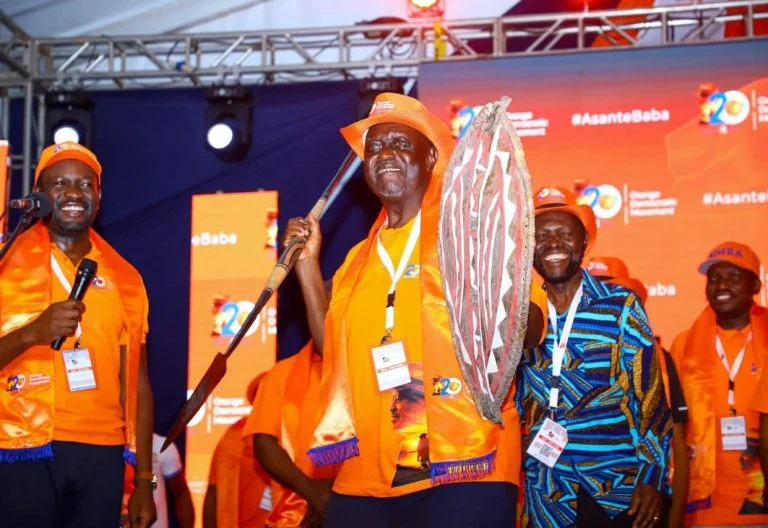
The Orange Democratic Movement (ODM), one of Kenya’s most influential political parties, is facing a critical moment as internal leadership disputes and strategic disagreements continue to surface ahead of the 2027 General Election.
Following the passing of long-time party leader Raila Odinga, ODM has entered a transition period marked by debates over succession, party governance, and its future political direction. These developments have raised questions among supporters and observers about the party’s unity and long-term stability.
Leadership Succession at the Center of Tensions
ODM’s leadership transition has exposed divisions between senior party figures and younger leaders pushing for reforms. Disagreements have emerged over how party organs, particularly the National Delegates Conference (NDC), should be convened and who should control the succession process.
Some leaders have accused the party’s old guard of attempting to influence leadership outcomes, while others insist that ODM’s constitution and established organs remain the only legitimate decision-making structures. These disputes have fueled public debate about transparency and inclusivity within the party.
Factional Disputes and Public Contradictions
Senior ODM officials have issued conflicting public statements regarding the state of the party. While some leaders acknowledge the existence of internal disagreements, others have strongly denied claims of division, maintaining that ODM remains united and operational.
At the same time, prominent party members have openly declared their intentions to challenge the status quo, signaling a deepening contest for influence within the party. Analysts note that such public disagreements, if unresolved, risk weakening ODM’s negotiating power on the national political stage.
Debate Over ODM’s Political Direction
Another major point of contention is ODM’s role in Kenya’s current political landscape. Internal discussions continue on whether the party should maintain a firm opposition stance or pursue structured cooperation with the ruling administration in the interest of national stability and reform.
This strategic debate has divided opinion within ODM, with some members viewing cooperation as pragmatic, while others fear it could dilute the party’s identity and core principles.
What Is at Stake for ODM
Political analysts warn that how ODM manages its leadership transition and internal democracy will be crucial to its survival as a dominant political force. Failure to resolve disputes through party mechanisms could lead to voter disillusionment or fragmentation ahead of the next election cycle.
However, despite the tensions, ODM remains one of Kenya’s most organized parties with a nationwide support base, functional structures, and significant representation in Parliament. No formal split has occurred, and party organs are expected to play a key role in resolving outstanding disputes.
Conclusion
While claims that ODM is “at stake” reflect real leadership and strategic challenges, the party’s future will largely depend on its ability to manage succession transparently, maintain unity, and clearly define its political direction. The coming months are likely to be decisive in determining whether ODM emerges strengthened or weakened from this period of transition.