 Kiplangat Brian
The Israel-Iran Escalation: From Shadow War to Open Confrontation
The Middle East witnessed a tectonic shift in June 2025 when Israel launched Operation Rising Lion, a pre-emptive strike against Iranian nuclear facilities and missile infrastructure. This operation marked the transition from decades of proxy conflict to direct state-on-state warfare. Israeli F-35I Adir and F-15I Ra’am aircraft executed over 200 sorties, striking more than 150 targets across 27 Iranian provinces, with Tehran absorbing one-third of the attacks. Critical sites included the Organisation of Defensive Innovation and Research (linked to nuclear weapons development), ballistic missile production facilities, and Islamic Revolutionary Guard Corps (IRGC) command centers. The operation leveraged unprecedented intelligence penetration: Israel smuggled suicide drones into Iran, established covert drone factories on Iranian soil, and eliminated senior IRGC commanders like Saeed Izadi and Behnam Shahriyari. This surgical decapitation campaign aimed to cripple Iran’s strategic capabilities but came at a grim human cost—over 40% of the 1,100+ Iranian fatalities were civilians, including deaths at hospitals, bakeries, and residential buildings 123.
The Middle East witnessed a tectonic shift in June 2025 when Israel launched Operation Rising Lion, a pre-emptive strike against Iranian nuclear facilities and missile infrastructure. This operation marked the transition from decades of proxy conflict to direct state-on-state warfare. Israeli F-35I Adir and F-15I Ra’am aircraft executed over 200 sorties, striking more than 150 targets across 27 Iranian provinces, with Tehran absorbing one-third of the attacks. Critical sites included the Organisation of Defensive Innovation and Research (linked to nuclear weapons development), ballistic missile production facilities, and Islamic Revolutionary Guard Corps (IRGC) command centers. The operation leveraged unprecedented intelligence penetration: Israel smuggled suicide drones into Iran, established covert drone factories on Iranian soil, and eliminated senior IRGC commanders like Saeed Izadi and Behnam Shahriyari. This surgical decapitation campaign aimed to cripple Iran’s strategic capabilities but came at a grim human cost—over 40% of the 1,100+ Iranian fatalities were civilians, including deaths at hospitals, bakeries, and residential buildings 123.
Iran’s retaliation was the largest missile assault in Israeli history: 370–550 ballistic missiles and 1,000+ drones targeted Nevatim and Hatzerim air bases, Tel Aviv, and Haifa. Israel’s multi-layered air defense (Iron Dome, David’s Sling, Arrow) achieved a 90% interception rate, limiting fatalities to 28 Israelis (mostly civilians). Yet the scale exposed vulnerabilities: missile defense batteries faced unsustainable reload demands, and cyber attacks temporarily disabled power grids and train networks. The U.S. escalated with Operation Midnight Hammer, deploying seven B-2 Spirit bombers to drop 30,000-pound bunker-buster bombs on Fordow’s underground nuclear facility—the largest B-2 strike ever recorded. While President Trump declared Iran’s nuclear program “obliterated,” U.S. intelligence leaks suggested only “months” of delay, with Fordow’s core infrastructure partially intact 241.
Gaza’s Unending Nightmare: Aid Blockades and Famine as Weapons of War
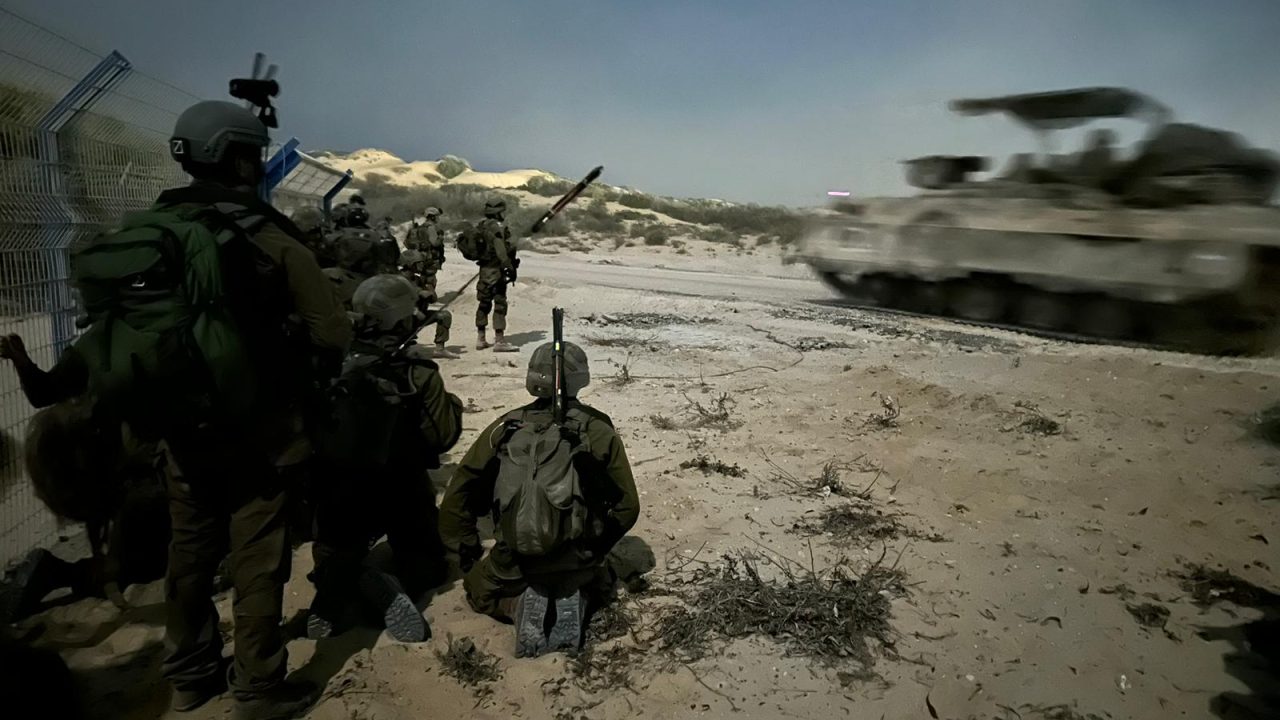
As Israel pivoted to confront Iran, Gaza descended into deeper humanitarian collapse. June 2025 was the deadliest month since November 2024, with at least 665 Palestinian civilians killed during aid distributions—35% of total fatalities. The violence centered on the U.S.-backed Gaza Humanitarian Foundation (GHF), an Israeli-controlled aid mechanism designed to bypass UN agencies. At Khan Yunis and Rafah, GHF sites became killing fields: on June 17 alone, Israeli drones and tanks fired on crowds awaiting food trucks, killing 90. Starvation fueled intra-Palestinian strife, including clashes between Hamas and clans accused of looting. Israel further destabilized Gaza by empowering alternative actors like Yasser Abu Shabab, a former Hamas prisoner whose militia now controls aid routes near Kerem Shalom. Amid this chaos, Hamas ambushed Israeli troops near buffer zones, killing seven soldiers in a June 24 raid—a signal of resilience despite territorial losses 36.
As Israel pivoted to confront Iran, Gaza descended into deeper humanitarian collapse. June 2025 was the deadliest month since November 2024, with at least 665 Palestinian civilians killed during aid distributions—35% of total fatalities. The violence centered on the U.S.-backed Gaza Humanitarian Foundation (GHF), an Israeli-controlled aid mechanism designed to bypass UN agencies. At Khan Yunis and Rafah, GHF sites became killing fields: on June 17 alone, Israeli drones and tanks fired on crowds awaiting food trucks, killing 90. Starvation fueled intra-Palestinian strife, including clashes between Hamas and clans accused of looting. Israel further destabilized Gaza by empowering alternative actors like Yasser Abu Shabab, a former Hamas prisoner whose militia now controls aid routes near Kerem Shalom. Amid this chaos, Hamas ambushed Israeli troops near buffer zones, killing seven soldiers in a June 24 raid—a signal of resilience despite territorial losses 36.
The near-total blockade strangled food and medical access, spiking malnutrition rates to 45% among children. Desperate civilians risked Israeli “red zones” to reach aid convoys, only to be met with artillery shells. NPR documented at least 300 Palestinians killed and 2,600 wounded in three weeks while seeking flour sacks. One survivor, Ibrahim Rajab, described his son-in-law slain while fetching food for four daughters. U.S. President Trump announced a 60-day Gaza ceasefire on July 1, but Hamas conditioned acceptance on a “complete end to the war”—a demand Israel rejected. The diversion of Israeli troops to the Iranian front reduced Gaza deployments by 50%, yet aid restrictions persisted, weaponizing famine to undermine Hamas 63.
The Proxy Vacuum: Iran’s Diminished “Axis of Resistance”
Iran’s strategic defeat lay not in missile damage but in the failure of its proxy network. Hezbollah—once Tehran’s most potent deterrent—remained silent during the conflict, its capabilities crippled by 600+ Israeli strikes since early 2025 and the loss of key commanders. In Iraq, Kataib Hezbollah and Harakat al-Nujaba threatened U.S. bases but launched only token drone sorties; Baghdad’s government pressured militias to avoid escalation, fearing electoral backlash in November polls. Yemen’s Houthis slashed attacks by 31%, adhering to an informal U.S. ceasefire despite Israeli strikes on al-Hudadya port and Sanaa. This restraint reflected military exhaustion after U.S. CENTCOM strikes eliminated 70+ Houthi fighters and mid-level commanders like Najib Kashri in April. Iran’s proxies, hollowed out by attrition and political calculations, could not fulfill their role as regional force multipliers 532.
Iran’s strategic defeat lay not in missile damage but in the failure of its proxy network. Hezbollah—once Tehran’s most potent deterrent—remained silent during the conflict, its capabilities crippled by 600+ Israeli strikes since early 2025 and the loss of key commanders. In Iraq, Kataib Hezbollah and Harakat al-Nujaba threatened U.S. bases but launched only token drone sorties; Baghdad’s government pressured militias to avoid escalation, fearing electoral backlash in November polls. Yemen’s Houthis slashed attacks by 31%, adhering to an informal U.S. ceasefire despite Israeli strikes on al-Hudadya port and Sanaa. This restraint reflected military exhaustion after U.S. CENTCOM strikes eliminated 70+ Houthi fighters and mid-level commanders like Najib Kashri in April. Iran’s proxies, hollowed out by attrition and political calculations, could not fulfill their role as regional force multipliers 532.
Nuclear Ambiguity and the Diplomatic Abyss
The war’s core unresolved issue remains Iran’s nuclear program. While U.S. bunker-busters damaged Fordow, IAEA Director Rafael Grossi warned the UN Security Council that “no one is in a position to fully assess underground damage.” Iran retains sufficient knowledge and industrial capacity to rebuild enrichment capabilities within 18–24 months. Tehran demands U.S. guarantees against future strikes before resuming nuclear talks, while the E3 (UK, Germany, France) threaten “snapback” sanctions by August 2025—a move Iran calls an “irreversible escalation.” Domestically, Tehran exploited the conflict to intensify repression: 700 dissidents were arrested, and six Mahsa Amini protesters were executed on espionage charges. Supreme Leader Ali Khamenei’s advanced age (86) has also triggered clandestine succession debates among elites 415.
The war’s core unresolved issue remains Iran’s nuclear program. While U.S. bunker-busters damaged Fordow, IAEA Director Rafael Grossi warned the UN Security Council that “no one is in a position to fully assess underground damage.” Iran retains sufficient knowledge and industrial capacity to rebuild enrichment capabilities within 18–24 months. Tehran demands U.S. guarantees against future strikes before resuming nuclear talks, while the E3 (UK, Germany, France) threaten “snapback” sanctions by August 2025—a move Iran calls an “irreversible escalation.” Domestically, Tehran exploited the conflict to intensify repression: 700 dissidents were arrested, and six Mahsa Amini protesters were executed on espionage charges. Supreme Leader Ali Khamenei’s advanced age (86) has also triggered clandestine succession debates among elites 415.
Regional Realignments and the Specter of Forever War
The ceasefire brokered by Trump on June 24 is fragile, with both Israel and Iran preparing for Round II. Israel insists Iran’s nuclear and missile threats must be “dismantled,” while President Masoud Pezeshkian vows “far more forceful” responses if attacked again. Regional powers are hedging: Gulf states declined to back Israel publicly, criticizing its Gaza conduct, while Turkey expanded influence in post-Assad Syria, clashing with Israel over airbase access. Russia and China amplified anti-U.S. rhetoric, with China importing Iranian oil to skirt sanctions. For Gaza, the conflict diverted international attention from a stalled Palestinian statehood initiative and deepened aid cuts. As the U.N. warns of famine, the Levant faces a binary future: diplomatic de-escalation or a multi-front war pitting Israel against a fractured but vengeful Iran 346.
The ceasefire brokered by Trump on June 24 is fragile, with both Israel and Iran preparing for Round II. Israel insists Iran’s nuclear and missile threats must be “dismantled,” while President Masoud Pezeshkian vows “far more forceful” responses if attacked again. Regional powers are hedging: Gulf states declined to back Israel publicly, criticizing its Gaza conduct, while Turkey expanded influence in post-Assad Syria, clashing with Israel over airbase access. Russia and China amplified anti-U.S. rhetoric, with China importing Iranian oil to skirt sanctions. For Gaza, the conflict diverted international attention from a stalled Palestinian statehood initiative and deepened aid cuts. As the U.N. warns of famine, the Levant faces a binary future: diplomatic de-escalation or a multi-front war pitting Israel against a fractured but vengeful Iran 346.
Key Statistics of the 2025 Israel-Iran-Gaza Conflict
- 1,100+ Iranian fatalities (40% civilians) 4
- 28 Israeli civilians killed in missile attacks 2
- 90% interception rate of Iranian projectiles by Israeli air defenses 2
- 665 Palestinians killed in aid-related violence (June 2025) 3
- 0 meaningful interventions by Iran's regional proxies 3
- 18–24 months estimated delay to Iran's nuclear program 4