 Wambui Faith
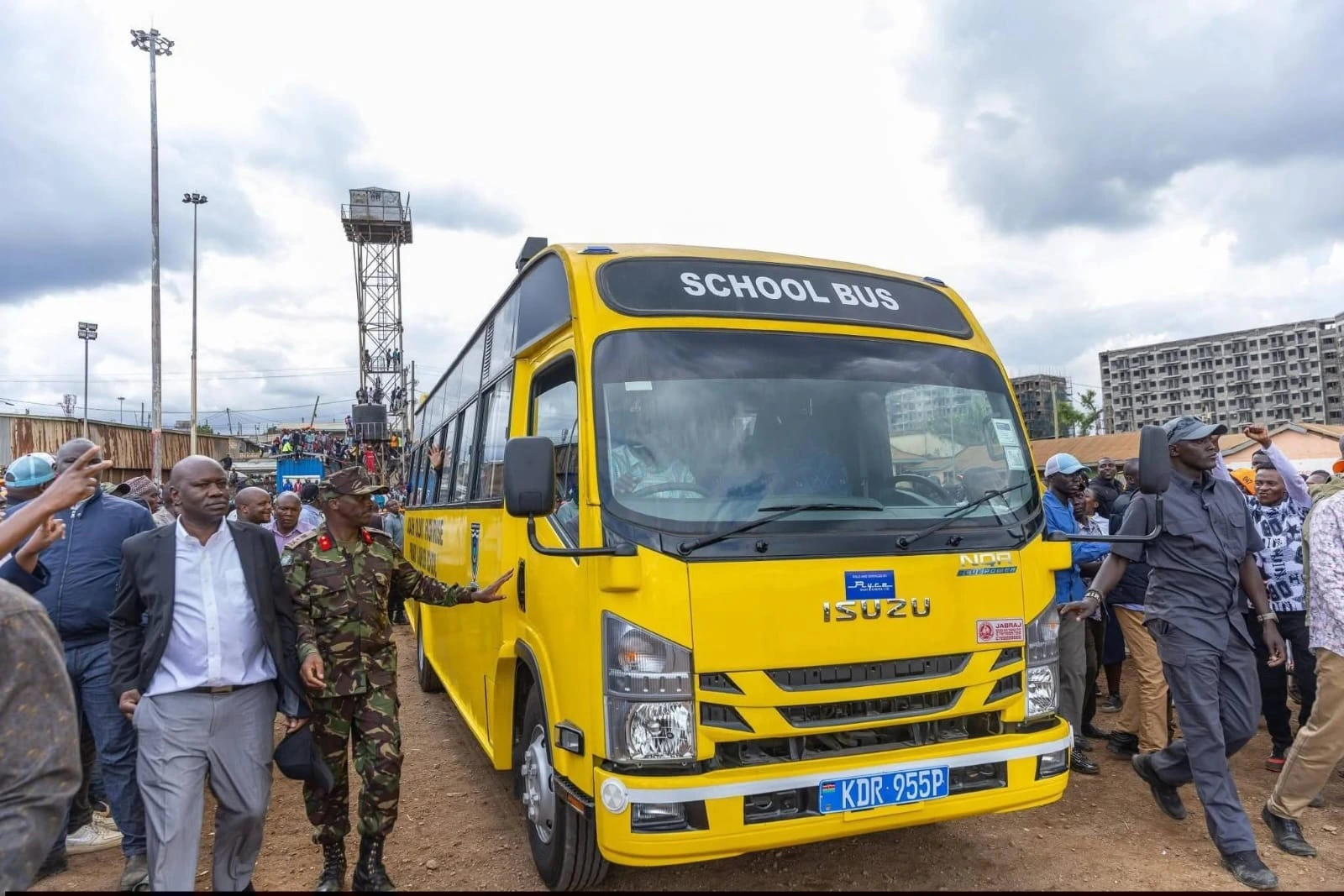
The residents of Kibera are raising eyebrows—and their voices—following a recent school bus donation by the President to Joseph Kangethe Primary School. While the arrival of a school bus is usually a cause for celebration, this particular handover has sparked a heated debate online and on the ground, with many questioning the integrity of the gift.
The Number Plate Controversy: KDR vs. KDX
The biggest "red flag" for the public isn't just the paint job, but the registration. Critics have pointed out that the bus bears a KDR series plate, despite the current market standard moving well into the KDX series.
In Kenya, registration plates are a timeline of a vehicle’s age. The question echoing through social media is simple: "If the government has the budget for the newest versions of luxury vehicles, why was this school given a KDR instead of a KDX?"
Is it a "Modified" Hand-Me-Down?
The skepticism doesn't stop at the plates. Observers have cited that the vehicle "seemed old," leading to widespread allegations that the bus might not be a factory-new unit. Instead, the public suspects it could be an old, modified vehicle that was simply refurbished to look the part for a photo op.
"It is possible it was not a new bus rather an old one that was just probably modified." — Social Media Observer
Public Backlash and Accountability
The backlash highlights a growing frustration with perceived "tokenism." For a school in an area like Kibera, a reliable, new bus is a vital asset for student safety and academic trips.
The public sentiment is clear: our schools deserve the best, not "recycled" donations that raise more questions than they provide solutions.
As the photos of the KDR bus continue to circulate, the government faces mounting pressure to clarify the procurement process. Was this a genuine mistake in registration, or is there truth to the rumors that Kibera’s children were handed a "new-look" old bus?
The Number Plate Controversy: KDR vs. KDX
The biggest "red flag" for the public isn't just the paint job, but the registration. Critics have pointed out that the bus bears a KDR series plate, despite the current market standard moving well into the KDX series.
In Kenya, registration plates are a timeline of a vehicle’s age. The question echoing through social media is simple: "If the government has the budget for the newest versions of luxury vehicles, why was this school given a KDR instead of a KDX?"
Is it a "Modified" Hand-Me-Down?
The skepticism doesn't stop at the plates. Observers have cited that the vehicle "seemed old," leading to widespread allegations that the bus might not be a factory-new unit. Instead, the public suspects it could be an old, modified vehicle that was simply refurbished to look the part for a photo op.
"It is possible it was not a new bus rather an old one that was just probably modified." — Social Media Observer
Public Backlash and Accountability
The backlash highlights a growing frustration with perceived "tokenism." For a school in an area like Kibera, a reliable, new bus is a vital asset for student safety and academic trips.
The public sentiment is clear: our schools deserve the best, not "recycled" donations that raise more questions than they provide solutions.
As the photos of the KDR bus continue to circulate, the government faces mounting pressure to clarify the procurement process. Was this a genuine mistake in registration, or is there truth to the rumors that Kibera’s children were handed a "new-look" old bus?