 Diana Muthini
In the humid, salt-tinged air of Mombasa on May 3, 2026, the Orange Democratic Movement (ODM) found itself at a crossroads that felt more like a cliff’s edge. For over twenty years, the party’s internal compass had always pointed in one direction: toward Raila Amollo Odinga. But with the passing of the man known to millions simply as "Baba," the compass has been shattered.
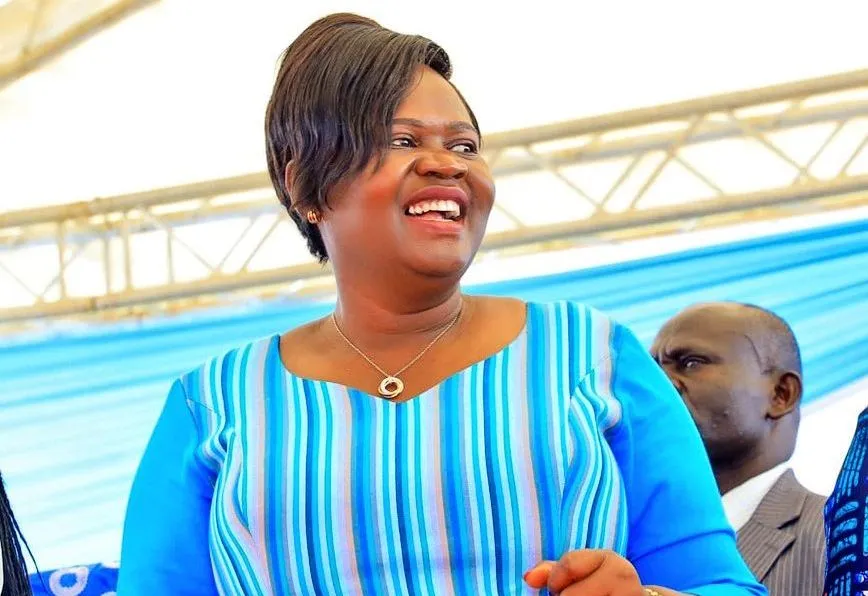
Stepping into the breach with a firm hand and a sharp tongue, ODM National Chairperson Gladys Wanga used the party’s first post-Raila leadership retreat to deliver a "State of the Union" that was part eulogy, part battle cry, and part stern warning. Her message was sophisticated but brutal in its simplicity: The safety net is gone.
The End of the "Baba" Safety Net
For decades, ODM politicians enjoyed a unique luxury in Kenyan politics. If a local candidate was struggling, a single visit or endorsement from Raila Odinga could resuscitate a failing campaign. If the party faced a strategic crisis, Baba’s word was the law that settled all disputes.
Wanga’s address to the delegates was a cold bucket of water to those still waiting for a savior. "This marks our first retreat since losing our leader," she remarked, her voice carrying the weight of a movement in transition. She acknowledged that the party had historically outsourced its thinking and its courage to one man.
By declaring an end to this reliance, Wanga is effectively forcing the ODM elite to grow up. She is transitioning the party from a personality cult into a political institution.
The Doctrine of Collective Failure
The most striking part of Wanga’s speech was her focus on shared responsibility. In the past, if ODM lost an election, the blame was often redirected—to the electoral commission, to "the system," or to betrayal by allies.
Wanga has flipped the script. She warned the leaders gathered in Mombasa that if the party underperforms in the 2027 General Election, there will be no scapegoats.
- Regional Kingpins: Leaders in traditional strongholds like Nyanza, Western, and the Coast are no longer just representatives; they are now the primary guardians of those votes.
- The Accountability Clause: Wanga implied that leadership positions within the party will henceforth be tied to electoral results. If your region fails to deliver, your seat at the high table is no longer guaranteed.
- Collaborative Strategy: With the passing of the "Supreme Leader" model, decision-making is being democratized—but with that democracy comes the burden of being wrong.
"We are no longer followers of a single man; we are the collective stewards of a legacy. If the ship sinks in 2027, we all get wet. There are no lifeboats for individuals anymore."
The 2027 Battleground: A New Frontier
The timing of this retreat is no accident. The 2027 elections are looming, and the political vultures are already circling ODM’s traditional bases. Without Raila’s charismatic pull, the party faces a two-front war:
- Internal Fractures: Without a singular authority to mediate, "ambition" can quickly turn into "anarchy." Wanga’s call for discipline is a preemptive strike against those who might seek to carve out their own fiefdoms at the expense of the party’s unity.
- The External Threat: Rival coalitions are already sensing weakness. They are betting that ODM will crumble without its figurehead. Wanga’s strategy is to present a "United Front" led by a committee of equals, making the party harder to decapitate.
The "Uhuru Factor" and the New Guard
Interestingly, the retreat also touched upon the party’s continued evolution under the broader influence of the "leadership of Uhuru"—referring to the strategic alliance structures left behind by the Handshake era. Wanga urged members to embrace this shared accountability, suggesting that while Raila is gone, the political machinery he built with former President Uhuru Kenyatta remains the party’s best bet for survival.
The Verdict: Can the Orange Bloom Without Its Root?
Gladys Wanga has set a high bar. She is asking veteran politicians—many of whom have never known a political world without Raila—to become self-sufficient overnight.
If this "Mombasa Declaration" holds, ODM could emerge as a modern, ideological powerhouse that survives for decades. If it fails, the 2027 election may not just be a loss for the party; it could be its obituary.
Wanga has laid down the gauntlet. The leaders have been warned: in the race to 2027, the "Orange" must either ripen together or rot alone.