 Diana Muthini
The culture of the Maasai is one of the most fascinating and deeply rooted traditions in East Africa. Known across the world for their vibrant clothing, fearless warriors, and strong connection to nature, the Maasai people have managed to preserve their identity for generations. Living mainly in the vast savannahs of southern Kenya and northern Tanzania, the Maasai continue to stand as a symbol of cultural pride and resilience in a rapidly modernizing world.
From the moment one encounters the Maasai, their unique way of life becomes evident. Their homes, known as manyattas, are traditionally built by women using natural materials such as mud, sticks, grass, and cow dung. These homes are designed to suit their semi-nomadic lifestyle, allowing families to move when necessary in search of water and pasture for their livestock. The Maasai’s close relationship with the land is not just practical—it is spiritual, cultural, and essential to their survival.
Cattle lie at the heart of Maasai culture. To the Maasai, cattle are everything—they represent wealth, food, and social status. A man’s success is often measured by the number of cattle he owns. Livestock are used in important ceremonies such as marriages, where cattle are given as bride wealth, strengthening ties between families. The Maasai diet traditionally consists of milk, meat, and sometimes blood, which is carefully drawn from cattle without harming them. This unique practice reflects their deep respect and dependence on their animals.
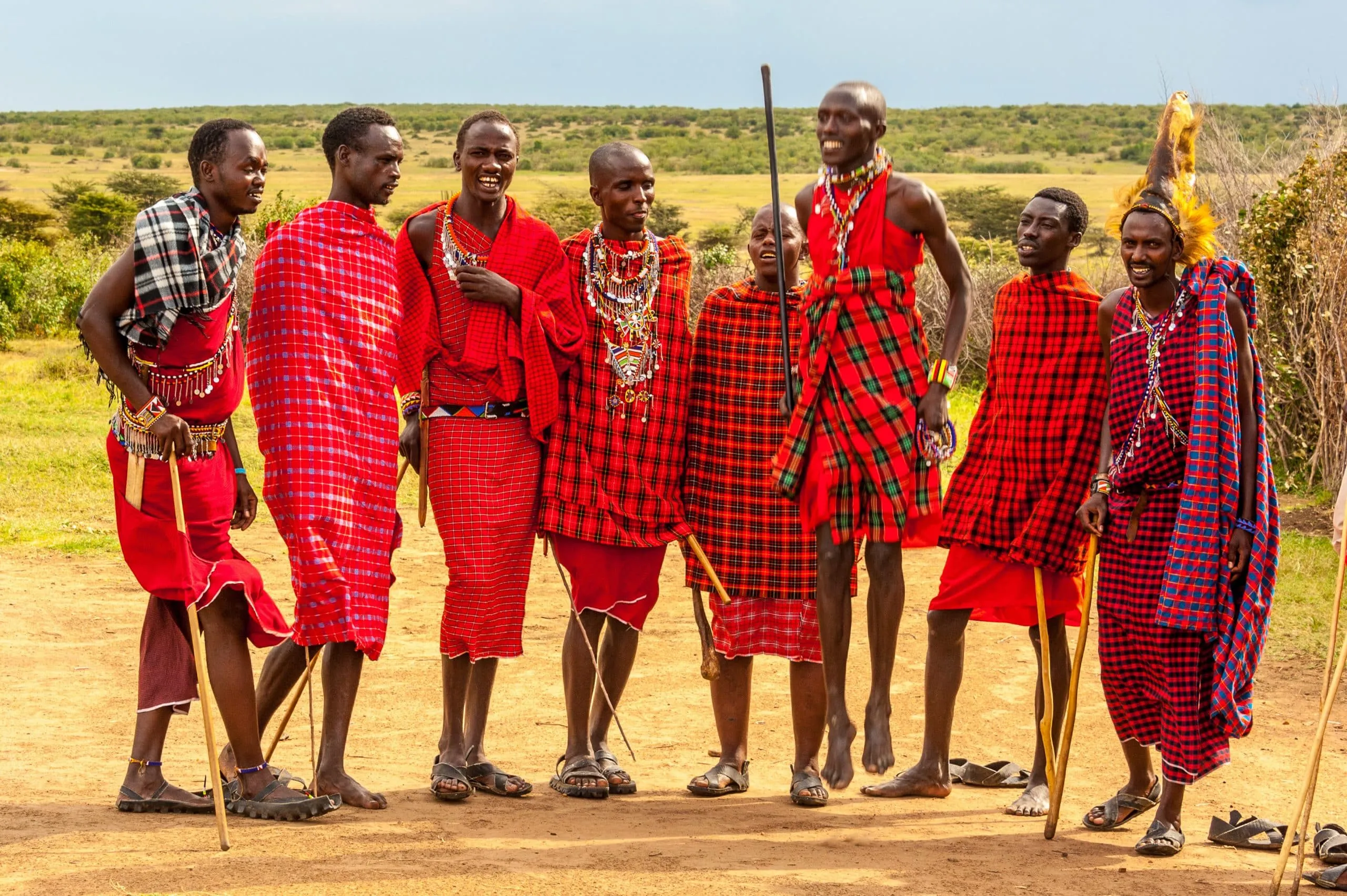
One cannot speak of Maasai culture without mentioning their striking appearance. The bright red cloth called shúkà is commonly worn and has become a global symbol of Maasai identity. Red is believed to represent bravery, strength, and protection.
Alongside this, intricate beadwork plays a major role in Maasai expression. Women create beautiful jewelry using beads of different colors, each carrying a specific meaning. For example, white often symbolizes purity, blue represents the sky and energy, and green stands for land and health. These ornaments are not just decorations—they are a language of culture, identity, and social status.
The social structure of the Maasai is organized through an age-set system, which defines roles and responsibilities within the community. Boys transition into warriors, known as morans, through important rites of passage. These ceremonies mark their journey into adulthood and prepare them to protect the community. Warriors are respected for their courage, discipline, and physical strength. As they grow older, they eventually become elders, who hold authority and make important decisions for the community. Elders are highly respected and are seen as custodians of wisdom and tradition.
Women, though often less visible in leadership roles, are the backbone of Maasai society. They are responsible for building homes, raising children, and maintaining the household. Their contribution to beadwork and local trade also supports family income.
Despite facing challenges such as limited access to education in the past, many Maasai women today are stepping forward, embracing education and advocating for change while still preserving their cultural values.
Ceremonies and rituals form a significant part of Maasai life. Events such as births, circumcision rites, marriages, and elderhood transitions are celebrated with great enthusiasm. Music and dance are central to these celebrations. One of the most famous dances is the Adumu, also known as the jumping dance. During this performance, young warriors leap high into the air in a rhythmic display of strength and endurance. The higher a warrior jumps, the more admiration he earns, making it both a cultural and social performance.
Religion and belief systems among the Maasai revolve around a single deity known as Enkai (or Engai). Enkai is believed to be the creator and provider, controlling elements such as rain and fertility. The Maasai see nature as sacred, and their spiritual beliefs are closely tied to the environment around them. Rain, for instance, is considered a blessing, as it ensures the survival of their cattle and, consequently, their people.
Language is another key pillar of Maasai identity. The Maa language is widely spoken within the community and serves as a unifying factor.
Although many Maasai people today also speak Swahili and English, especially in urban areas and schools, Maa remains a strong symbol of cultural pride and continuity.
Despite their strong traditions, the Maasai have not been untouched by modern changes. Challenges such as land encroachment, climate change, and government policies have affected their traditional way of life. Reduced grazing land has made it harder to sustain large herds of cattle, while unpredictable weather patterns threaten their livelihoods. Additionally, access to education and healthcare has introduced new ways of thinking and living.
However, the Maasai have shown remarkable adaptability. Many communities are now balancing tradition with modern life. Education is becoming more valued, and young Maasai are entering professions such as teaching, business, and leadership. Tourism has also become an important source of income, with visitors from around the world coming to experience Maasai culture firsthand. Cultural villages and guided experiences allow the Maasai to share their heritage while benefiting economically.
Even with these changes, the Maasai remain deeply connected to their roots. Their culture continues to thrive through storytelling, ceremonies, and the passing down of knowledge from elders to the younger generation. They have proven that it is possible to embrace progress without losing identity.
In conclusion, the Maasai culture is a powerful testament to resilience, unity, and tradition. It is a culture built on strong values—respect for nature, community, and heritage. As the world continues to evolve, the Maasai stand firm, reminding us of the importance of preserving cultural identity in the face of change. Their story is not just one of survival, but of pride, strength, and an unbreakable connection to their past.