 EMMANUEL WEKESA
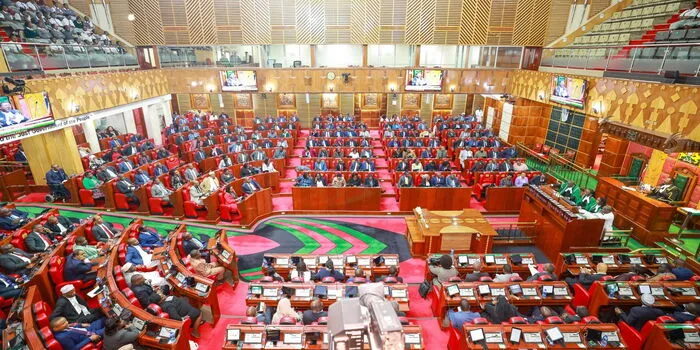
The High Court has ruled that the advisory issued by former Chief Justice David Maraga, recommending the dissolution of Parliament over its failure to implement the two-thirds gender rule, was unconstitutional. This decision highlights the importance of adhering to constitutional procedures in legal and legislative processes.
Procedural Irregularities and the Court’s Findings
The court found that Maraga's advisory was issued prematurely and did not fulfill the constitutional requirements. Specifically, it was issued before the relevant court orders were formally transmitted to Parliament and the Attorney General, as mandated by Article 261(6)(b) of the constitution. Such procedural lapses undermine the legal validity of the advisory and reinforce the need for strict adherence to constitutional processes.
In 2020, Maraga's recommendation prompted discussions about gender representation, as women in the 12th Parliament accounted for just over 21% of members in the National Assembly and 31% in the Senate. The current Parliament has seen slight improvements, with women occupying 23% of seats in the National Assembly and 31.3% in the Senate. The legal challenge and subsequent ruling emphasize the ongoing efforts to enforce gender equality laws in Kenya’s legislative bodies.
The case was presided over by a bench of five judges, including Justices Tabitha Ouya and Patricia Nyaundi, who assessed the procedural aspects and the constitutional implications of Maraga's advisory. The ruling was anticipated to influence future compliance with constitutional provisions related to representation and governance oversight.
Arguments surrounding the advisory also touched on the roles and responsibilities of judicial and executive branches in upholding constitutional mandates. The court’s decision reaffirms the supremacy of constitutional procedures over individual advisories or legislative inactions, serving as a safeguard against unlawful executive or judicial overreach.
While the advisory was supported by figures like Nelson Havi, a former Law Society of Kenya President, the court’s decision underscores that legal processes must be stringently followed. The outcome not only addresses procedural issues but also highlights the importance of constitutional compliance in maintaining the rule of law and fostering gender balanced representation in Kenya's legislative process.