 Victor Elvis Mugambi
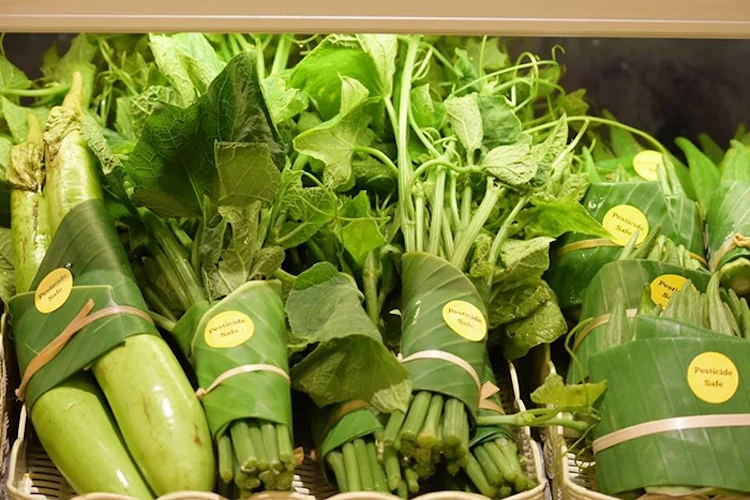
Recent viral images from Rimping Supermarket in Chiang Mai, Thailand, show fresh vegetables wrapped in banana leaves secured with bamboo or fiber ties. This eco-friendly packaging approach significantly reduces reliance on disposable plastics, though some labels still utilize small plastic components.
Traditional Banana Leaf Packaging in Modern Supermarkets
Banana leaves have been used across Asia for generations to wrap and cook food. Their natural water resistance and biodegradability, combined with their abundance in tropical regions, make them an ideal sustainable packaging material. This traditional practice, now being integrated into contemporary retail environments, highlights how age-old solutions can be adapted to address modern environmental concerns.
The spread of these images has prompted supermarkets across Southeast Asia to experiment with banana leaf packaging. While it may not replace all types of plastic packaging—particularly where banana leaves are not locally available—it exemplifies how simple, traditional ideas can contribute to environmental sustainability.
This trend underscores an important point: not every environmental challenge requires high-tech solutions. Sometimes, nature's own resources—like banana leaves—provide the most effective and practical answers.
Such initiatives demonstrate that sustainable technology can be as straightforward as growing on trees, turning age-old customs into modern environmental solutions, and inspiring global efforts towards greener practices in packaging.