 Diana Muthini
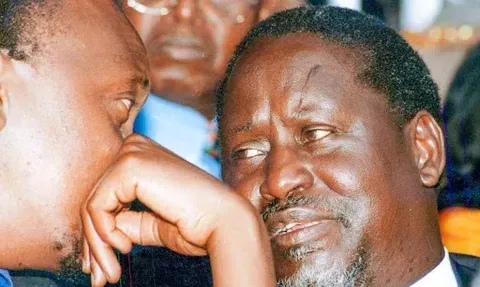
For decades, the political heartbeat of Kenya has been shaped by powerful personalities whose influence stretched across regions, generations, and ideologies. Among these figures, two names stood tallest—Raila Odinga and Uhuru Kenyatta. Their presence in national politics created a sense of structure, predictability, and often, intense rivalry that defined electoral cycles.
Today, however, Kenya finds itself at a crossroads. With both leaders stepping back from active frontline competition, the political order they once anchored is gradually dissolving. What remains is a vacuum—one that is rapidly being filled by a new generation of leaders, shifting alliances, and an electorate that is no longer bound by the rigid loyalties of the past. As the country looks ahead to the 2027 general election, the stakes have never been higher, and the outcome has never been more uncertain.
The End of Political Certainty
For many years, elections in Kenya followed a familiar pattern. Regions like Luo Nyanza and Mount Kenya were considered political fortresses—zones where voting behavior was largely predictable. Raila Odinga commanded immense loyalty in Luo Nyanza, while Uhuru Kenyatta held sway over the Mount Kenya region.
This structure simplified political calculations. Candidates built their strategies around these blocs, knowing that securing or negotiating support from these leaders could determine the outcome of an election. Coalitions were often less about ideology and more about aligning with these power centers.
But that era is fading.
Without these two dominant figures actively steering their respective bases, the once-solid voting blocs are beginning to fracture. Leaders within these regions are competing among themselves, each trying to establish authority and inherit influence—but none has yet matched the unifying power of their predecessors.
The Rise of New Political Actors
Into this evolving space steps a new wave of politicians—ambitious, strategic, and eager to redefine Kenya’s political narrative. With William Ruto already holding the presidency, attention is shifting toward who will challenge him in 2027 and how they will build support in this new, less predictable environment.
Younger leaders and previously overshadowed figures are now finding room to grow. They are no longer forced to operate under the shadows of Odinga or Kenyatta. Instead, they are crafting their own identities, engaging directly with citizens, and leveraging modern tools such as social media to build influence.
This generational shift is particularly significant among the youth, who make up a large portion of Kenya’s population. Many young voters are less tied to historical political loyalties and more focused on issues like employment, cost of living, education, and governance. Their growing influence could dramatically reshape campaign strategies and election outcomes.
Fragmentation or Freedom?
The weakening of traditional strongholds presents both opportunities and risks.
On one hand, it opens the door to a more competitive and inclusive political environment. Without pre-determined voting patterns, candidates must work harder to earn support. This could encourage issue-based politics, where leaders are judged on their ideas and performance rather than their ethnic or regional affiliations.
On the other hand, the absence of unifying figures could lead to fragmentation. In regions like Mount Kenya, multiple leaders are already vying for dominance, potentially splitting votes and weakening the region’s bargaining power at the national level. Similarly, Luo Nyanza may experience internal competition as different leaders attempt to fill the space left by Odinga.
This fragmentation could make coalition-building more complex than ever before. Instead of negotiating with a few key figures, presidential candidates may need to engage with a wider range of regional leaders, each with their own interests and demands.
The Changing Nature of Campaigns
The 2027 election is likely to look very different from previous ones. Campaigns are expected to become more dynamic, decentralized, and innovative.
Digital platforms will play an even bigger role, allowing candidates to reach voters directly without relying on traditional political structures. Grassroots mobilization will also be crucial, as politicians seek to build support from the ground up rather than depending on endorsements from political kingpins.
Moreover, messaging will need to evolve. With voters becoming more issue-driven, candidates who focus on practical solutions—such as economic growth, healthcare, infrastructure, and governance—may have an advantage over those relying solely on rhetoric or identity politics.
The Role of William Ruto
High-Stakes Free-for-All president, William Ruto remains a central figure in this unfolding story. His leadership, policies, and political strategies will significantly influence the direction of the 2027 election.
Ruto’s challenge will be to maintain and expand his support base in a political environment that is becoming increasingly fluid. Without the traditional opposition structures led by Odinga, he may face a more fragmented but unpredictable set of challengers.
At the same time, his administration’s performance will be under intense scrutiny. Issues such as the economy, cost of living, and governance will likely dominate public discourse, shaping voter perceptions and ultimately determining whether he secures a second term.
A Defining Moment for Kenya’s Democracy
The absence of Raila Odinga and Uhuru Kenyatta marks more than just a leadership transition—it signals a deeper transformation within Kenya’s political system.
This moment presents a unique opportunity for the country to move toward a more open and competitive democracy. It allows new voices to emerge, encourages greater political participation, and challenges leaders to connect with voters on a more meaningful level.
However, it also requires responsibility. Political actors must navigate this transition carefully to avoid instability, division, or conflict. Institutions must remain strong, and citizens must remain engaged and vigilant.
Conclusion: An Election Like No Other
As Kenya approaches the 2027 general election, one reality stands out: the rules of the game have changed.
Without the guiding influence of Raila Odinga and Uhuru Kenyatta, the political field is wide open. The election is no longer a contest defined by a few dominant figures, but a complex and evolving battle shaped by multiple players, shifting alliances, and an increasingly independent electorate.
It is, in every sense, anyone’s game.
And in this new era, the future of Kenya will be determined not just by who holds power—but by how that power is earned, challenged, and ultimately used to serve the people.
The countdown to 2027 has begun, and for the first time in a generation, Kenya steps into it without its most familiar political giants leading the way.