 Gerald Kyalo. (geraldbway).
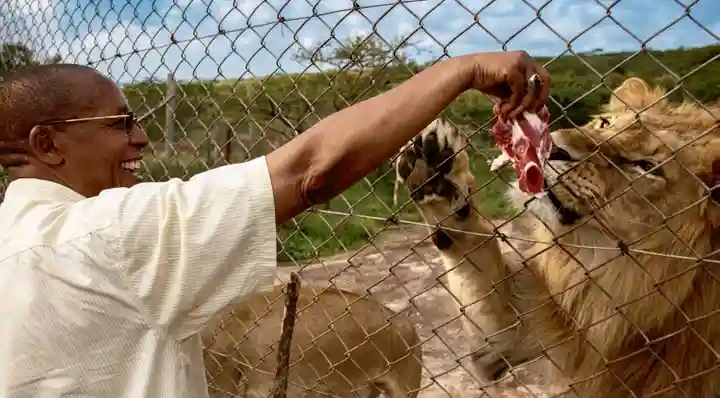
The late Makueni Senator, Mutula Kilonzo, remains one of Kenya’s most fascinating and controversial public figures. Known for his legal acumen, political tenacity, and larger-than-life personality, Kilonzo also had a side that few Kenyans could imagine—a man who fed lions, at a staggering cost of KSh 700,000 every month.
For most people, such a sum was jaw-dropping, enough to support entire families, pay school fees for dozens of students, or fund small businesses. But for Kilonzo, it seemed ordinary—just part of the daily rhythm of life on his sprawling Kwa Kyelu ranch in Machakos.
From Courtrooms to the Senate: A Life of Influence
Before the lions became central to his public image, Kilonzo had already carved out a formidable career. He was one of Kenya’s most respected legal minds, a senior advocate whose courtroom skills were legendary. Precision, confidence, and a sharp tongue marked his legal style. Kilonzo was equally at ease negotiating with presidents as he was dominating television debates, and he advised some of the country’s most powerful figures.
Eventually, his influence expanded beyond law into politics. He became Senator for Makueni, bringing the same strategic thinking and fearless advocacy that had characterized his legal career into the political arena. Articulate, combative, and deeply strategic, Kilonzo was not a man content with the ordinary. His ambitions and lifestyle reflected a constant fascination with scale, power, and legacy.
The Lions of Kwa Kyelu Ranch
Kilonzo’s ranch was home to three lions: Mutula, Nduku, and Sis. One was named after himself, another after his wife, and the third after someone known only to him. These were not symbolic lions; they were real, living predators, acquired through official wildlife channels under special permissions that allowed private custody under regulated conditions.
Feeding these lions cost KSh 700,000 each month—a figure that dwarfed the annual income of most Kenyan households. To outsiders, it seemed extravagant, almost surreal. But for Kilonzo, the lions were more than animals—they were part of a world he had built in his own image, symbols of achievement and a life lived on his terms.
The ranch itself was not just a home for lions. It was a private ecosystem, reportedly home to giraffes, zebras, buffaloes, camels, gazelles, monkeys, fish ponds, cattle, goats, and beehives. Visitors described it as less a farm and more a carefully curated wildlife sanctuary. It reflected Kilonzo’s broader approach to life: ordinary scale did not interest him; he was drawn to the extraordinary.
Wealth, Vision, and Eccentricity
Part of what made Kilonzo’s story compelling was the contrast between his humble beginnings and the life he eventually built. He often spoke of starting out with modest means, relying on discipline, hard work, and determination to climb the ranks of Kenya’s legal system. He transformed his courtroom prowess into national prominence and considerable wealth.
The lions, then, were not mere pets—they were declarations. They were proof that the young lawyer who once had little could now support creatures historically reserved for royalty. Critics saw excess, while admirers saw vision. For Kilonzo, it was simply normal.
A Mysterious End
On 27 April 2013, Mutula Kilonzo did not wake up. His ranch workers reportedly called him for breakfast, but there was no response. He was later found dead in his bedroom at the age of 66.
His death sparked years of speculation and legal inquiries. Poisoning theories circulated, evidence was disputed, and the case became one more enigmatic chapter in a life that rarely moved quietly. Eventually, an inquest concluded that there was no foul play, though the mystery surrounding his passing never fully disappeared.
Legacy Beyond Lions
Mutula Kilonzo is remembered for many things: his legal brilliance, political courage, and influence in shaping national affairs. But his lions, and the staggering cost of maintaining them, have become an enduring symbol of his life philosophy. In a country where most people struggle to feed their families, Kilonzo chose to feed predators, illustrating his willingness to live life by his own rules.
In the end, the story of the senator who spent KSh 700,000 a month feeding lions is more than a tale of wealth or eccentricity. It is a story about ambition, vision, and the audacity to build a life on a scale few can imagine. Mutula Kilonzo was not content with the ordinary, and perhaps that is why his life—and even his death—remains a topic of fascination years later.
For most people, such a sum was jaw-dropping, enough to support entire families, pay school fees for dozens of students, or fund small businesses. But for Kilonzo, it seemed ordinary—just part of the daily rhythm of life on his sprawling Kwa Kyelu ranch in Machakos.
From Courtrooms to the Senate: A Life of Influence
Before the lions became central to his public image, Kilonzo had already carved out a formidable career. He was one of Kenya’s most respected legal minds, a senior advocate whose courtroom skills were legendary. Precision, confidence, and a sharp tongue marked his legal style. Kilonzo was equally at ease negotiating with presidents as he was dominating television debates, and he advised some of the country’s most powerful figures.
Eventually, his influence expanded beyond law into politics. He became Senator for Makueni, bringing the same strategic thinking and fearless advocacy that had characterized his legal career into the political arena. Articulate, combative, and deeply strategic, Kilonzo was not a man content with the ordinary. His ambitions and lifestyle reflected a constant fascination with scale, power, and legacy.
The Lions of Kwa Kyelu Ranch
Kilonzo’s ranch was home to three lions: Mutula, Nduku, and Sis. One was named after himself, another after his wife, and the third after someone known only to him. These were not symbolic lions; they were real, living predators, acquired through official wildlife channels under special permissions that allowed private custody under regulated conditions.
Feeding these lions cost KSh 700,000 each month—a figure that dwarfed the annual income of most Kenyan households. To outsiders, it seemed extravagant, almost surreal. But for Kilonzo, the lions were more than animals—they were part of a world he had built in his own image, symbols of achievement and a life lived on his terms.
The ranch itself was not just a home for lions. It was a private ecosystem, reportedly home to giraffes, zebras, buffaloes, camels, gazelles, monkeys, fish ponds, cattle, goats, and beehives. Visitors described it as less a farm and more a carefully curated wildlife sanctuary. It reflected Kilonzo’s broader approach to life: ordinary scale did not interest him; he was drawn to the extraordinary.
Wealth, Vision, and Eccentricity
Part of what made Kilonzo’s story compelling was the contrast between his humble beginnings and the life he eventually built. He often spoke of starting out with modest means, relying on discipline, hard work, and determination to climb the ranks of Kenya’s legal system. He transformed his courtroom prowess into national prominence and considerable wealth.
The lions, then, were not mere pets—they were declarations. They were proof that the young lawyer who once had little could now support creatures historically reserved for royalty. Critics saw excess, while admirers saw vision. For Kilonzo, it was simply normal.
A Mysterious End
On 27 April 2013, Mutula Kilonzo did not wake up. His ranch workers reportedly called him for breakfast, but there was no response. He was later found dead in his bedroom at the age of 66.
His death sparked years of speculation and legal inquiries. Poisoning theories circulated, evidence was disputed, and the case became one more enigmatic chapter in a life that rarely moved quietly. Eventually, an inquest concluded that there was no foul play, though the mystery surrounding his passing never fully disappeared.
Legacy Beyond Lions
Mutula Kilonzo is remembered for many things: his legal brilliance, political courage, and influence in shaping national affairs. But his lions, and the staggering cost of maintaining them, have become an enduring symbol of his life philosophy. In a country where most people struggle to feed their families, Kilonzo chose to feed predators, illustrating his willingness to live life by his own rules.
In the end, the story of the senator who spent KSh 700,000 a month feeding lions is more than a tale of wealth or eccentricity. It is a story about ambition, vision, and the audacity to build a life on a scale few can imagine. Mutula Kilonzo was not content with the ordinary, and perhaps that is why his life—and even his death—remains a topic of fascination years later.