 Diana Muthini
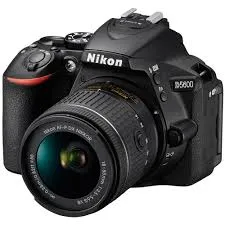
The Architect of Light: A Deep Dive into the Nikon Obsession
To the uninitiated, a camera is just a box that captures light. But to a "Nikon person," that box is a legacy. It is a specific philosophy of engineering that refuses to take shortcuts. In 2026, as we find ourselves increasingly surrounded by "smart" devices that do all the thinking for us, there is something deeply rebellious about picking up a Nikon. It is a brand built on the idea that the photographer—not the algorithm—should be the one in control.
If you want to understand why this company has survived over a century of technological upheaval, you have to look past the spec sheets and dive into the grit, the glass, and the soul of the system.
1. The "Nikon Feel": Ergonomics as an Art Form
Ask any long-term shooter what keeps them loyal to Nikon, and they won't start with megapixels. They’ll talk about the "grip." There is a legendary attention to detail in how a Nikon body sits in the palm. The buttons are where your fingers naturally fall; the "sub-command" dial is exactly where your index finger expects it to be.
This isn't an accident. Nikon has spent decades studying the anatomy of the human hand. While other brands have occasionally chased "slim" or "futuristic" designs that end up feeling like slippery bars of soap, Nikon has remained committed to the idea that a camera is a professional tool. Whether you’re wearing thick gloves in the Arctic or shooting a wedding in 40°C heat, a Nikon feels like an extension of your own arm. It’s the difference between holding a piece of consumer electronics and holding a finely tuned instrument.
2. The Legend of the F-Mount: A 60-Year Handshake
One of the most remarkable feats in industrial history was Nikon’s commitment to the F-mount. Introduced in 1959, this lens mount remained the standard for over sixty years. This meant a photographer in the year 2010 could take a lens their grandfather used in the 1960s and, with very little effort, click it onto a high-tech DSLR.
That created a unique "Nikon culture." It turned lenses into heirlooms. It meant that "Nikon glass" wasn't just a purchase; it was an investment in a system that wouldn't abandon you. Even now, in the era of the Z-mount, Nikon’s FTZ adapters are so seamless that those vintage lenses—with their unique flares and "imperfect" character—are finding a second life on ultra-modern 45-megapixel sensors. It’s a bridge between generations that no other brand has quite managed to build with the same level of integrity.
3. The Optical Pursuit: The Z-Mount Revolution
When Nikon finally moved to the mirrorless Z-system, they didn't just copy what others were doing. They went back to the drawing board and created the widest lens mount of any full-frame system. To the average person, this sounds like technical jargon. To a photographer, it was a declaration of war.
The wide mount and short flange distance allowed Nikon’s engineers to do things that were previously physically impossible. This led to the creation of lenses like the 58mm f/0.95 Noct—a lens so fast and so sharp it shouldn't exist—and the 14-24mm f/2.8 S, which redefined what a wide-angle zoom could be. In 2026, the "S-Line" lenses are widely considered the gold standard of optical purity. They don't just resolve detail; they capture the texture of light.
4. The Resilience of the Professional Flagship
There is a specific kind of respect reserved for the Nikon "single-digit" series (the D4, D5, D6, and now the Z9). These aren't just cameras; they are heavy-duty workhorses designed to survive the unthinkable.
I remember talking to a sports photographer who had his Nikon gear drenched in a torrential downpour for four hours during a football match. While the "weather-sealed" phones in the crowd were glitching out, his Nikon didn't skip a beat. That reliability is why NASA has been sending Nikons into space since the 1970s. When you are orbiting the Earth or standing on a touchline in a blizzard, "pretty good" isn't enough. You need "Nikon tough."
The Z9 and the more compact Z8 have carried this torch into the digital future. By eliminating the mechanical shutter—the part most likely to break after half a million shots—Nikon essentially created a camera with no "moving parts" to wear out. It was a bold, human-centric engineering choice that said: We want this tool to last you a decade, not just until the next model comes out.
5. Color Science: The "Nikon Look"
Every camera brand has a "recipe" for how it interprets color. Canon is known for warm skin tones; Sony for its clinical accuracy. Nikon, however, has always been the king of Naturalism. There is a richness to Nikon’s greens and blues that landscape photographers swear by. The "Standard" picture profile doesn't over-saturate; it looks like what your eye actually sees. In 2026, as AI-filtered photos make everything look like a neon dream, the honest, grounded color science of a Nikon RAW file feels like a breath of fresh air. It provides a "filmic" quality that gives the photographer a better starting point for their own creative vision.
6. The Joy of the "Mechanical" in a Digital World
Perhaps the most "human" thing about Nikon right now is their success with the Nikon Zf. It’s a camera that looks like the vintage FM2 from the 1980s, complete with dedicated brass dials for shutter speed and ISO.
In an age of touchscreens and menus, there is a profound psychological satisfaction in hearing a physical dial "click" into place. It slows you down. It makes you think about the exposure. It turns photography back into a craft rather than a "swipe-and-tap" exercise. Nikon understood that we don't just want the best specs; we want the best experience. We want to feel the machine working with us.
Final Thoughts: The Heritage of the Observer
Nikon isn't the biggest company in the world, and they don't try to be everything to everyone. They are, at their core, an optics company. They are for the people who wake up at 4:00 AM to catch the "blue hour," for the parents who want to freeze their child’s first steps in perfect clarity, and for the journalists who need to tell the truth in dangerous places.
Choosing a Nikon is a statement that you value the history of the image. It’s a commitment to a tool that is built to be used, bruised, and pushed to its limits. As we move further into 2026 and beyond, Nikon remains a reminder that while technology will always change, the human desire to see the world clearly—and to hold that vision in our hands—never will.