 CALEB MWENDWA MUSYOKI
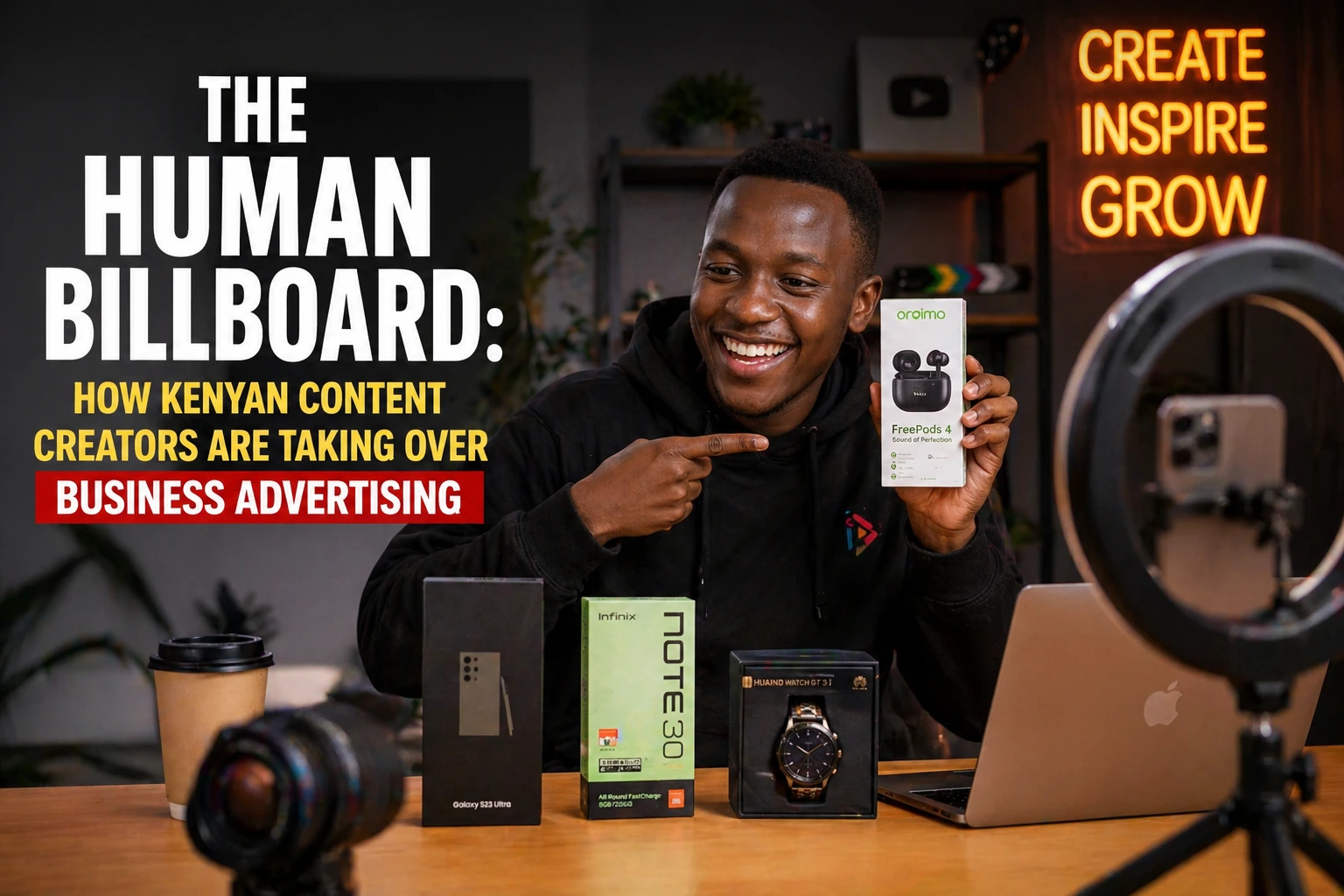
Not too long ago, if a Kenyan corporate brand wanted to launch a product, the playbook was rigid and predictable: hire a mainstream advertising agency, book prime-time slots on this particular station and shoot a glossy, overly polished commercial featuring a celebrity.
Today, that playbook is being torn to shreds.
The new gatekeepers of Kenyan advertising are not suited executives in boardrooms; they are young, camera-savvy creators in apartments, cars, and makeshift studios. From TikTok and Instagram to YouTube and X Kenyan content creators have staged a bloodless coup in the marketing space, fundamentally changing how businesses spend their advertising budgets.
Here is how Kenyan content creators are taking over the business advertisement space, and why brands are gladly handing over the keys.
1. The Death of the "Corporate Voice" and the Rise of Relatability
For decades, corporate Kenya spoke to consumers in a formal, detached tone. Kenyan creators flipped this script. They speak "Sheng", they use local humor, and they aren’t afraid to look imperfect.
When a creator integrates a brand into their content, it doesn’t feel like an advertisement; it feels like a recommendation from a clever friend. This authenticity is the holy grail of modern marketing. Kenyans are highly skeptical of traditional advertising but are incredibly loyal to creators they trust. By leveraging this parasocial relationship, creators offer brands something TV commercials never could: genuine consumer trust.
2. The "Skit-mercial" Revolution
Kenya has a rich history of comedy, and creators have masterfully merged this with advertising. Enter the era of the "skit-mercial."
Instead of a 30-second pitch, a brand will sponsor a 2-minute comedic skit. Think of the wildly popular university-themed skits or corporate workplace parodies. The creator builds a hilarious, engaging narrative, and the product is seamlessly woven into the plot—often as the punchline or the solution to the character's problem. Because the entertainment value is so high, consumers actively choose to watch the advertisement rather than skip it. This format has proven incredibly effective for brands in the telecom, banking, and fast-moving consumer goods (FMCG) sectors.
3. Sniper-Targeted Audiences vs. The Shotgun Approach
Traditional media relies on a "spray and pray" method. A billboard on Uhuru Highway or a TV ad reaches everyone—toddlers, grandparents, and the target demographic alike.
Creators offer surgical precision. If a fintech company wants to reach Gen Z investors, they don’t buy a newspaper ad; they partner with a finance creator on TikTok. If a beauty brand wants to sell hair products to young women, they go to a lifestyle vlogger on YouTube. This hyper-targeting means businesses get a much higher Return on Investment (ROI). Every shilling spent on a creator goes directly toward a pre-qualified, engaged audience.
4. Agility and Speed to Market
In the traditional agency model, shooting a commercial could take weeks of scripting, casting, and editing. By the time the ad airs, the trend it was based on might be dead.
Creators operate at the speed of the internet. If a meme goes viral on a Tuesday, a smart brand can partner with a creator, and a branded spin-off video can be live by Wednesday. This agility allows businesses to stay culturally relevant, capitalize on real-time trends, and run hyper-specific campaigns (like flash sales or holiday discounts) with zero lag time.
5. Democratizing Ad Budgets for SMEs
Historically, only corporate giants like Safaricom, Equity Bank, or Coca-Cola could afford mass media advertising. Content creators have completely democratized this space.
A Small and Medium Enterprise (SME) in Gikomba or a fledgling tech startup in Kilimani with a budget of just Ksh 20,000 can now afford to run a targeted campaign by hiring a "micro-influencer" (a creator with 10,000 to 50,000 highly engaged followers). This has allowed thousands of local businesses to compete for visibility, fueling the growth of Kenya's SME sector.
6. Creators as Full-Service Agencies
The evolution has gone beyond mere endorsement. Today’s top-tier Kenyan creators function as full-service advertising agencies. They write the scripts, direct the video, shoot it, edit it, distribute it, and often handle community management in the comment section. Brands are realizing that paying one creator is often more cost-effective and yields better engagement than paying five different agencies to handle different aspects of a campaign.
The Rise of Creator-Led Commerce
We are now entering the next phase: creators directly driving sales. Through affiliate marketing links, custom discount codes, and the integration of shopping features on social platforms, creators are no longer just raising brand awareness—they are closing the deal. A fashion creator posting a "Get Ready With Me" (GRWM) video can generate thousands of direct sales for a local boutique within hours of posting.
The Challenges Ahead
The takeover is not without friction. As the space matures, issues are arising. Some creators are inflating their follower numbers with bots, leading brands to demand more transparency and focus on engagement rates over vanity metrics. Furthermore, top-tier creators have become expensive, sometimes rivaling traditional media rates, which pushes smaller brands toward micro-influencers.
Additionally, the lack of formal regulation means brands occasionally face PR disasters when a creator they partner with gets involved in a public scandal.
The Bottom Line ;
The Kenyan content creator has successfully transitioned from being viewed as an "internet hobbyist" to a legitimate, powerful business partner. They have not just taken over the advertisement space; they have redefined it.
As internet penetration in Kenya continues to grow and the smartphone becomes the primary screen for the majority of the population, the power dynamic will only tilt further in favor of the creator. For any business in Kenya today—whether a multinational bank or a local restaurant—the message is clear: you don't need a billboard on Mombasa Road; you need a creator on your phone screen.
Today, that playbook is being torn to shreds.
The new gatekeepers of Kenyan advertising are not suited executives in boardrooms; they are young, camera-savvy creators in apartments, cars, and makeshift studios. From TikTok and Instagram to YouTube and X Kenyan content creators have staged a bloodless coup in the marketing space, fundamentally changing how businesses spend their advertising budgets.
Here is how Kenyan content creators are taking over the business advertisement space, and why brands are gladly handing over the keys.
1. The Death of the "Corporate Voice" and the Rise of Relatability
For decades, corporate Kenya spoke to consumers in a formal, detached tone. Kenyan creators flipped this script. They speak "Sheng", they use local humor, and they aren’t afraid to look imperfect.
When a creator integrates a brand into their content, it doesn’t feel like an advertisement; it feels like a recommendation from a clever friend. This authenticity is the holy grail of modern marketing. Kenyans are highly skeptical of traditional advertising but are incredibly loyal to creators they trust. By leveraging this parasocial relationship, creators offer brands something TV commercials never could: genuine consumer trust.
2. The "Skit-mercial" Revolution
Kenya has a rich history of comedy, and creators have masterfully merged this with advertising. Enter the era of the "skit-mercial."
Instead of a 30-second pitch, a brand will sponsor a 2-minute comedic skit. Think of the wildly popular university-themed skits or corporate workplace parodies. The creator builds a hilarious, engaging narrative, and the product is seamlessly woven into the plot—often as the punchline or the solution to the character's problem. Because the entertainment value is so high, consumers actively choose to watch the advertisement rather than skip it. This format has proven incredibly effective for brands in the telecom, banking, and fast-moving consumer goods (FMCG) sectors.
3. Sniper-Targeted Audiences vs. The Shotgun Approach
Traditional media relies on a "spray and pray" method. A billboard on Uhuru Highway or a TV ad reaches everyone—toddlers, grandparents, and the target demographic alike.
Creators offer surgical precision. If a fintech company wants to reach Gen Z investors, they don’t buy a newspaper ad; they partner with a finance creator on TikTok. If a beauty brand wants to sell hair products to young women, they go to a lifestyle vlogger on YouTube. This hyper-targeting means businesses get a much higher Return on Investment (ROI). Every shilling spent on a creator goes directly toward a pre-qualified, engaged audience.
4. Agility and Speed to Market
In the traditional agency model, shooting a commercial could take weeks of scripting, casting, and editing. By the time the ad airs, the trend it was based on might be dead.
Creators operate at the speed of the internet. If a meme goes viral on a Tuesday, a smart brand can partner with a creator, and a branded spin-off video can be live by Wednesday. This agility allows businesses to stay culturally relevant, capitalize on real-time trends, and run hyper-specific campaigns (like flash sales or holiday discounts) with zero lag time.
5. Democratizing Ad Budgets for SMEs
Historically, only corporate giants like Safaricom, Equity Bank, or Coca-Cola could afford mass media advertising. Content creators have completely democratized this space.
A Small and Medium Enterprise (SME) in Gikomba or a fledgling tech startup in Kilimani with a budget of just Ksh 20,000 can now afford to run a targeted campaign by hiring a "micro-influencer" (a creator with 10,000 to 50,000 highly engaged followers). This has allowed thousands of local businesses to compete for visibility, fueling the growth of Kenya's SME sector.
6. Creators as Full-Service Agencies
The evolution has gone beyond mere endorsement. Today’s top-tier Kenyan creators function as full-service advertising agencies. They write the scripts, direct the video, shoot it, edit it, distribute it, and often handle community management in the comment section. Brands are realizing that paying one creator is often more cost-effective and yields better engagement than paying five different agencies to handle different aspects of a campaign.
The Rise of Creator-Led Commerce
We are now entering the next phase: creators directly driving sales. Through affiliate marketing links, custom discount codes, and the integration of shopping features on social platforms, creators are no longer just raising brand awareness—they are closing the deal. A fashion creator posting a "Get Ready With Me" (GRWM) video can generate thousands of direct sales for a local boutique within hours of posting.
The Challenges Ahead
The takeover is not without friction. As the space matures, issues are arising. Some creators are inflating their follower numbers with bots, leading brands to demand more transparency and focus on engagement rates over vanity metrics. Furthermore, top-tier creators have become expensive, sometimes rivaling traditional media rates, which pushes smaller brands toward micro-influencers.
Additionally, the lack of formal regulation means brands occasionally face PR disasters when a creator they partner with gets involved in a public scandal.
The Bottom Line ;
The Kenyan content creator has successfully transitioned from being viewed as an "internet hobbyist" to a legitimate, powerful business partner. They have not just taken over the advertisement space; they have redefined it.
As internet penetration in Kenya continues to grow and the smartphone becomes the primary screen for the majority of the population, the power dynamic will only tilt further in favor of the creator. For any business in Kenya today—whether a multinational bank or a local restaurant—the message is clear: you don't need a billboard on Mombasa Road; you need a creator on your phone screen.