 EMMANUEL WEKESA
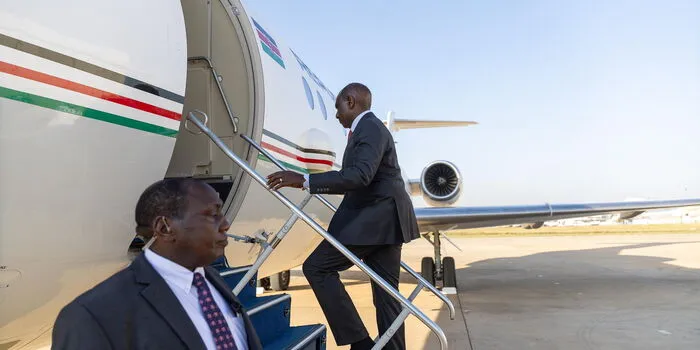
Questions over the future of the presidential aircraft have resurfaced after President William Ruto traveled to South Africa aboard a privately chartered jet. The Head of State arrived in Pretoria on the evening of Wednesday, May 3, for a three-day state visit at the invitation of South African President Cyril Ramaphosa, with flight tracking data confirming that he departed Nairobi aboard a Boeing 737-800 BBJ2.
Ruto Relying on Chartered Flights for International Travel
The aircraft used by President Ruto is a luxury executive jet operated by UAE-based Empire Aviation Group, the same jet used during some recent international trips. This shift has renewed scrutiny over Kenya's official presidential aircraft, which has traditionally been associated with official travel. Kenya's traditional aircraft, a Fokker 70 jet first acquired in 1995, has been out of service since August 2025 after being flown to the Netherlands for extensive maintenance due to concerns over its age and reliability.
Maintaining Kenya's aging presidential aircraft has become increasingly difficult due to the collapse of its manufacturer, Fokker, in 1996, which has complicated long-term support and spare parts procurement. The government has reportedly considered retiring the aircraft by 2026, but a clear replacement strategy has yet to be publicly articulated.
In the meantime, President Ruto has continued to rely on a combination of chartered aircraft and other travel options. This approach has drawn criticism, especially given the high costs associated with chartered flights. During a trip to the United States, reports indicated the flight cost Ksh 194,175,000 (USD 1.5 million), though Ruto clarified that the flight was procured through special connections at a significantly lower cost of Ksh 10 million.
As the government approaches 2026, the future of Kenya’s presidential aviation remains uncertain. Neither State House nor the Ministry of Defence has publicly announced plans for purchasing a new presidential jet, leaving the current reliance on private charters and the aging aircraft amid ongoing debates over transparency and cost-effectiveness.